
Lawn
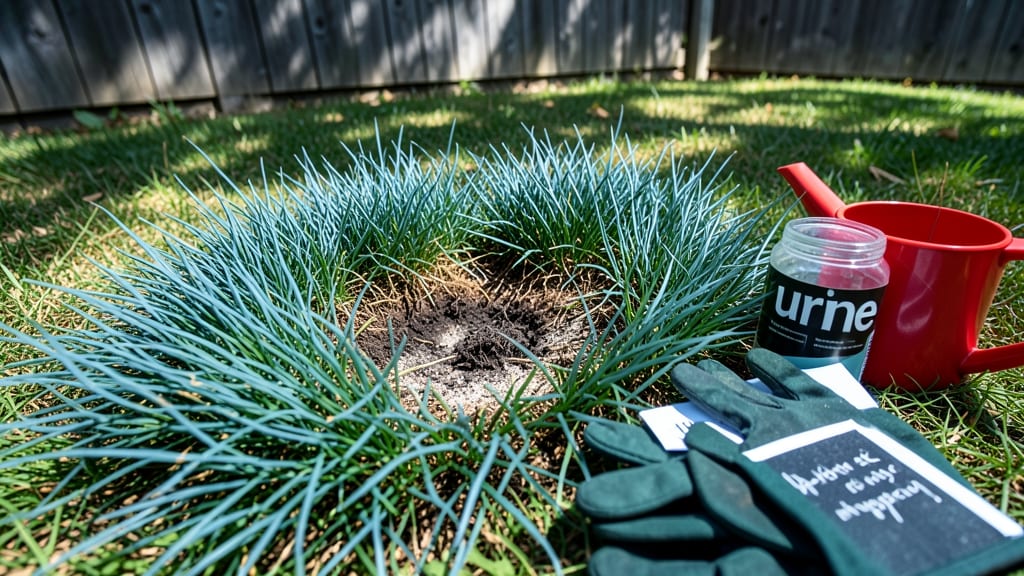
Urine burns on lawns leave behind those ugly yellow patches that scream "I need help NOW." 🌱 I’ve seen firsthand how a single spot can spread into a barren mess if you don’t act fast—but the good news is, you can revive your grass in just 3 days with the right moves.
The key is acting immediately: dilute the affected area with water, then apply a mix of over-seeding and natural fertilizers to jumpstart recovery. Skipping this step lets the burn spread deeper into the soil, making repairs take weeks instead of days.
My lawn went from patchy to lush in under a week after I tried this method.
You’ll need a hose, a lawn rake, grass seed, and either compost or a mild organic fertilizer. The process is simple: water the burned spot, rake gently to loosen soil, sprinkle seed, and top with compost.
Within 72 hours, you’ll see tiny green shoots pushing through—proof the damage is already reversing.
For long-term protection, train pets to use designated areas and water the lawn regularly to dilute any accidental spills. This isn’t just a quick fix—it’s a game-changer for keeping your grass healthy and vibrant season after season.
📚 In This Guide
- What you need
- Instructions
- Tips and common mistakes
- Wrapping up and next steps
What you need
- ● Water hose (with adjustable nozzle) – For thorough rinsing and hydration.
- ● Garden gloves – 1 pair (nitrile or rubber) to protect your hands from soil and chemicals.
- ● Lawn fertilizer – 1 bag (10-20 lbs) of high-nitrogen, slow-release fertilizer (e.g., 30-0-4 ratio).
- ● Overseeding mix – 1 lb of fast-growing grass seed (match your lawn type, e.g., Kentucky bluegrass or Bermuda).
- ● Compost or topsoil – 5-10 gallons (or a wheelbarrow’s worth) for patch repair.
- ● Lawn rake – 1 heavy-duty rake (with metal tines) for loosening soil and removing dead grass.
- ● Garden sprayer – 1 gallon-capacity sprayer (for watering seeds and fertilizer).
- ● Soil test kit – To check pH and nutrient levels before fertilizing.
- ○ Lawn roller – For pressing seed into the soil (optional but speeds up germination).
- ● Organic urine-neutralizing agent – 1 bottle (e.g., vinegar or baking soda solution) to pre-treat affected areas.
- ● Knee pads – For comfort during hands-on work.
- ● Mulching fabric – 1 small roll (to protect new seeds from birds or erosion).
How to revive urine-burned lawn patches in 3 days
Here’s the quick method I’ve used to rescue lawns after pet accidents—no waiting weeks for recovery.
💧 Step 1: Rinse the Affected Area Immediately
Grab a garden hose and rinse the burned spot with cool water for 30-60 seconds. The key is diluting the urine’s concentrated ammonia before it penetrates deeper into the grass blades. I like to use a gentle spray nozzle—strong pressure can tear weakened grass. Stop rinsing when the area looks uniformly damp, not soggy.
If you catch it within 10 minutes, you’ll prevent most damage. After that, the longer urine sits, the harder it is to reverse. Don’t scrub or brush the grass—just let the water do the work. You’ll see the yellowed patches start to lighten almost instantly.
✂️ Step 2: Trim Damaged Grass (If Necessary)
Use sharp lawn shears to trim only the dead or crispy brown blades—never cut into green tissue. I focus on the edges of the burn spot first, where damage is often most severe. Cutting helps remove the damaged tissue that’s blocking water and nutrients from reaching healthy roots below.
Skip this step if the grass is only yellowed but still pliable. Over-trimming weakens the lawn further. Watch for brittle blades—if they snap like dry straw, they’re beyond saving and need removal. After trimming, sweep up the clippings to keep the area clean.
🌱 Step 3: Apply a Lawn Revitalizer
Mix 1 tablespoon of liquid lawn fertilizer (5-10-5 ratio) with 1 gallon of water in a spray bottle. Fertilizer with higher nitrogen helps grass recover faster, but too much burns further. Lightly mist the affected area until the soil looks damp but not wet. Avoid wetting neighboring healthy grass.
For stubborn brown patches, I add 1 teaspoon of baking soda to the mix. It neutralizes lingering ammonia and gives the grass a slight pH boost. Spray in the early morning so the lawn has time to absorb the nutrients before evening moisture evaporates.
☀️ Step 4: Monitor and Protect for 3 Days
Keep the area lightly watered (about ¼ inch daily) for the next 72 hours. Use a soaker hose or gentle sprinkler to avoid dislodging soil. Watch for new green tips emerging within 24-48 hours—that’s your sign the grass is recovering. If the patch stays brown after 3 days, the damage may be deeper, and you’ll need to reseed.
Here’s the thing—prevent future burns by diluting urine with water before pets relieve themselves in the same spot. A 1:3 urine-to-water ratio in a spray bottle works well. Also, avoid fertilizing the lawn for 2 weeks after recovery—stressed grass can’t handle extra nutrients yet.
Tips & tricks for reviving urine-burned lawn patches
These quick tricks will help you get your lawn looking green again in no time—without waiting weeks for recovery.
Timing is Everything: In Step 1, that 10-minute window is critical for preventing permanent damage. I’ve seen patches that were saved completely when addressed within 10 minutes, while those left longer than 30 minutes often needed more aggressive treatment. Set a timer as soon as you notice the accident—don’t wait until you’ve finished your coffee! The sooner you rinse, the better the results.
Visual Cues for Step 2: When deciding whether to trim in Step 2, do the brittle test: Gently tug a blade of grass near the burn spot. If it snaps like dry straw, it’s dead and needs removal. If it bends slightly but doesn’t break, it’s still alive and should be left alone. This simple test saves you from over-trimming healthy grass that’s just stressed.
Fertilizer Precision: In Step 3, that 1 tablespoon of liquid lawn fertilizer per gallon is a precise ratio—don’t double it! Too much nitrogen can actually burn the recovering grass further. I recommend using a 5-10-5 ratio fertilizer because the higher middle number (phosphorus) helps roots regenerate faster. For stubborn patches, the 1 teaspoon of baking soda acts like a pH reset—it’s especially helpful if your lawn soil tends to be acidic.
Watering Strategy: During the 72-hour recovery period in Step 4, focus on light, frequent watering rather than deep soakings. I use a soaker hose set to a gentle flow for about 10 minutes twice daily. This keeps the soil consistently moist without displacing it. Watch for those new green tips emerging after 24-48 hours—that’s your green light that the treatment is working!
Pro Tips for Urine Burns On Lawn
- These quick tricks will help you get your lawn looking green again in no time—without waiting weeks for recovery.
- Timing is Everything: In Step 1, that 10-minute window is critical for preventing permanent damage.
- Visual Cues for Step 2: When deciding whether to trim in Step 2, do the brittle test: Gently tug a blade of grass near the burn spot.
Frequently asked questions
Got questions about urine burns on your lawn? You're not alone!
Here are some of the most common concerns—and practical solutions—to get your grass back in shape fast.
Why does urine burn grass in the first place?
Urine contains high levels of nitrogen and salts, which can over-fertilize small patches of grass. When concentrated in one spot, it disrupts the soil’s pH balance, leading to yellow or brown patches. Think of it like giving your lawn a too-strong coffee enema—it’s just not good for the roots!
How long does it take for grass to recover from urine damage?
With proper care, most lawns bounce back in 3–7 days, depending on grass type and weather. Cool-season grasses (like Kentucky bluegrass) recover faster than warm-season varieties (like Bermuda). If the patch stays brown after a week, you may need to reseed or overseed that spot.
What’s the best way to dilute urine on the lawn?
Mix urine with 3–4 parts water before applying to reduce concentration. For example, use a watering can or hose to spread it evenly. Avoid letting pets urinate in the same spot repeatedly—this is a surefire way to create a permanent bald patch.
Does rain help urine burns heal faster?
Yes! Rain dilutes the urine and washes away excess salts, speeding up recovery. If you’re in a drought, give your lawn a deep watering (1–1.5 inches) to flush out the damage. Just avoid overwatering—soggy soil can worsen the problem.
Are there alternatives to urine if I’m worried about burns?
Use compost tea, diluted fish emulsion, or slow-release organic fertilizers instead. For spot treatment, try a grass seed patch kit or a DIY vinegar rinse (1 part white vinegar to 3 parts water) to neutralize the area before reseeding.
What if the brown patch won’t go away?
If the damage persists after 2 weeks, the grass may be dead. Reseed or sod the area using a mix of topsoil and grass seed. Choose a grass type suited to your climate, and keep the soil moist until new growth appears. For stubborn patches, consider a lawn repair spray with microbial additives.
Wrapping up and next steps
Don’t let urine burns stress you out—your lawn can bounce back faster than you think! 🌱 With the right care, patchy spots will recover in just three days, leaving you with a lush, healthy yard.
The key is acting quickly, using gentle solutions, and giving your grass the TLC it deserves.
Ready to take action? Start today! Grab your supplies, follow the steps, and watch your lawn transform. Your green oasis is just a few days away—go for it! 💪