
Lawn
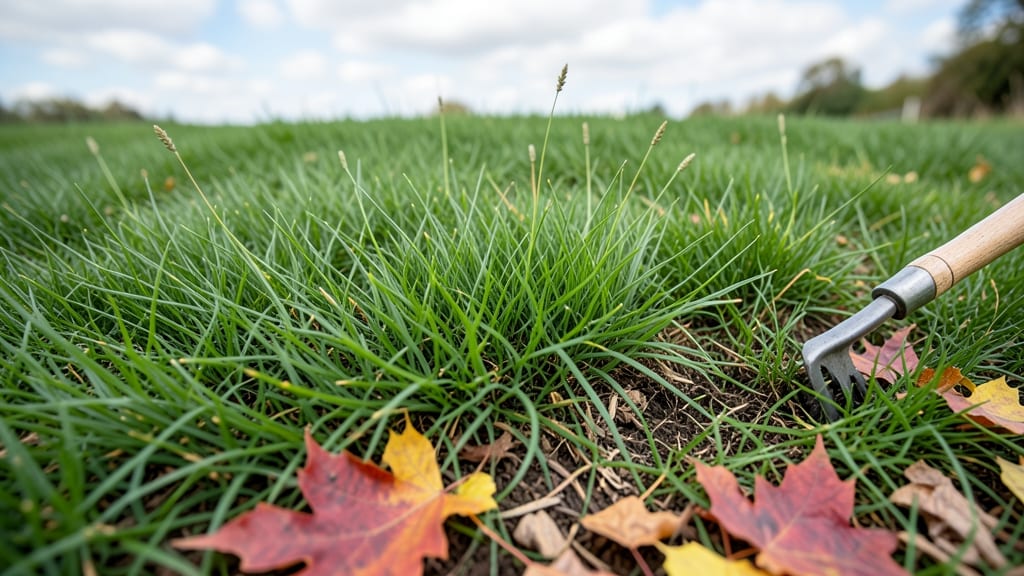
Leaving leaves on your lawn isn't inherently bad—it depends on how thick they are and how long they stay. While thick layers can smother grass and create fungal issues, thin layers or shredded leaves act as natural mulch, enriching soil and retaining moisture. The key is balance and proper timing.
Thick leaf layers block sunlight and trap moisture, creating the perfect conditions for fungal growth like brown patch disease. 🌿 However, when leaves are shredded or left in thin layers, they decompose into nutrient-rich organic matter, improving soil health over time.
I've found that mulching leaves with a lawn mower is the most effective way to turn them into beneficial mulch without harming the grass.
For best results, aim to keep leaf layers under ¼ inch thick—any thicker and you risk suffocating your grass. In colder climates, leaving leaves over winter can provide insulation for roots, but in warmer regions, they may need to be removed to prevent overheating.
Always consider your local climate and grass type when deciding whether to leave or remove leaves.
💡 In This Article
- How Lawn Leaves Affect Grass Growth Mechanically and Nutritionally
- Best Practices for Managing Fallen Leaves on Lawns
How lawn leaves affect grass growth mechanically and nutritionally
When leaves blanket your lawn in thick layers, they create a physical barrier that blocks sunlight from reaching grass blades. This light deprivation weakens photosynthesis, causing grass to yellow and weaken over time. The problem isn't just the shade—it's the trapped moisture underneath.
Thick leaf layers (over ½ inch) create a damp, oxygen-poor environment that suffocates grass roots and encourages fungal growth like brown patch disease. 🌱
Nutritionally, leaves transform differently based on their condition. Whole leaves decompose slowly (taking months to break down), while shredded leaves decompose in weeks, releasing nitrogen and other nutrients into the soil. A ¼-inch layer of shredded leaves acts like natural mulch, retaining soil moisture and improving soil structure.
This is why mulching leaves with a lawn mower is so effective—it turns potential problems into beneficial organic matter.
The seasonal timing matters too. In fall, leaves provide some insulation for grass roots, but by winter, they can compact and create mats that prevent water absorption. Spring is the worst time for thick leaves—they block sunlight when grass needs it most to recover from dormancy.
The key is understanding your grass type: cool-season grasses handle leaves better than warm-season varieties, which are more sensitive to smothering.
Here's what's happening chemically: As leaves decompose, they release tannins that can acidify the soil over time. While this may benefit some plants, it can make lawn soil too acidic for optimal grass growth (ideal pH is 6.0-7.5).
The decomposition process also consumes soil nitrogen, which is why many lawn care experts recommend adding nitrogen fertilizer when using leaves as mulch. This balances the nutrient cycle.
Consider this comparison: A ½-inch layer of whole leaves blocks 80% of sunlight, while the same thickness of shredded leaves blocks only 20% while still providing mulch benefits. The texture difference is everything—whole leaves create a thatch-like mat, while shredded leaves blend into the soil surface. 🌿
For homeowners in regions with heavy leaf drop, the solution often lies in a combination approach: remove thick accumulations (over ½ inch) while leaving thinner layers to decompose. This hybrid method gives you the benefits of natural mulch without the risks of suffocation.
The decomposition rate varies by leaf type—maple leaves break down faster than oak leaves due to their thinner structure and higher moisture content.