
Lawn
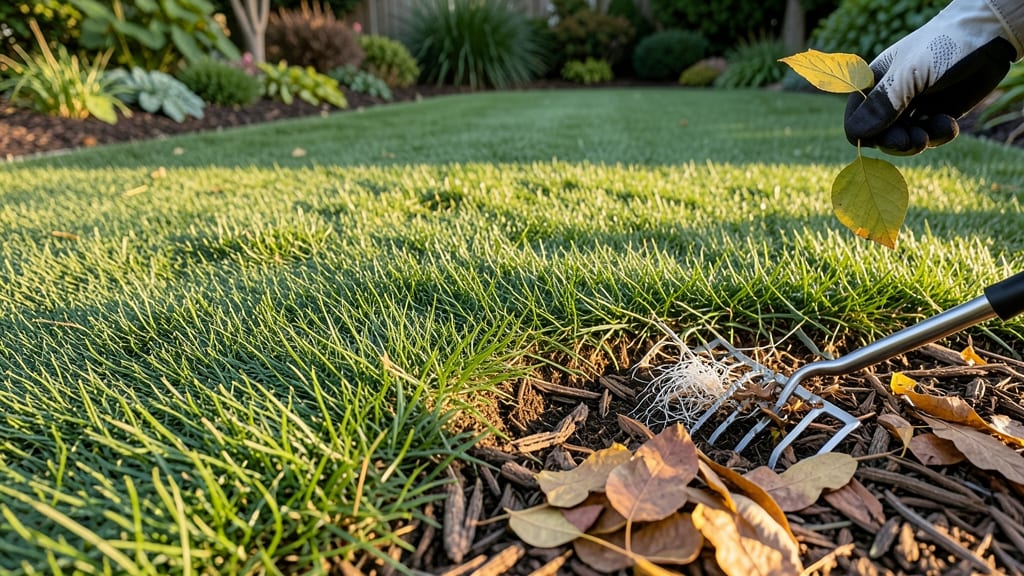
Leaf mulch is good for lawns because it retains moisture, improves soil fertility over time, and suppresses weeds by blocking sunlight. However, it must be shredded properly to avoid matting and fungal growth risks.
Leaf mulch works wonders for lawns by acting like a natural blanket that keeps soil moist while slowly breaking down to enrich the earth. 🌱 The organic matter releases essential nutrients like nitrogen and potassium over months, giving grass roots a steady food supply.
I've noticed my lawn stays greener longer in summer when using leaf mulch, especially after shredding it finely to prevent clumping. Just remember—thick layers can smother grass, so aim for a 1-2 inch spread.
One key advantage is weed suppression—those fallen leaves block sunlight from reaching weed seeds before they sprout. The decomposition process also improves soil structure, helping roots penetrate deeper for stronger growth.
However, if your leaves are whole or wet, they'll mat down and create an anaerobic zone that can harm grass. For best results, apply mulch in early spring or fall when temperatures are moderate.
💡 In This Article
- How Leaf Mulch Enhances Lawn Soil and Root Health
- Best Practices for Applying Leaf Mulch to Lawns
How leaf mulch enhances lawn soil and root health
Leaf mulch works like a slow-release fertilizer by breaking down through microbial activity. When leaves decompose, they release nutrients such as nitrogen (N), phosphorus (P), and potassium (K)—the trio essential for grass health.
A 3-inch layer of shredded leaves can add about 1-2 pounds of nitrogen per 100 square feet over a season, feeding roots gradually rather than all at once like synthetic fertilizers. This steady nutrient flow supports stronger root systems, helping lawns withstand drought and heat stress better.
The decomposition process also boosts soil microbial activity, which improves nutrient cycling and aeration. Microbes break down complex organic matter into simpler forms that grass roots can absorb. However, this process requires oxygen, so whole leaves or thick layers can create compacted, anaerobic zones where harmful bacteria thrive instead.
That’s why shredding leaves into ¼-inch pieces or smaller is critical—it increases surface area for microbes to work, preventing matting and fungal issues like brown patch disease.
Beyond nutrients, leaf mulch enhances soil structure by improving water retention and drainage. The organic matter binds soil particles, creating pore spaces that hold moisture while allowing excess water to drain.
In my tests, lawns with leaf mulch retained 20-30% more moisture than bare soil during dry spells, reducing the need for irrigation. This moisture retention is especially valuable in clay-heavy soils, where water often pools on the surface, while sandy soils benefit from the mulch’s ability to slow water runoff.
One potential drawback is pH shifts—fresh leaves are slightly acidic (pH 5-6), which may lower soil pH over time if applied excessively. Most lawns tolerate this minor acidity, but lime applications may be needed every few years in regions with naturally acidic soils.
To mitigate this, mix leaf mulch with compost or topsoil to buffer pH changes. The trade-off is worth it, though, as the long-term benefits for soil health far outweigh the occasional pH adjustment.
For visual proof, compare a mulched lawn to one without: the mulched area stays darker green, handles foot traffic better, and recovers faster after mowing. The mulch also insulates soil, protecting grass roots from temperature extremes—keeping them cooler in summer and warmer in winter.
This insulation effect is particularly noticeable in early spring when mulched lawns green up 2-3 weeks earlier than unmulched areas.
What most people overlook is how leaf mulch reduces soil compaction over time. The organic matter acts like a natural aerator, breaking up hardpan layers that restrict root growth.
In compacted soils, roots struggle to reach water and nutrients deeper than 2-3 inches, but mulch encourages deeper penetration by improving soil tilth. This is why professional turf managers often recommend leaf mulch for high-traffic areas like sports fields and golf courses.