
Lawn
Your lawn holes aren't just unsightly—they're a sign of hidden trouble, and UK gardens have their own unique culprits. 🌱 From leatherjackets to moles, the pests here are different than in other regions, and the damp climate makes grass recovery trickier. The good news?
With the right approach, you can patch those holes and restore a lush lawn in just 3 days—no grub damage required. Most holes start with something digging beneath the surface. Leatherjackets (larvae of crane flies) are the top offenders in the UK, followed by moles and even pets.
Then there's the weather—heavy rain compacts soil, leaving weak spots that collapse. The key is identifying the cause first, because treating moles differently than fixing compacted soil makes all the difference in long-term results.
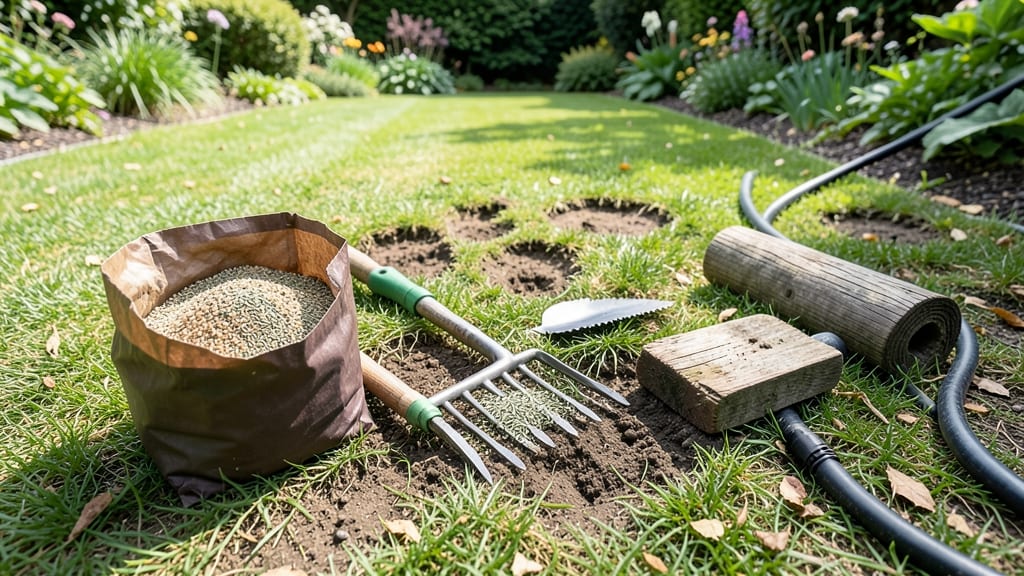
You'll need a few simple tools: a garden fork, quality seed mix suited to UK conditions, and some topsoil. Start by removing the damaged turf, then loosen the soil below. For larger holes, mix in some compost to help the new grass establish faster.
The right seed blend for your region (check for perennial ryegrass mixes) ensures quick germination, even in cooler UK springs. What works here won't always work elsewhere. UK lawns need seeds that tolerate damp winters and mild summers.
The method covers both quick fixes and long-term prevention, so you'll see results fast while building a stronger lawn foundation. Let's get those patches looking seamless!
Hidden Culprits Behind Lawn Holes
If your lawn in the UK is suddenly dotted with mysterious holes, don’t blame the gnomes—there’s usually a scientific (and sometimes sneaky) reason behind it. Understanding these causes is the first step to restoring your grass to its lush glory. Let’s dig into the real troublemakers.
One of the most common culprits for lawn holes is the work of grubs (larvae of beetles like the Dock Beetle or Chafer Beetle) and earthworms. While worms are generally beneficial, their tunnels can weaken grass roots, creating soft spots that lead to holes when stepped on.
Grubs, however, are pure lawn destroyers—they devour roots, leaving patches of grass vulnerable to pulling up easily.
Why it happens:
- Grub infestations: Female beetles lay eggs in soil during spring/summer. When the larvae hatch, they burrow into the grass roots, creating a network of damage. Heavy infestations can turn your lawn into a spongy mess, with holes appearing after foot traffic or rain.
- Earthworm activity: While worms aerate soil, their castings and tunnels can loosen the turf. If your lawn is already stressed (drought, poor drainage), the grass may not recover, leading to sunken patches or holes.
- Seasonal spikes: Grub activity peaks in late summer to early autumn, which is why holes often appear just as your lawn is supposed to be thriving.
💡 Pro Tip: Check for grubs by slicing a small section of turf and looking for white, C-shaped larvae. If you find more than 5-6 per square foot, you’ve got a problem.
If your lawn holes aren’t caused by critters, they might be the work of fungal infections or root rot. These issues thrive in damp, poorly drained UK soils, especially after heavy rain or overwatering.
Why it happens:
- Fungal diseases (e.g., Rhizoctonia, Fusarium): These fungi attack grass roots, causing them to weaken and die. The result? Small, irregular holes as the grass collapses. Fungal spores spread quickly in humid conditions, which is why UK lawns are particularly susceptible after wet summers.
- Root rot: Caused by waterlogged soil or compacted ground, root rot suffocates grass roots. The grass turns brown, pulls up easily, and leaves behind holes. This is common in clay-heavy UK soils that don’t drain well.
- Thatch buildup: A thick layer of thatch (dead grass and debris) blocks water and air, creating the perfect environment for fungi to flourish.
🔥 Warning Sign: If holes appear in patches with a white, cottony fungus on the roots, you’re likely dealing with a fungal issue. Root rot may also smell musty or rotten.
While grubs get most of the blame, other animals are guilty of lawn destruction. From burrowing mammals to feathered pests, these critters can turn your lawn into Swiss cheese overnight.
Why it happens:
- Moles and voles: Moles create tunnels just below the surface, while voles gnaw on grass roots and stems. Their activity weakens the turf, leading to sunken holes or sudden patches of dead grass.
- Birds (e.g., blackbirds, starlings): They scratch at the soil to find grubs or worms, which can uproot grass in the process. Look for pecked patches or small holes with a "digged" appearance.
- Rabbits and deer: These herbivores may not dig holes, but their grazing can stress grass, making it more susceptible to pulling up and creating gaps.
🌡️ Seasonal Clue: Animal activity spikes in spring and autumn when food is scarce, and moles/voles are most active after rain, which softens the soil.
Sometimes, holes aren’t caused by living things at all. Environmental factors like drought, compacted soil, or heavy foot traffic can weaken grass to the point where it collapses into holes.
Why it happens:
- Drought stress: UK summers can be surprisingly dry, causing grass roots to shrink and pull away from the soil. When rain finally comes, the ground becomes too soft, and grass pulls up easily, leaving holes.
- Compacted soil: Heavy foot traffic, pets, or machinery compresses soil, reducing oxygen and water flow to roots. Weakened grass is more likely to tear when walked on.
- Poor drainage: Waterlogged soil suffocates roots, leading to fungal growth and root death. The grass may appear healthy but is actually rotting beneath the surface.
🎯 Quick Test: Press your thumb into the soil. If it springs back slowly or feels mushy, your lawn is likely compacted or waterlogged.
Now that you know the real villains behind your lawn’s holes, you’re ready to tackle them head-on. The next step? Grub-free grass revival in 3 days—no chemicals required!
Quick Fixes for a Hole-Free Lawn
If your lawn is looking like a golf course gone wrong, don’t panic! With the right approach, you can restore your grass to its lush glory in just a few days.
Below, we’ve mapped out practical solutions tailored to the most common causes of lawn holes—from pests to pets—and included prevention tips to keep your yard looking sharp.
If moles, grubs, or other critters are the culprits, your first step is elimination. Then, patch up the damage before it spreads.
🔥 Step 1: Identify the Pest
- Grubs? Dig up a small section of turf. If you find white, C-shaped larvae, you’ve got grubs.
- Moles? Look for tunnels or fresh mounds of soil—no digging required!
- Voles or rabbits? Check for gnawed grass or surface holes.
🍳 Step 2: Treat the Problem
- For grubs: Apply a grub killer (like Bayer Advanced Grub Killer) following package instructions. Water lightly afterward.
- For moles: Use mole repellents (like castor oil-based sprays) or set humane traps. Avoid poisons—they can harm pets and wildlife.
- For rabbits/voles: Install chicken wire barriers around vulnerable areas or use pet-safe repellents.
👨🍳 Step 3: Patch the Holes
- Remove debris (chewed grass, dead roots).
- Loosen the soil with a fork or rake.
- Fill with topsoil mixed with compost (50/50 ratio).
- Sprinkle grass seed and press lightly.
- Water gently to settle the soil.
Pro Tip: 💡 Use a lawn patch mix (like Evergreen Lawn Repair Mix) for faster regrowth—it includes seed and fertilizer.
Dogs (and cats!) create holes through digging, marking, or rough play. The fix? Reinforce the soil and discourage repeat offenses.
🔪 Step 1: Smooth the Soil
- Rake the area to break up compacted soil.
- Add a thin layer of sand (if soil is too clay-heavy) or compost (if too sandy).
- Press down firmly with a lawn roller or the back of a rake.
⏰ Step 2: Re-seed and Protect
- Sprinkle fast-growing grass seed (like Annual Ryegrass).
- Cover with a light straw mulch to retain moisture.
- Water daily until new grass sprouts (about 7–10 days).
🎯 Step 3: Train Your Pet
- Distract with toys or a designated digging spot (fill a sandbox with soil).
- Spray vinegar or citrus (diluted) on problem areas—pets dislike the smell!
- Supervise playtime near freshly repaired patches.
Pro Tip: ✨ For stubborn diggers, try a plastic lawn protector over high-risk zones until grass regrows.
Heavy foot traffic, drought, or freeze-thaw cycles can leave your lawn looking like Swiss cheese. The solution? Rejuvenate the soil and encourage regrowth.
🌡️ Step 1: Aerate the Lawn
- Rent a core aerator (or use a garden fork) to poke holes 3–4 inches deep, 3–4 inches apart.
- Remove plugs—they’ll break down and add nutrients!
🍎 Step 2: Feed and Water
- Apply a slow-release lawn fertilizer (like Miracle-Gro Lawn Food).
- Water deeply 2–3 times per week (early morning is best).
- If drought is the issue, top-dress with compost to improve moisture retention.
💪 Step 3: Overseed for Thickness
- Choose drought-resistant grass seed (like Fescue) if your area gets little rain.
- Spread seed evenly with a broadcast spreader.
- Keep the soil moist until germination (usually 10–14 days).
Pro Tip: 🔥 For bare spots, try a liquid lawn starter (like Scotts Turf Builder Liquid) to jumpstart growth.
An ounce of prevention is worth a pound of patching! Follow these habits to keep your lawn hole-free:
- ✅ Mow high (3–4 inches) to strengthen grass roots.
- ✅ Water deeply but infrequently (1–1.5 inches per week).
- ✅ Aerate annually (spring or fall) for healthy soil.
- ✅ Test soil pH (ideal: 6.0–7.0) and amend if needed.
- ✅ Train pets or install barriers in high-traffic areas.
- ✅ Treat pests early—don’t wait for visible damage!
With these fixes, your lawn will be back to its green, hole-free glory in no time. Happy gardening! 🌱
Frequently asked questions
What’s the fastest way to fix small lawn holes in the UK?
For quick repairs, use a lawn patch mix (like Evergreen Lawn Repair Mix) that combines seed and fertilizer. Remove debris, loosen the soil with a fork, fill with the mix, and water gently. New grass should appear in 7-10 days—ideal for small, scattered holes caused by pets or light foot traffic.
How do I tell if moles or grubs are causing my lawn holes?
Check for moles by looking for raised tunnels or fresh soil mounds. For grubs, dig up a small turf section and look for white, C-shaped larvae. Moles create larger, irregular holes while grubs leave smaller, spongy patches that pull up easily when walked on.
Can I use regular garden soil to fill lawn holes?
No—regular garden soil compacts too easily and won’t support new grass growth. Instead, mix topsoil with compost (50/50 ratio) for better drainage and nutrients. This helps new grass establish faster, especially in damp UK conditions.
Why do my lawn holes keep coming back after patching?
Recurring holes often mean the root cause isn’t fixed. If it’s grubs, apply a targeted treatment. For compacted soil, aerate first. If pets are the issue, train them or use repellents. Without addressing the source, patches will fail within weeks.
What’s the best time of year to repair lawn holes in the UK?
Aim for spring (March-May) or early autumn (September-October) when soil is warm enough for seed germination but not scorching. Avoid winter repairs—cold temperatures slow growth. UK’s mild climate makes spring ideal for most regions.