
Lawn
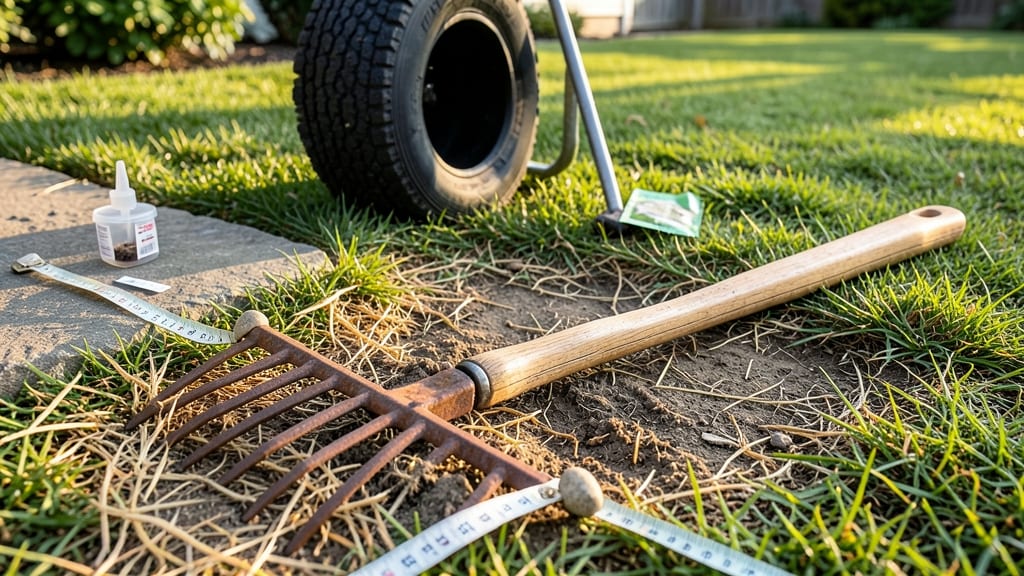
Your lawn's bare spots are screaming for attention—grass seed revival in 7 days is totally doable with the right approach. 🌱 I've turned patchy lawns into lush carpets by combining quick fixes with long-term soil care, and you can too.
The key? Stopping the damage and giving grass the perfect conditions to regrow fast.
Most bare spots come from one of three culprits: thin soil (no nutrients), traffic damage (compacted roots), or pests/disease (eating your grass alive). My first step? Pulling weeds and raking out dead patches—it’s brutal but necessary.
Then I test the soil pH (most lawns need 6.0-7.0) and add compost or starter fertilizer to feed the new seeds.
By day 3, you’ll see tiny green sprouts pushing through—that’s your reward for prep work. Use a light layer of straw (not mulch) to protect seeds from birds and drying out.
Water gently twice daily until germination, then taper to deep, infrequent watering. In just a week, those spots will look like they were always meant to be part of the lawn.
This works year-round (except winter), but spring and fall give the best results. For stubborn spots, repeat the process in 6 weeks. The secret? Healthy soil = fast regrowth. Let’s get your lawn back to its full glory—no more eyesores!
Root Causes of Lawn Thinning
Bare spots in your lawn aren’t just an eyesore—they’re often a sign that something’s disrupting your grass’s ability to thrive. Understanding the why behind these patches is the first step to fixing them.
Below, we break down the most common culprits, backed by science, so you can target the real issue and restore your lawn’s lushness.
Healthy grass needs nutrient-rich, well-aerated soil to grow strong roots. When soil becomes compacted, depleted, or waterlogged, grass struggles to establish itself—leading to thin or bare areas.
- Compaction: Heavy foot traffic, machinery, or even rain can squeeze soil particles together, reducing oxygen and water flow to roots. Grass roots suffocate, weakening the plant’s ability to absorb nutrients. - Fix: Aerate your lawn in spring or fall to relieve compaction.
A core aerator pulls small soil plugs, allowing air, water, and roots to penetrate deeper. - Nutrient Deficiency: Grass is a heavy feeder.
If your soil lacks nitrogen, phosphorus, or potassium, patches will thin out as grass struggles to grow. - Test it: Conduct a soil test (available at garden centers) to check pH and nutrient levels.
Most lawns need a pH between 6.0–7.0 for optimal growth. - Poor Drainage: Clay-heavy or low-lying areas can trap water, drowning roots and inviting fungal diseases.
Grass in waterlogged soil turns yellow or dies off. - Fix: Amend soil with compost or sand to improve drainage, or install a French drain in problem areas.
Insects and small animals can turn your lawn into a buffet—chewing roots, stems, and seeds before they get a chance to grow.
- Grubs: The larvae of beetles (like Japanese beetles or June bugs) feed on grass roots, causing patches to pull up easily or turn brown. - Spot them: Look for white, C-shaped larvae in the soil or birds pecking at your lawn. - Fix: Apply beneficial nematodes (microscopic worms) or a grub-specific insecticide in early summer. - Chinch Bugs: These tiny pests suck sap from grass blades, leading to straw-like, wilted patches.
They thrive in hot, dry conditions. - Spot them: Flip over a piece of cardboard in the affected area—if chinch bugs (black with white wings) crawl out, you’ve found your culprit. - Fix: Water deeply to flush them out, then apply neem oil or an insecticide labeled for chinch bugs. - Moles & Voles: While not insects, these burrowing mammals create tunnels and eat grass roots, leaving behind ragged, irregular bare spots. - Spot them: Look for tunnels (moles) or surface holes (voles) and chewed grass. - Fix: Use repellents (like castor oil-based sprays) or traps for voles; moles can be deterred with sonic spikes or professional removal.
Even the best-maintained lawns suffer when environmental conditions go rogue. Heat, drought, or extreme cold can weaken grass, making it vulnerable to bare patches.
- Drought Stress: Grass needs 1–1.5 inches of water per week (including rainfall).
Without enough moisture, roots shrink, and blades turn brown and crispy. - Fix: Water deeply 2–3 times per week (early morning is best) and adjust your mower height to 3–4 inches to retain moisture. - Heat & Foot Traffic: High temperatures combined with heavy use (kids playing, pets running) can smother grass, preventing new growth. - Fix: Reduce foot traffic during heatwaves and mulch clippings to retain soil moisture. - Fungal Diseases: Overwatering, poor airflow, or thick thatch create the perfect conditions for fungi like dollar spot or brown patch. - Spot them: Look for circular brown patches with a "smoky" ring or stringy mycelium (white threads) on blades. - Fix: Improve drainage, mow high, and apply fungicide if needed.
Sometimes, the problem isn’t nature—it’s us! Over- or under-maintenance can accidentally create bare spots.
- Over-Fertilizing: Too much fertilizer burns grass roots, leading to yellowing or dead patches. Burn spots appear as crispy, brown areas where fertilizer granules were concentrated. - Fix: Follow label instructions and use a slow-release fertilizer to avoid spikes in nutrients. - Improper Mowing: Cutting grass too short (scalping) weakens roots, making it susceptible to drought and pests.
Conversely, uneven mowing can leave some areas stressed. - Fix: Never remove more than 1/3 of the blade height in one mowing. Keep your mower blade sharp! - Weed & Crabgrass Invasion: Weeds compete with grass for water, nutrients, and sunlight.
Crabgrass, in particular, thrives in thin lawns and spreads quickly. - Fix: Apply pre-emergent herbicide in early spring to block crabgrass, then overseed bare areas with disease-resistant grass seed.
Not sure which cause applies to your lawn? Use this quick checklist:
- Pull up a small patch of grass—are the roots white and healthy, or brown and mushy? (Pest damage vs. disease)
- Check the soil—is it hard, waterlogged, or crumbly?
(Compaction vs. drainage) 3. Look for patterns—are bare spots random (disease/pests) or in high-traffic areas (foot damage)? 4. Test your soil—low pH or nutrient levels will show up in a lab test.
Once you identify the root cause, you can target your revival plan—whether it’s aerating, reseeding, or treating pests. The good news? Most bare spots can be fully repaired in 7–14 days with the right approach. 🚀
Quick Fixes for Patchy Grass
Now that you know the root causes behind those pesky bare spots, let’s roll up your sleeves and turn your lawn back into a lush green carpet! The good news? Most fixes are faster and easier than you think—some even work in just 7 days.
Below, we’ve matched the most common culprits with step-by-step solutions, plus pro tips to keep your grass thriving long-term.
Problem: Heavy foot traffic, pets, or machinery flattens the soil, cutting off air and water to grass roots. Fix:
- 🔪 Aerate aggressively – Rent a core aerator (or use a garden fork for small spots) to pull out 2–3-inch soil plugs. Focus on the bare areas and edges.
- 🌱 Top-dress lightly – Spread a ¼-inch layer of compost or a 50/50 mix of sand and compost over the area. This helps loosen the soil and adds nutrients.
- 💧 Water deeply – Soak the spot for 10–15 minutes to help the top-dressing settle and roots breathe.
✨ Pro Tip: If your soil stays soggy after rain, mix in perlite or coarse sand to improve drainage. For high-traffic zones, aerate twice a year (spring and fall).
Problem: Your lawn mix isn’t suited for the light conditions in your yard (e.g., sun-loving Kentucky bluegrass dying in shade). Fix:
- 🔍 Test your lawn – Walk through your yard at noon. Areas with <4 hours of sun need shade-tolerant grasses like fine fescue or creeping red fescue. >6 hours of sun? Opt for tall fescue or Bermuda grass.
- 🌱 Overseed strategically – Buy pre-mixed seed for your climate/light conditions. Scatter it thinly (follow package rates) over the bare spot, then cover with straw mulch (not hay—it can introduce weeds).
- 💧 Keep it moist – Water daily (lightly) for the first 2 weeks, then taper to 2–3 times weekly for deep soaking.
💡 Quick Hack: If reseeding isn’t an option, try a living sod roll for instant coverage. Just lay it down, trim edges, and water well.
Problem: Over-fertilizing, drought, or pests weakened your grass, leaving it sparse. Fix:
- 📊 Test your soil – Grab a DIY kit from a garden center to check pH and nutrient levels. Most bare spots need more nitrogen (for green-up) and potassium (for root strength).
- 🥗 Apply the right fertilizer –
- For new seed: Use a starter fertilizer (high in phosphorus).
- For thinning grass: Switch to a slow-release, balanced fertilizer (like 16-4-8).
- 🌡️ Water wisely – Deep water 2–3 times per week (early morning is best). Avoid light, frequent watering—it encourages shallow roots.
🔥 Emergency Boost: Mix 1 tbsp of liquid seaweed fertilizer with water and spray it on bare spots. Seaweed stimulates root growth and stress recovery.
Problem: Weeds (like crabgrass) or moss are outcompeting your grass for space. Fix:
- 🌱 Kill weeds first –
- Hand-pull small weeds (grab the root!).
- Spot-treat larger weeds with vinegar + dish soap (1 gallon vinegar + 1 tbsp soap) or a natural pre-emergent like corn gluten meal.
- 🧹 Remove moss – Scrape it off with a rake, then sprinkle lime (to raise pH) or sulfur (to lower pH) based on your soil test.
- 🌱 Plant new grass – After killing weeds/moss, overseed with dense, competitive grass like perennial ryegrass.
🎯 Prevention: Apply corn gluten meal in early spring to prevent weed seeds from germinating.
Problem: Dogs, kids, or frequent walking create bare, trampled patches. Fix:
- 🛡️ Create a barrier –
- Lay down landscape fabric under the bare spot, then cover with 1–2 inches of fresh topsoil.
- Plant clover or creeping thyme (drought-resistant and pet-friendly) as a temporary fix.
- 🌱 Reseed with tough grass – Choose buffalo grass (drought-proof) or zoysia grass (pet-resistant).
- 💧 Train traffic patterns – If possible, redirect foot traffic to pathways or use gravel or stepping stones to protect high-use areas.
💡 Pet Owner Tip: Rinse dog urine spots with water immediately to dilute salts, and train your pup to pee on gravel near the lawn’s edge.
Want to see results fast? Combine these steps for a bare-spot makeover in a week:
- Day 1: Aerate + top-dress.
- Day 2: Overseed (or lay sod).
- Day 3–7: Water lightly daily, then deep-soak every other day.
- Day 5: Apply a light layer of straw mulch to retain moisture.
By Day 7, you’ll see new green shoots—and with consistent care, those spots will disappear for good!
🚀 Ready to transform your lawn? Pick the fix that matches your problem, then grab your tools and get to work. Your lush, green yard is just 7 days away!
Frequently asked questions
Why do my bare spots keep coming back even after I reseed?
Persistent bare spots often mean the underlying issue isn't fixed. Check for compacted soil (needs aeration) or pest activity (like grubs). Without addressing these, new grass won't establish roots. Try core aeration + compost before reseeding again.
Can I use regular garden soil to fill bare spots?
No—regular garden soil is too dense and can suffocate grass roots. Use a lightweight topsoil or a 50/50 mix of topsoil and compost instead. This improves drainage and provides nutrients for new growth.
How do I know if my bare spots are from pests or disease?
Pull up a small patch of grass: healthy roots mean pests (like grubs), while mushy, discolored roots indicate disease. Look for white grubs in soil or fungal threads on blades. Treat accordingly—nematodes for pests, fungicide for disease.
Is fall or spring the best time to fix bare spots?
Both work! Spring (March-May) gives warm soil for fast germination, while fall (September-November) has cooler temps that reduce weed competition. Avoid summer heat—new grass struggles in extreme conditions.
Will my lawn look patchy if I use different grass seed types?
Yes—mixing seed types can create color/texture inconsistencies. Stick to one grass variety (like tall fescue) for uniform growth. For shade/sun mixes, use a pre-blended seed designed for your yard's conditions.