
Lawn
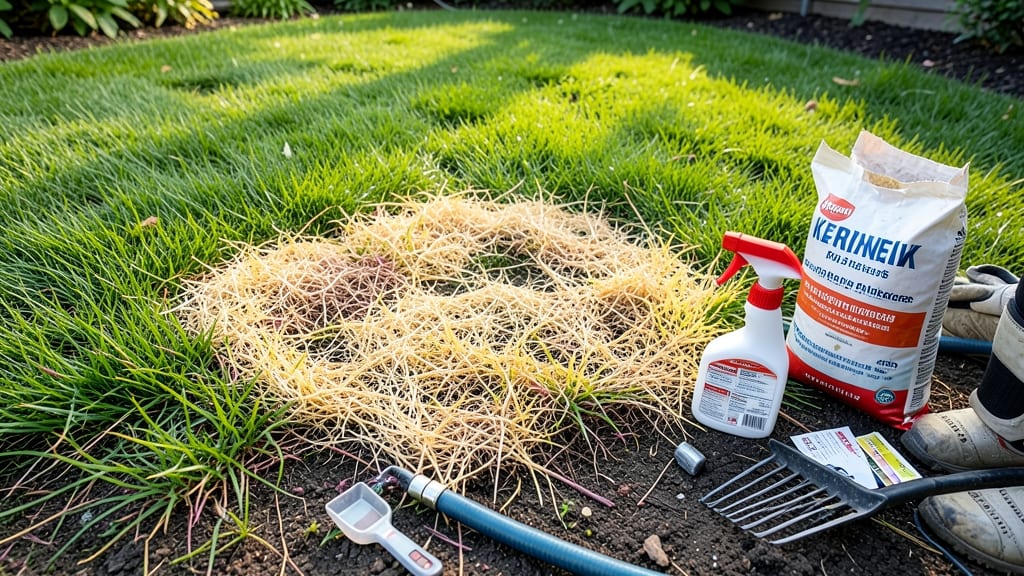
Yellow grass patches in your lawn don’t have to mean a total overhaul—sometimes it’s just a quick fix. 🌱 I’ve seen lawns go from patchy and sad to lush and green in just a few weeks with the right approach, and I’m sharing the exact steps that work.
The first step is figuring out why those patches are yellow. Is it fungal disease like brown patch or dollar spot? Or maybe it’s drought stress, compaction, or even pest damage. Most people skip this step and just throw down fertilizer, which can make things worse.
Once you know the cause, the solution is straightforward: aerate compacted soil, adjust watering habits, or apply targeted treatments like fungicides. The key is acting fast—before the patches spread or become permanent. Here’s the good news: with the right care, your lawn can bounce back faster than you think.
Let’s get those patches looking like the rest of your turf again!
Hidden Culprits Behind Dead Spots
Yellow grass patches in your lawn aren’t just a cosmetic issue—they’re often a cry for help from your turf. Understanding the root causes is the first step to restoring a lush, green lawn. Let’s break down the most common reasons these unsightly patches appear, so you can tackle them head-on.
Too much of a good thing can kill your grass. Overwatering suffocates roots by depriving them of oxygen, while poor drainage creates soggy, waterlogged soil that promotes fungal growth and root rot. Signs to watch for:
- Mushy, spongy grass that pulls up easily
- Musty odors emanating from the soil
- Patches that stay wet long after rain or watering
Why it happens: Grass needs air as much as water. When soil stays saturated, aerobic bacteria (the good kind) can’t thrive, and anaerobic bacteria take over, breaking down organic matter and releasing toxins. Over time, this weakens roots, turning vibrant green blades yellow or brown.
Actionable fix: Test your soil’s drainage by pouring water on a patch—if it pools for more than 6 hours, you’ve got poor drainage. Aerate compacted soil in fall or spring, and adjust your watering schedule to 1–1.5 inches per week, including rainfall. Early morning watering (before 10 AM) reduces evaporation and fungal risks.
On the flip side, yellow patches can signal thirsty grass. Drought stress forces grass to go into survival mode, curling leaves and turning them yellow or straw-like. Signs include:
- Crunchy, foot-dry blades
- Grass that springs back when you walk on it (like a trampoline)
- Patches that recover quickly after watering (a temporary fix)
Why it happens: Grass roots need consistent moisture to absorb nutrients. When soil dries out, roots shrink and struggle to reach water deep underground. Cool-season grasses (like Kentucky bluegrass) show stress first, followed by warm-season types (like Bermuda grass) if drought persists. Without intervention, roots weaken, and the grass dies back in patches.
Actionable fix: Water deeply 2–3 times per week (early morning) rather than daily shallow watering. Aim for 6–8 inches of soil moisture—use a screwdriver to check: if it resists after 6 inches, water more. Mulch around trees/shrubs to retain moisture, and consider drought-tolerant grass varieties if your climate is arid.
Fungal diseases thrive in warm, humid conditions and can turn your lawn into a yellow-and-brown quilt overnight. The two most common offenders are dollar spot (small, straw-colored circles) and brown patch (larger, irregular dead zones).
Why it happens: Fungi like Sclerotinia homoeocarpa (dollar spot) and Rhizoctonia solani (brown patch) spread via spores in moist, shaded, or over-fertilized lawns. They attack grass blades and crowns, cutting off water and nutrient flow. Warm nights (70–80°F) with high humidity create the perfect breeding ground.
Actionable fix:
- 🔥 Improve airflow: Thin out dense grass with a mower or rake to reduce humidity.
- 🍳 Adjust watering: Water early in the day and avoid overhead sprinklers that keep leaves wet.
- 👨🍳 Fertilize smartly: Use a low-nitrogen, high-potassium fungicide (like propiconazole) in early morning or late evening.
- 🌡️ Monitor weather: Fungal activity peaks in summer—stay vigilant during heatwaves.
Tiny invaders can wreak havoc underground or above, leaving yellow patches in their wake. The most destructive culprits are:
- Grubs: White, C-shaped larvae that chew roots (common in cool-season grasses).
- Chinch bugs: Sap-sucking insects that cause straw-like patches (especially in St. Augustine grass).
- Sod webworms: Moth larvae that skeletonize blades, turning grass yellow.
Why it happens: Pests target stressed grass (e.g., after drought or overwatering). Grubs, for example, thrive in moist, thatchy soil and can devour roots in weeks. Chinch bugs release toxins as they feed, causing rapid yellowing. Without intervention, the grass pulls up easily, revealing the pests beneath.
Actionable fix:
Pest
Signs
Solution
Grubs
Spongy lawn that lifts like a rug; moles/skunks digging
Apply beneficial nematodes or imidacloprid in late summer. Encourage birds (natural predators).
Chinch bugs
Yellow patches near sidewalks or in dry areas; bugs in soil when rolled back
Water deeply to flush them out, then treat with bifenthrin. Reduce thatch.
Sod webworms
Irregular brown patches; moths at dusk; chewed blades
Apply carbaryl or spinosad (organic option). Rake up thatch to expose eggs.
Too much of a “good” thing—like fertilizer, herbicides, or even dog urine—can scorch your lawn. Yellow patches often appear where chemicals concentrate or grass is overfed.
Why it happens: Excessive nitrogen (especially in synthetic fertilizers) burns roots and leaves, while herbicides (like 2,4-D) can drift or be overapplied, killing grass in targeted areas. Even dog urine, high in urea, creates a localized burn when concentrated.
Actionable fix:
- ✨ Test soil first: Use a DIY kit to check pH and nutrient levels before fertilizing.
- 🎯 Apply evenly: Use a spreaders for granular fertilizer; avoid piling near edges.
- 💡 Dilute pet areas: Train dogs to urinate in one spot and rinse the area with water.
- 🔪 Flush chemicals: If you suspect herbicide drift, water the area deeply for 3 days to dilute residue.
Yellow patches are rarely just “bad luck”—they’re a symptom of an underlying issue. By identifying the cause (and ruling out others), you can target the fix and bring your lawn back to life. Next up: How to diagnose which culprit is plaguing your turf! 🚀
Revive Your Lawn with These Fixes
Yellowing grass patches can feel like a mystery, but the right approach turns them into a thing of the past. Below, we’ve mapped out practical, step-by-step solutions tailored to the most common causes—plus prevention tips to keep your lawn lush and even. Grab your gloves, and let’s get to work!
Signs: Soggy soil, mushrooms, or grass that feels spongy underfoot.
How to Fix It:
- 🔪 Test Your Soil Dig a 6-inch hole in the affected area. If water pools or drains slowly (more than 2 hours), drainage is the issue. If the soil stays damp but not soggy, you may be overwatering.
- 🌱 Improve Drainage - Aerate the lawn with a core aerator to create channels for water escape.
Rent one or hire a pro for large areas. - Add organic matter: Mix in 1–2 inches of compost or sand (for sandy soils) to loosen compacted soil. - Grade the yard: If water pools in low spots, slope the soil slightly (1/4 inch per foot) away from the house or structures.
- 💧 Adjust Watering Habits
- Water deeply but less frequently—aim for 1–1.5 inches per week (including rain).
- Water early in the morning (4–8 AM) to reduce evaporation and fungal risks.
- Avoid light, daily watering, which encourages shallow roots and disease.
💡 Pro Tip: If mushrooms pop up, rake them out and improve airflow by thinning dense grass or mowing higher (3–4 inches).
Signs: Circular yellow/brown patches, slimy grass blades, or fungal growth (like web-like threads).
How to Fix It:
- 🧪 Confirm the Fungus Gently tug a patch of grass. If it lifts easily (like a rug), it’s likely fungal. Check for:
- Brown patch: Large, irregular circles (common in hot, humid weather).
- Dollar spot: Small, straw-colored patches with dark edges.
- 🌡️ Adjust Conditions to Fight Fungus
- Water less frequently but more deeply to dry out the lawn faster.
- Mow high (3–4 inches) to improve airflow and shade the soil.
- Aerate to reduce thatch buildup (thatch > 0.5 inches is a fungus magnet).
- 💊 Apply Fungicide (If Needed)
- Preventative: Use a fungicide with azoxystrobin or propiconazole (like BioAdvanced Fungus Control) every 4–6 weeks during peak fungus season (spring/fall).
- Treatment: For severe cases, apply a systemic fungicide (e.g., Scotts DiseaseEx) and reapply in 10–14 days.
✨ Prevention Hack: Overseed with fungus-resistant grass types like tall fescue or Kentucky bluegrass.
Signs: Uniform yellowing, slow growth, or grass that pulls up easily.
How to Fix It:
- 📊 Soil Test First Grab a DIY soil test kit (like LawnCare Pro) or send a sample to your local extension office. Check for:
- Low nitrogen (N): Leads to pale, weak grass.
- Imbalanced pH: Below 6.0 or above 7.5 locks out nutrients.
- 💪 Fertilize Smartly
- Quick fix: Spread a slow-release fertilizer (like Scotts Turf Builder) with a high nitrogen content (25–30%) in early spring or fall.
- For severe deficiency: Use a liquid iron supplement (like Southern Ag Liquid Iron) for instant greening (works in 3–7 days).
- 🌱 Boost Soil Health
- Top-dress with compost (1/4 inch layer) to improve organic matter.
- Overseed thin areas with high-quality grass seed (match your existing type).
- Aerate + fertilize in one step for deep nutrient penetration.
🎯 Targeted Tip: If your lawn is sandy, use a starter fertilizer with extra phosphorus (P) to help roots establish.
Signs: Grass grows slowly, feels hard underfoot, or turns yellow in shaded spots.
How to Fix It:
- 🌳 Fix Shade Issues
- Thin trees/shrubs to let light reach the lawn (aim for 4–6 hours of sunlight daily).
- Choose shade-tolerant grass like fine fescue or zoysia if trimming isn’t an option.
- 🔨 Break Up Compaction
- Rent a core aerator and rent it over the affected area (or use a manual spike aerator for small spots).
- Top-dress with a mix of sand and compost (50/50) to improve soil structure.
- 🌱 Overseed for Thick Growth
- Spread shade-tolerant seed (like creeping red fescue) in late summer/fall.
- Keep the area moist but not soggy until new grass sprouts (4–6 weeks).
💡 Quick Fix: For small compacted spots, use a garden fork to poke holes (12 inches apart) and fill with compost.
Once your lawn is back in shape, lock in the greenery with these habits:
- Mow high (3–4 inches) to shade roots and retain moisture.
- Water deeply but infrequently (1–1.5 inches/week).
- Aerate annually (spring or fall) to prevent compaction.
- Fertilize seasonally (spring + fall) and test soil every 2–3 years.
- Dethatch if the layer exceeds 0.5 inches (use a rake or dethatching machine).
Remember: Patience is key—some fixes (like soil improvement) take 3–6 months to show full results. But with the right steps, those yellow patches will be a distant memory! 🌿💚
Frequently asked questions about yellow lawn patches
Why do some yellow patches recover after watering while others don't?
Temporary recovery after watering usually means drought stress—the grass is just reviving temporarily. Permanent yellow patches that stay dry and brittle indicate dead roots from overwatering, compaction, or disease. Test by pulling up a small section: if it resists, roots are healthy; if it lifts easily, the grass is dead.
Can I just overseed yellow patches instead of fixing the problem?
Overseeding can temporarily hide the issue, but it won't fix the root cause. If you don't address drainage, fungus, or nutrient deficiencies, new grass will just die too. Start with a soil test and targeted fixes—then overseed thin areas for a long-term solution.
How do I tell if my yellow patches are from grubs vs. fungus?
Grubs create spongy, lifting turf (like a rug) while fungus causes circular, straw-colored patches with possible webbing. Roll back a small section: if you see white grubs, treat with nematodes; if you spot thread-like fungal threads, use a fungicide.
Will aerating help if my lawn is already too compacted?
Yes! Aeration creates channels that break up compacted soil, but for severe cases, you may need to top-dress with compost or rent a deep tiller first. Do this in spring or fall when grass is actively growing, then water deeply to help roots establish.
How soon can I see results after treating yellow patches?
Quick fixes like water adjustments or iron supplements show results in 3–7 days. Fungicides take 7–14 days, while soil improvements (compost, aeration) may take 2–3 months for full recovery. Patience is key—don't overwater or fertilize too soon!