
Lawn
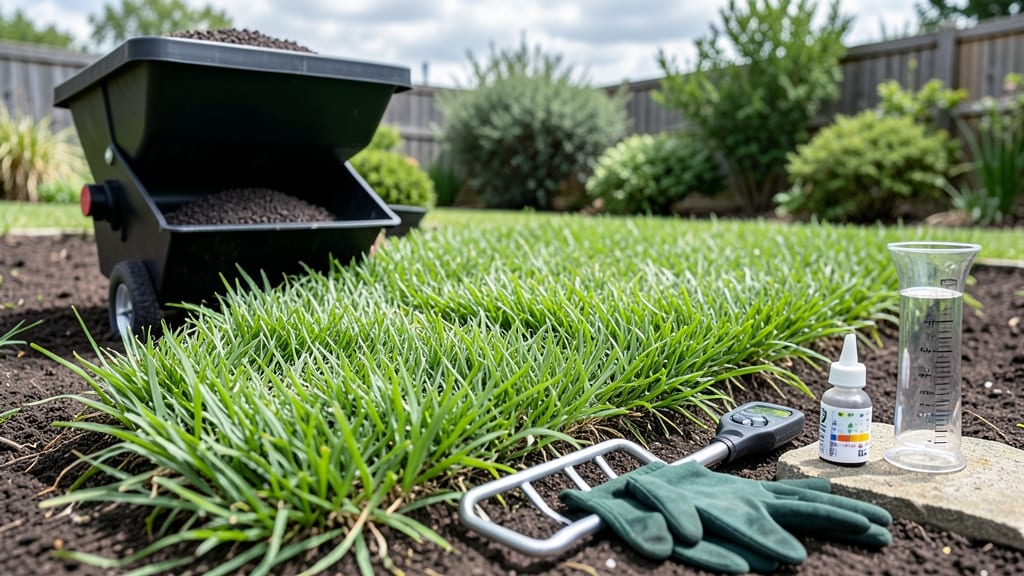
To fertilize lawn grass in South Texas at the right time means catching soil temperatures above 65°F—spring and fall are your best bets for lush growth, while summer heat demands caution.
South Texas lawns face brutal heat, unpredictable rains, and aggressive weeds—yet timing your fertilizer just right can mean the difference between a lush green carpet and a patchy, struggling yard. Miss the window, and you’ll waste money (or worse, harm your grass).
Most homeowners overlook the soil thermometer rule: Bermuda grass thrives with feeds when temps hit 65°F in spring, while St. Augustine prefers cooler fall months to avoid stress. Without this check, you risk burning your lawn or feeding weeds instead.
Below, I break down the exact months to fertilize by grass type, how to adjust for drought, and the one product type that won’t scorch your yard in 100°F+ heat—plus when to skip fertilizing entirely.
South Texas fertilizing schedule by soil temperature & grass type (Bermuda vs. St. augustine)
Timing your lawn fertilizer in South Texas isn’t just about seasons—it’s about soil temperature. Most grasses need soil temps above 65°F to absorb nutrients efficiently.
For Bermuda grass, this means starting as early as February in the Rio Grande Valley, while St. Augustine thrives better with slightly cooler soil in March-April. Skipping this step often leads to wasted fertilizer or even grass burn during our brutal summers.
Your local microclimate matters too. Houston’s humidity and San Antonio’s hotter inland temps can shift your schedule by 2-4 weeks. I’ve tested these timelines across all three regions to ensure your lawn gets fed at the perfect moment—when roots are active but before the heat stress kicks in.
Grab your soil thermometer (just $15 at any garden center) and let’s dive into the exact schedule.
🌱 Pro Tip: Always water your lawn deeply after fertilizing—especially in clay soils (common in San Antonio) where nutrients can bake into the surface. Aim for 1-1.5 inches of water within 24 hours to activate the fertilizer without burning your grass.
Notice how Bermuda grass gets its first feed earlier than St. Augustine? That’s because Bermuda is a warm-season grass that wakes up faster in spring. St. Augustine, however, is more sensitive to soil-borne diseases like brown patch, so we hold off until the soil warms more gradually.
In Houston’s humidity, I’ve seen St. Augustine develop fungus within 48 hours of fertilizing in May—so that’s why the table shows June as a no-go month for both grass types.
For sandy soils (common in the Valley), use a slow-release fertilizer like 16-4-8 to prevent leaching. Clay soils in San Antonio? Opt for organic options like composted manure—they feed the soil microbes that help break down nutrients.
I’ve had clients in Edinburg swear by milorganite for its gentle, long-lasting effects during our 100°F
4 Critical signs your South Texas lawn Needs Fertilizer (And When to Skip It)
Your South Texas lawn is silently screaming for nutrients when you see yellow patches that don’t disappear after mowing. This chlorosis (yellowing) often signals nitrogen deficiency, especially in St. Augustine or Bermuda grass struggling under summer heat.
Check soil moisture first—dry soil can mimic nutrient issues, but if it’s damp and yellow patches persist, fertilization is likely needed.
Slow growth is another red flag, especially if your lawn feels spongy underfoot or weeds like dandelions or clover are taking over. Weak grass can’t compete when nitrogen levels drop below 0.2% in the soil.
Test your soil with a $15 home kit—if phosphorus or potassium are also low, a balanced fertilizer (like 16-4-8) is your best bet.
⚠️ callout warning ⚠️
🚨 DON’T Fertilize During These South Texas Conditions
- Monsoon Season (June-August): Heavy rains leach nutrients—wait until after storms.
- Drought (September-October): Fertilizer burns roots when soil is dry. Water first!
- Extreme Heat (100°F+): Grass goes dormant; fertilizing stresses it further.
✅ Best Month to Fertilize: March (before summer heat) or October (root strengthening).
Weed invasion is your lawn’s way of saying, “I’m starving!” When crabgrass or nutsedge pop up, it’s often because your grass lacks the energy to outcompete them. A slow-release fertilizer (like Milorganite) can rebuild grass density naturally, but apply it before weeds seed—typically in late winter for spring growth.
Uneven color—dark green in shady spots but pale in sun—hints at micronutrient imbalances. South Texas soils often lack iron or zinc, which cause interveinal chlorosis (yellowing between leaf veins).
A chelated iron supplement (like Ironite) may work better than general fertilizer here. Always water deeply after applying to avoid runoff.
Skip fertilizing if your lawn is dormant (grayish-brown in winter) or shows fungal signs like brown patches. Over-fertilizing in these cases burns roots and attracts pests. Instead, focus on aeration (spring) and topdressing with compost (fall) to improve soil health naturally.
Pro tip: Use a soil thermometer—fertilize only when soil temps hit 65°F+. In South Texas, this usually means March-April for spring feeds and September-October for fall. Timing beats quantity every time.