
Lawn
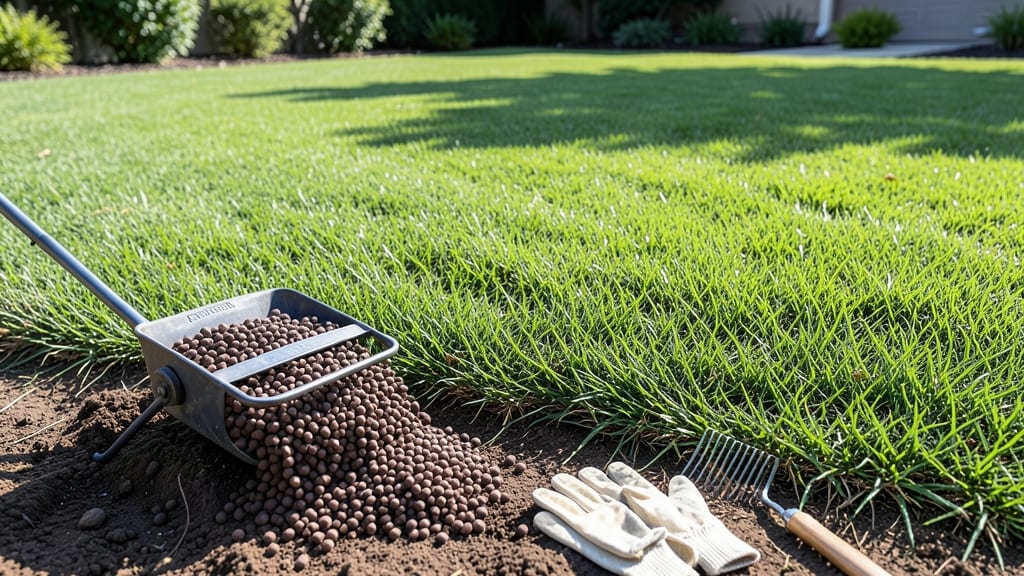
Fertilizing your lawn in Texas at the right time can mean the difference between a vibrant, healthy yard and one that struggles under the heat.
Texas homeowners know a lush, green lawn is a point of pride—but timing your lawn fertilization wrong can waste money and harm your grass. With Texas’ diverse climate zones, knowing exactly when to fertilize is the difference between a thriving yard and a struggling one.
Spring and fall are the best times to feed your lawn, but the exact months depend on whether you're in North or South Texas. In cooler North Texas, early spring (February-March) kickstarts growth, while South Texas’ warmer winters shift the schedule slightly later.
Below, I’ll break down the optimal months for each zone, the right fertilizer types for Texas grasses, and how to avoid overdoing it during peak heat—so you can keep your lawn looking its best year-round.
Texas lawn fertilization schedule by climate zone (North vs. south)
Texas’ climate zones create a challenge for lawn care—what works in North Texas (cooler winters) won’t always suit Central or South Texas (warmer winters). The key difference? Frost dates and growing season length. North Texas lawns get 4-6 weeks of dormancy, while South Texas grass grows nearly year-round.
This means your fertilization schedule must adapt to avoid burning grass in summer heat or missing growth spurts in milder winters.
For both zones, the best times to fertilize are early spring (to wake up dormant grass) and fall (to strengthen roots before winter). However, the exact months and fertilizer types differ.
North Texas homeowners should focus on winterizer blends in late fall, while South Texas lawns benefit from slow-release summer blends to handle heat stress. Let’s break it down by month for each zone.
| Month | North Texas (Cooler Winters) | Central/South Texas (Warmer Winters) | Fertilizer Type | Soil Prep Tip |
|---|---|---|---|---|
| January | Winterizer (low N) | Light feed (if grass is green) | Slow-release winter blend | Test soil pH (aim for 6.0-7.0) |
| February | Pre-emergent (if needed) | Spring starter (high N) | Quick-release starter | Aerate compacted soil |
| March | Growth booster (30-0-4) | Growth booster (34-0-4) | Slow-release summer blend | Top-dress with compost |
| April | Maintenance feed | Maintenance feed | Balanced NPK (24-4-8) | Mulch with grass clippings |
| May-July | SKIP (dormancy risk) | Light feed (if no drought) | Drought-tolerant blend | Irrigate deeply at dawn |
| August | SKIP (heat stress) | SKIP (unless Bermuda) | N/A | Reduce watering slightly |
| September | Root strengthener (10-0-20) | Root strengthener (12-0-12) | Slow-release fall blend | Overseed if needed |
| October | Winterizer (low N) | Light winter feed | Winterizer blend | Aerate before fertilizing |
| November-December | SKIP (dormancy) | SKIP (unless Bermuda) | N/A | Mulch for insulation |
In North Texas, the January winterizer is critical to protect grass from cold snaps, while September’s root strengthener prepares lawns for winter dormancy. Skip fertilizing in summer months (May-July)—the heat can burn grass, and dormant grass won’t absorb nutrients.
Instead, focus on deep watering and mowing high (3-4 inches) to retain moisture.
For Central and South Texas, the schedule shifts slightly. Since grass grows nearly year-round, you can apply a light feed in January if your lawn stays green. However, avoid fertilizing during peak summer (June-August) unless you have Bermuda grass, which thrives in heat.
For other grasses, prioritize slow-release fertilizers to prevent nutrient runoff during heavy rains.
Both zones should aerate soil in spring and fall—this opens up compacted soil, helping fertilizers penetrate deeper. In North Texas, clay-heavy soils common in the region benefit from gypsum amendments before fertilizing.
South Texas lawns, often sandy, need organic matter like compost to retain moisture and nutrients. Always water fertilizers in deeply (1 inch) to activate them without burning grass.
Pro tip: Use a soil test kit
Signs your Texas lawn needs fertilizer (and when to avoid it)
Your Texas lawn communicates its needs through visible signs—yellow patches, slow growth, or thin spots that refuse to fill in.
These aren’t just cosmetic issues; they’re cries for nutrients your grass can’t access on its own. Bermuda grass, St. Augustine, and other Texas favorites thrive when soil pH and nutrient levels are balanced, but drought stress or poor soil can deplete them quickly.
Before reaching for that fertilizer spreader, though, take a closer look. Brown tips might signal underwatering, while mushy grass could mean overwatering or fungal issues.
Only when you’ve ruled out these problems should you consider fertilization. Texas heat and clay-heavy soils (common in the Hill Country) further complicate the picture—what looks like a nutrient deficiency might actually be compaction stress.
⚠️ CALLOUT-WARNING: WHEN NOT TO FERTILIZE YOUR TEXAS LAWN
- Extreme heat (above 90°F): Burns grass roots
- Drought conditions: Forces grass to work harder
- After overseeding: Wait 6-8 weeks for new grass to establish
- Winter months (Dec-Feb in North Texas): Grass is dormant
- Early spring (Feb-Mar): Kickstart growth
- Fall (Sept-Oct): Strengthen roots before winter
One of the most common mistakes I see in Texas yards is fertilizing during summer’s peak heat. When temperatures climb above 90°F, grass roots struggle to absorb nutrients—what you apply just burns the blades instead.
Even slow-release fertilizers can backfire if the soil is too dry. Test your soil first (pH of 6.0-7.0 is ideal for most Texas grasses) to avoid wasting money on nutrients your lawn can’t use.
Pay attention to growth patterns too. If your lawn recovers slowly after drought or weeds take over in bare patches, it’s a red flag. Weedy areas often indicate low nitrogen—a primary nutrient for leafy growth.
However, don’t overcorrect: Excess nitrogen leads to soft, weak grass that’s prone to pests. A balanced 30-0-4 NPK ratio (common in Texas lawn fertilizers) is usually sufficient for most grasses.
For St. Augustine grass, watch for purple or red tinges—a classic sign of phosphorus deficiency, despite its low NPK needs.
Meanwhile, Bermuda grass may show stunted growth if potassium levels are too low. Zoysia grass, a drought-tolerant favorite, often needs less frequent feeding but benefits from micronutrients like iron to maintain its deep green color. Always match your fertilizer to your grass type.
If you’re unsure whether your lawn needs fertilizer, perform a simple soil test (available at local Texas A&M AgriLife Extension offices). Organic options like composted manure or fish emulsion can be gentler than synthetic blends, especially for sandy soils (common in East Texas).
Remember: Less is more—Texas lawns often need lighter, more frequent applications than northern states, not heavy doses.