
Fertilization
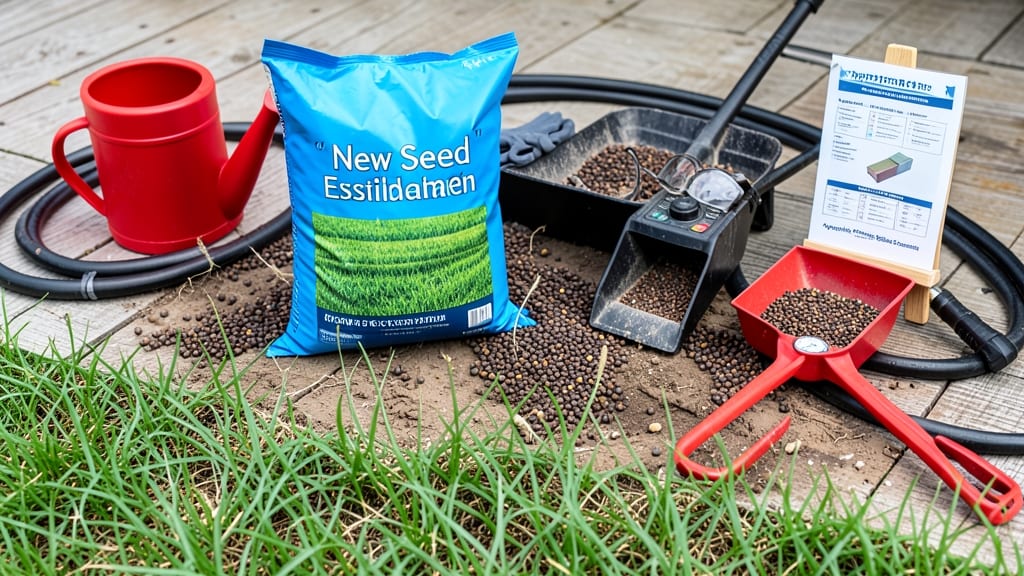
Fertilizing your lawn after overseeding at 6 weeks is the secret to strong root growth and a lush, healthy lawn.
You’ve just put in the time and effort to overseed your lawn—thin patches filled, new seeds sown—but now you’re wondering when to fertilize without risking stunted growth. The truth is, rushing it can burn tender seedlings or send nutrients into the soil where they won’t help new grass take hold.
Science-backed timing ensures your investment pays off with deep roots and vibrant growth.
Most gardeners make the mistake of fertilizing too soon, thinking the grass needs an immediate boost. But young grass prioritizes root development over top growth, and premature feeding can actually weaken those roots.
The 6-week window aligns with when seedlings have established enough to absorb nutrients without harm, making it the ideal time for a slow-release fertilizer.
In this guide, I’ll break down the exact steps to fertilize after overseeding, including soil prep, the right fertilizer types, and how climate zones can shift your timing. Whether you’re in a cool-season or warm-season area, you’ll know exactly when to feed for the strongest lawn possible.
Why waiting 6 weeks after overseeding maximizes root growth
When you overseed your lawn, you're giving those tiny seeds a chance to take root and fill in bare spots—but rushing to fertilize too soon can actually stunt their growth. The 6-week rule isn't arbitrary; it's based on how grass seedlings develop.
During the first few weeks, new shoots focus all their energy on growing roots and leaves, not on absorbing nitrogen-heavy fertilizers. Adding fertilizer too early can burn delicate seedlings or force them to grow top-heavy, making them weak and prone to disease.
Think of it like a baby learning to walk: you wouldn't rush them with heavy weights. Instead, you let them build strength naturally. The same principle applies to your lawn. Those first 4-6 weeks are all about establishing a strong root system that can support the grass as it matures.
Premature fertilization can disrupt this process, leading to patchy, weak growth that recovers slowly—or not at all.
Here’s the science: Grass seeds need time to break dormancy, germinate, and develop a fibrous root network. By the time they’re 6 weeks old, they’ve typically grown roots that extend 2-4 inches deep, which is when they can handle a light fertilizer application without stress.
This timing aligns with when seedlings are ready to transition from seedling to established grass, making them resilient enough to absorb nutrients effectively.
But what if you wait too long? Fertilizing after 8 weeks can also backfire. By this point, your new grass may have already shifted into rapid leaf growth, and a sudden nutrient boost can lead to excessive top growth at the expense of root development.
The sweet spot is that 4-8 week window, where roots are strong enough to support new growth but haven’t yet outpaced their ability to absorb nutrients.
Premature fertilization (before 4 weeks) risks:
- Seedling burn from high salt content in fertilizers
- Weak root systems due to unbalanced growth
- Increased disease susceptibility from stressed plants
- Top-heavy growth with shallow roots
- Wasted nutrients as grass prioritizes leaf over root growth
- Uneven establishment between new and old grass
At 6 weeks, your new grass has typically developed a fibrous root system that can handle nutrient absorption without stress. This is when you should apply a slow-release fertilizer to support continued growth.
The roots are now deep enough to anchor the grass and access moisture, while the shoots are strong enough to utilize nitrogen for leaf development. This balance is what turns your patchy lawn into a dense, resilient carpet over time.
Let me share a personal example: Last fall, I overseeded my cool-season Kentucky Bluegrass in early October. I resisted the urge to fertilize right away, even though I was eager to see results. At the 6-week mark, the new grass was already 2 inches tall
Step-by-step fertilizer application guide for overseeded lawns
Now that you’ve waited the crucial 6-week period after overseeding, your new grass seedlings have developed strong roots and are ready for their first fertilizer boost. But choosing the wrong type or applying it incorrectly can still harm your lawn.
The secret lies in selecting a low-nitrogen, slow-release fertilizer that won’t burn tender seedlings while providing steady nutrients for growth.
Before grabbing any bag of fertilizer, test your soil’s pH and nutrient levels using a home test kit or send a sample to your local extension office. Most overseeded lawns thrive in a pH range of 6.0–7.0, and adjusting lime or sulfur now prevents future nutrient deficiencies.
If your soil is already balanced, you’re ready to proceed with a high-phosphorus, low-nitrogen blend to support root development.
One of the biggest mistakes homeowners make is rushing to fertilize too soon. Applying nitrogen-rich fertilizer before the 6-week mark can cause seedlings to grow too quickly above ground while neglecting root development, leaving them weak and prone to disease.
Conversely, waiting too long—beyond 8 weeks—misses the critical window for establishing a dense lawn.
For cool-season grasses like fescue or ryegrass, a second light application 8–10 weeks after overseeding can further strengthen roots before winter. Warm-season grasses like Bermuda or Zoysia, however, should skip fall fertilization entirely and wait until spring.
Always follow the label instructions for your specific grass type to avoid overdoing it.
After fertilizing, keep your lawn consistently moist but not soggy. Use a rain gauge or tuna can to measure water depth—aim for 1–1.5 inches per week, including rainfall. This ensures nutrients reach the roots without washing away or causing runoff.
With proper timing and care, your overseeded lawn will reward you with a lush, resilient carpet by next season.