
Lawn
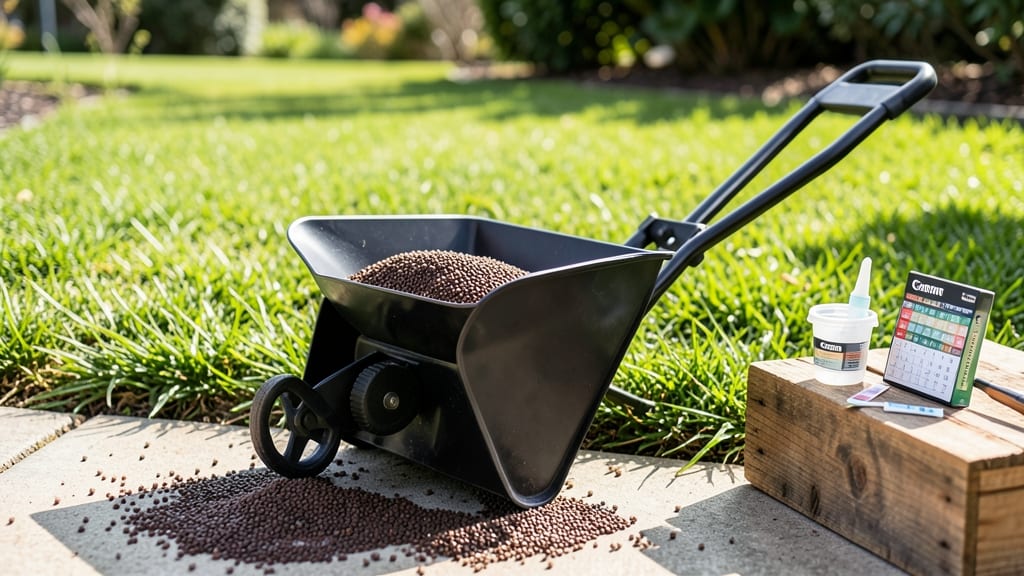
Fertilizing your San Antonio lawn at the right time saves money, prevents damage, and keeps your 🌱 thriving through brutal summers and mild winters.
Picture this: you’ve just spent $100 on fertilizer, spread it carefully, and two weeks later, your grass looks like it’s wilting faster than a cactus in a sauna.
That’s what happens when you fertilize at the wrong time—too early, and you feed weeds; too late, and your grass burns under the sun.
San Antonio’s climate demands precision. Cool-season grasses like Bermuda need feeding when soil temps hit 55–65°F in spring, while warm-season varieties like St. Augustine thrive when temps drop to 70–78°F in fall.
Miss these windows, and you’re either wasting fertilizer or risking brown patches that even the best irrigation can’t fix.
In this guide, I’ll break down the exact months to fertilize, how to read your soil’s temperature cues, and which fertilizers work best for San Antonio’s clay-heavy soil—so you can skip the guesswork and grow a lawn that’s the envy of the neighborhood.
San Antonio’s ideal soil temperature ranges for fertilizing (spring & fall)
Timing your lawn fertilization in San Antonio isn’t just about the calendar—it’s all about soil temperature. Too early or too late, and you’ll either waste money or shock your grass.
The key is understanding when your Bermuda, St. Augustine, or Zoysia grasses are primed for growth based on soil warmth, not air temperature. For most San Antonio lawns, this means waiting for 55-65°F in spring and 70-78°F in fall.
These ranges ensure nutrients are absorbed efficiently, not burned off by heat or wasted in dormancy.
Why does soil temperature matter so much? Grass roots are sensitive to cold shock or heat stress. When soil is too cool, nutrients sit idle; when it’s too hot, they can leach away or even damage roots.
For example, St. Augustine thrives in warmer soil (65-75°F), while Zoysia can handle slightly cooler ranges (55-68°F). Bermuda grass, the heat-loving powerhouse, needs soil temps above 70°F to activate its growth engines. Ignore these triggers, and you’ll end up with uneven growth or weed explosions.
Testing your soil temperature is easier than you think. Grab a soil thermometer (available at any garden center for under $10) and check 2-3 inches deep—that’s where the roots are active. Do this in the early morning when temps are stable.
If your soil is below 55°F in spring or above 80°F in summer, hold off on fertilizing. Patience here saves you from brown patches and fungal outbreaks later.
Spring fertilization in San Antonio typically kicks off in March or early April, but don’t rush—wait until your soil hits 55°F for St. Augustine or 60°F for Zoysia. For Bermuda grass, aim for 70°F+ soil temps, which usually aligns with late April to May.
This timing helps your grass outcompete weeds early in the season. I once fertilized my St. Augustine in February when soil was still at 50°F, and my lawn spent the next month looking like a burn victim instead of a lush carpet.
Fall is your second critical window, but the stakes are different. Here, you’re not just feeding growth—you’re strengthening roots for winter. Shoot for 70-78°F soil temps, which in San Antonio usually means September to early October. This gives your grass time to <
Step-by-step fertilization schedule for San Antonio’s climate zones
San Antonio’s heat islands and clay-heavy soil demand a tailored fertilization plan to keep your lawn thriving. Unlike northern climates, our warm-season grasses like Bermuda and Zoysia need precise timing to avoid stress from summer heat.
The key? Fertilize when soil temps are ideal—55-65°F in spring and 70-78°F in fall—and adjust for your yard’s microclimate. Let’s break it down month by month.
First, test your soil’s pH and nutrient levels—San Antonio’s clay soil often lacks organic matter. If your pH is below 6.0, amend with lime before fertilizing. For organic options, compost or fish emulsion work well, while synthetic fertilizers like 30-0-4 provide fast nitrogen for quick growth.
Always water deeply before and after applying fertilizer to prevent burn.
🌱 San Antonio Fertilization Timeline
- 📅 February-March: Apply first spring feed (high nitrogen) when soil temps hit 55°F. Use 1 lb per 100 sqft for cool-season grasses like Ryegrass.
- 🌡️ April-May: Switch to slow-release fertilizer (e.g., 24-0-12) as temps rise. Avoid fertilizing if soil temps exceed 80°F—grass goes dormant.
- ☀️ June-August: Skip heavy feeding. Use pre-emergent herbicide (late April) to block weeds, not fertilizer. Lightly top-dress with 0.5 lb per 100 sqft only if grass shows stress.
- 🍂 September-October: Second feed (high potassium) when soil temps drop to 70-78°F. Focus on root strengthening for winter resilience.
- ❄️ November-January: No fertilization. Grass is dormant; focus on aeration and overseeding (if needed) in late fall.
💡 Pro Tip: Adjust for heat islands—shadier spots can fertilize 2 weeks later than sunbaked areas.
For organic fertilization, mix composted manure or worm castings into the top 2 inches of soil in early spring and fall. Synthetic fertilizers like Milorganite or Ironite are great for quick greening but require more frequent applications.
Always follow the 3-1-1 rule: 3 parts nitrogen, 1 part phosphorus, and 1 part potassium for balanced growth.
San Antonio’s clay soil can compact easily, reducing nutrient uptake. Before fertilizing, aerate your lawn in late spring or early fall to improve air and water flow. Use a core aerator to pull out small soil plugs, then top-dress with sand or compost to break up clay.
This step alone can double fertilizer effectiveness in heavy soils.
Watch for signs of over-fertilization, like yellowing grass or white crust on the soil surface. If this happens, flush the lawn with 1-1.5 inches of water to leach excess nutrients. For drought-prone areas, reduce fertilizer by 50% and focus on deep watering instead.
Remember, a healthy lawn in San Antonio isn’t just about feeding—it’s about timing, soil prep, and smart watering.
By following this schedule, your Bermuda, St. Augustine, or Zoysia grass will stay lush and resilient year-round, even through our brutal summers. Start with a soil test, adjust for your yard’s conditions, and you’ll see visible results in 4-6 weeks—no wasted money or stressed grass! 🌿