
Fertilization
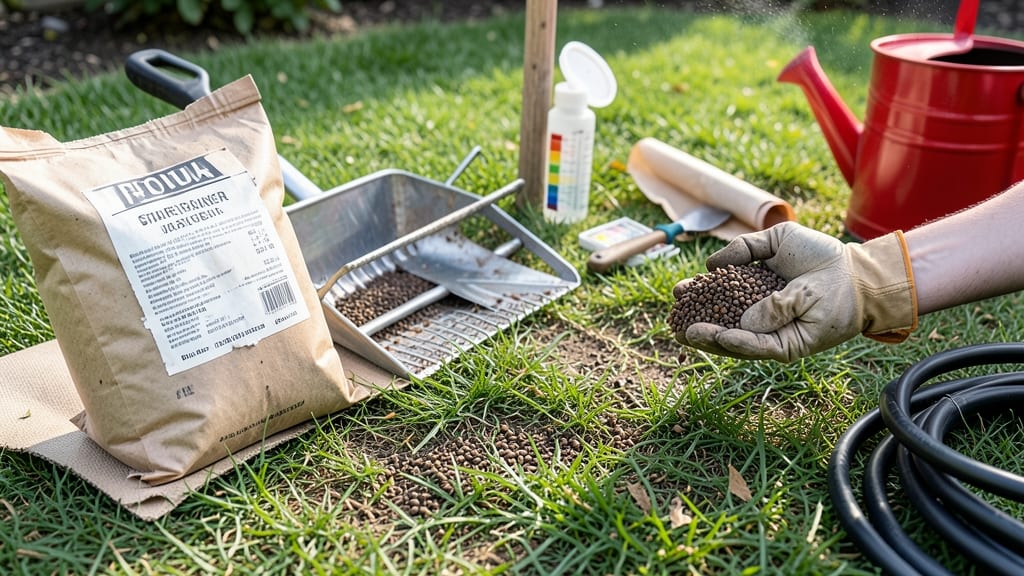
Fertilizing lawn grass after seeding too soon can burn delicate seedlings and stunt their growth, so timing is everything—and the right window is 6 to 8 weeks after planting.
New grass seed needs time to establish strong roots before fertilizing—or you risk burning delicate seedlings and stunting growth. Timing is everything, and getting it wrong can mean the difference between a lush lawn and patchy disappointment.
Most homeowners rush to fertilize too early, thinking more nutrients mean faster results. But young grass roots are fragile, and fertilizer salts can actually stress seedlings before they’re ready. Waiting lets the roots grow deep enough to handle nutrients without shock.
In this guide, I’ll break down the biology behind the wait, how to spot when your lawn is ready, and the best fertilizers to use once it is. No more guesswork—just stronger grass from day one.
The science behind fertilizing new grass seed: why 6-8 weeks is critical
When you spread fresh grass seed, it’s tempting to rush and fertilize right away. But those tiny seedlings need time to develop strong roots before they can handle nutrients. Fertilizer—especially nitrogen-heavy formulas—can burn delicate seedlings or overwhelm their growth, leading to stunted development or even death.
The 6-8 week waiting period isn’t arbitrary; it’s rooted in how grass seedlings grow.
In the first 2-3 weeks, seeds germinate and send down primary roots just 1-2 inches deep. These roots are fragile and focused on anchoring the plant, not absorbing heavy nutrients. Adding fertilizer too soon can disrupt this critical phase, causing seedlings to bolt upward instead of growing roots.
Think of it like a baby learning to walk—you wouldn’t hand them a backpack full of books before they’ve taken their first steps!
By week 4-6, the root system begins branching out, creating a network of secondary roots that can better absorb nutrients. This is when the grass transitions from relying on stored seed energy to actively seeking food from the soil.
Waiting until this stage ensures the seedlings have the energy reserves and root structure to safely metabolize fertilizer without stress.
Here’s what happens if you fertilize too early: the high salt content in fertilizers draws moisture out of the seedlings’ cells, causing osmotic shock. This leads to yellowing leaves, wilting, or even seedling death.
Even if the grass survives, premature fertilization can delay establishment by up to 4-6 weeks, leaving your lawn vulnerable to weeds and erosion.
| Root Development Stage | Seedling Age | Fertilizer Risk | Safe Fertilization Window |
|---|---|---|---|
| Primary root growth | Weeks 1-3 | High (burn risk) | Avoid fertilizer |
| Secondary root branching | Weeks 4-6 | Moderate (use starter fertilizer only) | Light organic top-dressing |
| Established root network | Weeks 6-8+ | Low (ready for full fertilizer) | Standard lawn fertilizer |
| Mature grass transition | 8+ weeks | None (focus on mowing) | Begin regular feeding schedule |
The 6-8 week window aligns with when most grass varieties—like tall fescue, Kentucky bluegrass, or perennial ryegrass—have developed enough root mass to handle nutrients.
For example, cool-season grasses (planted in early fall or spring) typically hit this milestone around late May to early June, while warm-season grasses (like Bermuda or Zoysia) reach it in late July to August.
Timing also depends on your climate and seed type. In cooler regions, where growth slows in early spring, you might extend the wait to 8-10 weeks to avoid fertilizing before the last frost.
Conversely, in hot, dry climates, seedlings may mature faster, and you could fertilize as early as 5 weeks—but only with a low-nitrogen starter fertilizer.
If you’re eager to help your lawn grow, focus on watering deeply (1-1.5 inches per week) and keeping the soil consistently moist during the first 6 weeks. This encourages root growth without the risks of fertilization.
Once the grass reaches 3-4 inches tall and has a dense, uniform appearance, it’s a clear sign the roots are ready for nutrients.
Waiting too long—beyond 8-10 weeks—can also backfire. By this point, weeds may have taken over, or the grass might become nitrogen-deficient, leading to pale, weak growth.
The key is balancing patience with proactive care, like lightly raking to improve seed-to-soil contact or top-dressing with compost to boost organic matter without overloading the system.
Pro tip: If you’re unsure whether your lawn is ready, perform the "finger test". Gently pull up a small section of grass. If you see a 1-2 inch root ball with multiple fine roots, it’s time to fertilize.
If the roots are sparse or the grass pulls up easily, wait another week or two.
Remember, the goal isn’t just a green lawn—it’s a resilient lawn. Rushing fertilization can create short-term color but long-term weakness. By understanding the biological stages of grass growth, you’ll set your lawn up for years of healthy establishment—not just a quick fix.
Signs your new lawn is ready for fertilizer (and what to do if it’s not)
After seeding your lawn, patience is key—rushing to fertilize can burn tender seedlings and set back growth. Instead, watch for these visual cues that your grass is ready for its first feeding. The right timing ensures nutrients strengthen roots rather than shock them.
First, check your grass’s height and density. If seedlings are 2-3 inches tall and uniformly thick, they’ve likely developed enough roots to handle fertilizer. Thin or patchy areas may need more time or adjustment before applying nutrients.
Next, perform the finger test for soil moisture. Gently press your finger into the soil—if it feels damp but not soggy about an inch deep, your lawn is hydrated enough for fertilization. Overly dry soil can lock out nutrients, while soggy soil risks root suffocation.
Color is another critical clue. Healthy new grass should be a deep green hue, not pale or yellowish. Pale grass signals nutrient deficiency but also weak root systems—wait until it darkens before fertilizing. If your grass looks stressed or wilted, hold off until it recovers.
✅ Fertilizer-Ready Checklist
- Grass Height: 2-3 inches tall
- Density: Uniform, no bare spots
- Color: Deep green, not pale
- Soil Moisture: Damp 1 inch deep
- Root Depth: 1-2 inches (pull gently to test)
⚠️ Wait if: Grass is thin, pale, or under 1 inch—roots aren’t ready for nutrients.
Climate plays a role too. In cooler regions, aim for fertilization 6-8 weeks after seeding (around late spring). For warmer climates, extend the wait to 8-10 weeks to avoid stressing seedlings during heatwaves. Always fertilize in the early morning to reduce nutrient loss from evaporation.
If your lawn still isn’t ready, focus on light feeding with compost or a low-nitrogen starter fertilizer to support growth without overloading delicate roots. Avoid high-nitrogen products—they can burn seedlings and create brown patches.
Once you’ve confirmed readiness, use a slow-release fertilizer with half the recommended rate for new lawns. Water thoroughly after application to activate nutrients and prevent soil burn. With the right timing, your lawn will thrive for years to come! 🌱