
Lawn
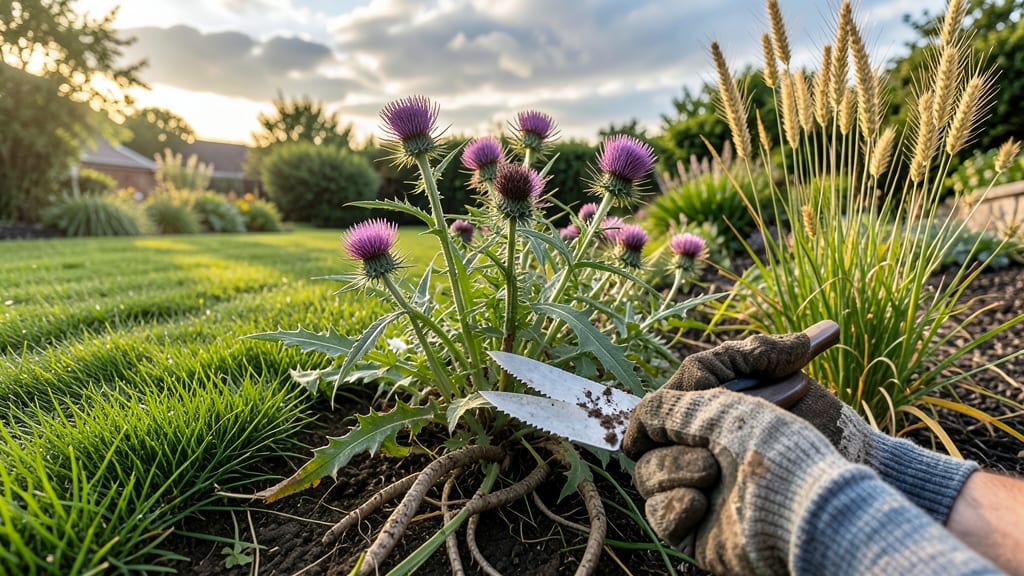
Spiky weeds in your lawn aren’t just unsightly—they’re stealing nutrients and space from your grass. 🌱 I’ve wrestled with crabgrass, nutsedge, and thistles in my own yard, and the right removal method makes all the difference.
These weeds spread fast, and if you ignore them, they’ll turn your lawn into a prickly mess before you know it.
The problem starts with poor soil health or thin grass, giving weeds the perfect opportunity to take over. Too much sunlight, irregular watering, or compacted soil only makes it worse.
But here’s the good news: with the right approach—whether manual, chemical, or cultural—you can reclaim your lawn in just a few weeks.
By the time you’re done, your turf will be thick, green, and free of those spiky invaders. The key is consistency: proper mowing height, regular aeration, and choosing the right suppression method for your specific weeds.
Prevention is easier than cleanup, and once you’ve got the upper hand, maintaining it gets simpler each year.
This method works for any lawn size, from small suburban patches to larger backyard spaces. Let’s get started on that spotless turf you’ve been dreaming of—without the itchy aftermath.
Root Causes of Lawn Invaders
Spiky weeds don’t just pop up out of nowhere—they thrive because of specific conditions in your lawn. Understanding why these unwelcome guests appear is the first step to preventing them. Below, we break down the science behind their persistence and how your lawn’s environment might be inviting them in.
Weeds like crabgrass, nutsedge, and chickweed love nutrient-poor, compacted, or imbalanced soil. Here’s why:
- Lack of organic matter: Healthy lawns have rich, loamy soil packed with compost, microbes, and earthworms. When soil is depleted (often from over-tilling or synthetic fertilizers without organic amendments), weeds fill the void. They’re opportunistic—growing where grass struggles.
- Compacted soil = easy entry: Heavy foot traffic, machinery, or clay-heavy soil compresses the top layer, reducing oxygen and water flow. Grass roots suffocate, while weed seeds thrive in these low-competition zones. Test your soil: Press your finger 3 inches deep—if it feels like concrete, compaction is the culprit.
- pH imbalances: Most lawn grasses prefer a pH of 6.0–7.0. If your soil is too acidic (<5.5) or alkaline (>7.5), grass weakens, and weeds like dandelions (which tolerate pH 5.0–8.5) take over. 💡 Pro tip: A simple $20 home soil test kit reveals pH and nutrient gaps.
Actionable fix: Aerate compacted areas in spring/fall, top-dress with 2–3 inches of compost, and apply a slow-release organic fertilizer (like bone meal or alfalfa meal) to rebuild soil health.
Weeds exploit bare spots like a fast-food drive-thru at lunch rush. Here’s how grass thinning happens:
- Overwatering or underwatering:
- Too much water: Soggy soil suffocates grass roots (leading to fungal diseases like brown patch) and encourages sedges (weeds that love moisture).
- Too little water: Drought-stressed grass turns brown and dies, leaving gaps for crabgrass and chickweed.
- Improper mowing: Cutting grass too short (below 2.5 inches) weakens roots, while mowing at the same height every time creates a "mowing line" where weeds sneak in.
- Disease or pest damage: Grubs, chinch bugs, or fungal infections (like dollar spot) kill grass in patches, creating prime real estate for weeds.
Actionable fix:
- Mow at 3–4 inches and never remove more than ⅓ of the blade height at once.
- Water deeply 2–3 times per week (early morning) to encourage deep roots.
- Reseed bare spots with shade-tolerant grass (like fine fescue) or a clover mix for natural weed suppression.
Weeds are master survivors—some love sun, others thrive in shade. Your lawn’s light conditions might be unintentionally helping them:
- Full-sun weeds (e.g., crabgrass, spurge): These weeds outcompete grass in hot, sunny areas because they germinate early (as soon as soil hits 55°F) and grow 2–3x faster than grass in summer heat.
- Shade-loving weeds (e.g., chickweed, moss): Trees or buildings block sunlight, weakening grass and creating a cool, damp microclimate—perfect for broadleaf weeds that grass can’t outgrow.
Actionable fix:
- Prevent sun-lovers: Apply a pre-emergent herbicide (like corn gluten meal) in early spring before weed seeds sprout.
- Combat shade: Overseed with shade-tolerant grass (e.g., creeping red fescue) or add mulch to retain moisture.
Weeds don’t just sprout—they hitchhike into your yard via:
- Wind and water: Dandelion and chickweed seeds travel miles on breezes, while nutsedge spreads via underground tubers carried in irrigation runoff.
- Animals and humans: Birds drop seeds, mowers spread them, and even your shoes can transport weed fragments from neighboring yards.
- Contaminated soil/manure: Topsoil from garden centers or compost with weed seeds can introduce problems like bindweed (which grows 40+ feet long!).
Actionable fix:
- Install a 1–2 inch deep edging barrier (like landscape fabric) around lawn borders to block seed drift.
- Clean mower blades and shoes after use in infested areas.
- Use sterilized mulch (heat-treated or certified weed-free).
Key takeaway: Spiky weeds aren’t random—they’re responding to gaps in your lawn’s defenses. By addressing soil health, grass density, light conditions, and seed sources, you’ll starve them out before they spike up again. 🚫🌱
Eradicate Unwanted Invaders Naturally
Dealing with spiky weeds in your lawn can feel like a never-ending battle, but with the right strategies, you can reclaim your turf—without harsh chemicals. Below, we’ve mapped out practical, cause-specific solutions to tackle the root of the problem (literally!).
Each fix is paired with prevention tips to keep your lawn lush and weed-free long-term.
If your lawn is thin or patchy, weeds thrive in the gaps. The fix? Strengthen your grass so it outcompetes intruders.
🔥 Step 1: Test and Amend the Soil
Weeds often take hold when soil lacks essential nutrients. Grab a DIY soil test kit (or send a sample to your local extension office) to check pH and nutrient levels.
- Low pH (acidic soil)? Spread lime in early fall or spring.
- Compacted soil? Aerate with a core aerator to let roots breathe.
- Nutrient-deficient? Apply a balanced fertilizer (like 10-10-10) in early spring.
👨🍳 Step 2: Overseed Bare Spots
Fill thin areas with high-quality grass seed matched to your climate. For fast results, use a starter fertilizer to jumpstart growth.
- Best grasses for weed resistance:
- Tall fescue (shade-tolerant)
- Perennial ryegrass (fast-growing)
- Buffalo grass (drought-resistant)
- Pro tip: Water lightly twice daily for the first 2 weeks to keep seeds moist. 💡
🌡️ Prevention Tip:
Mow your lawn 3–4 inches tall—taller grass shades out weeds and develops deeper roots. 🎯
For stubborn spiky weeds like nutsedge, crabgrass, or dandelions, pulling them by hand (or with the right tools) can be surprisingly effective.
🔪 Step 1: Pull at the Right Time
Weeds are easiest to remove when the soil is soft and moist (after rain or watering). Use these tools:
- Hand-pulling: Grasp the weed as close to the base as possible and tug firmly. A weed puller (like a dandelion digger) helps loosen deep roots.
- For broadleaf weeds (dandelions, clover): A hula hoe or weeding knife slices roots cleanly.
- For grassy weeds (nutsedge, crabgrass): A manual sod cutter or digging fork breaks up rhizomes.
⏰ Step 2: Timing Is Everything
Remove weeds before they seed (late spring to early summer for most weeds). Check the calendars for your region—some weeds (like chickweed) spread in winter.
💡 Prevention Tip:
Apply a pre-emergent herbicide (like corn gluten meal) in early spring to block weed seeds from germinating. ✨ (Note: This won’t kill existing weeds but stops new ones!)
If weeds are widespread or return yearly, targeted herbicides can be a last resort. But use them strategically to avoid harming your lawn.
🍳 Step 1: Choose the Right Herbicide
Not all herbicides work on all weeds. Match the product to the weed type:
| Weed Type | Recommended Herbicide | Best Time to Apply |
|---|---|---|
| Broadleaf weeds (dandelions, clover) | 2,4-D or triclopyr (selective herbicides) | Late spring or early fall (active growth) |
| Grassy weeds (nutsedge, crabgrass) | Pre-emergent (pendimethalin) or post-emergent (glyphosate for spot treatment) | Pre-emergent: Early spring; Post-emergent: When weeds are young |
| All weeds (reset lawn) | Glyphosate (non-selective) | After removing existing grass (for full renovation) |
🚫 Step 2: Apply Safely
Always:
- Read the label—some herbicides require mixing with water.
- Use a shielded sprayer to avoid drift onto sidewalks or plants.
- Avoid applying if rain is forecast within 24–48 hours.
🌱 Prevention Tip:
After treating weeds, reseal your lawn with a thin layer of compost or topsoil to prevent regrowth. 🌡️
The best way to stop weeds? Make your lawn so thick and healthy that weeds can’t take hold. Here’s how:
- Mow high (3–4 inches). Taller grass blocks sunlight, which weeds need to grow.
- Water deeply but infrequently. Aim for 1–1.5 inches per week to encourage deep roots.
- Dethatch annually. A layer of thatch (over ½ inch) smothers grass and invites weeds.
- Feed regularly. Apply slow-release fertilizer in spring and fall.
- Consider natural mulches. A thin layer of grass clippings or straw suppresses weeds between grass rows.
With consistency, your lawn will become a weed-resistant fortress—no more spiky surprises! 🏰
Frequently asked questions
What are the most common spiky weeds I might find in my lawn?
You're likely dealing with crabgrass, nutsedge, thistles, or chickweed. Crabgrass has jagged edges and spreads quickly in summer, while nutsedge produces sharp, triangular stems and grows from underground tubers. Thistles have spiky leaves and flower stalks, while chickweed has small, star-shaped leaves with tiny hairs.
Can I safely pull weeds by hand without damaging my lawn?
Yes, but timing matters! Pull weeds when soil is moist (after rain or watering) and grasp as close to the base as possible. Use a weed puller tool for deep-rooted weeds like nutsedge. Avoid pulling when grass is dry—this can uproot healthy grass too. For large patches, consider spot-treating with vinegar (50% water) for organic control.
How often should I apply pre-emergent herbicide to prevent spiky weeds?
Apply pre-emergent herbicide once per year, typically in early spring (before soil reaches 55°F) to block weed seeds from germinating. For persistent weeds, reapply in late summer. Organic options like corn gluten meal work similarly but require 20 lbs per 1,000 sq ft and should be spread before weeds appear.
Will mowing taller grass really help prevent weeds?
Mowing grass at 3–4 inches shades out weeds by blocking sunlight and encourages deeper grass roots that compete with weeds. Taller grass also retains moisture better, reducing stress that makes lawns vulnerable to weed invasion. Just avoid cutting more than ⅓ of the blade height at once to prevent shock.
What's the fastest way to kill existing spiky weeds without chemicals?
For immediate results, use a vinegar-based spray (1 gallon white vinegar + 1 cup dish soap + 1 cup salt) on small patches. For larger areas, smother weeds with cardboard or thick mulch for 4–6 weeks to block sunlight. Manual removal with a hula hoe or digging fork works well for stubborn weeds like nutsedge.