
Lawn
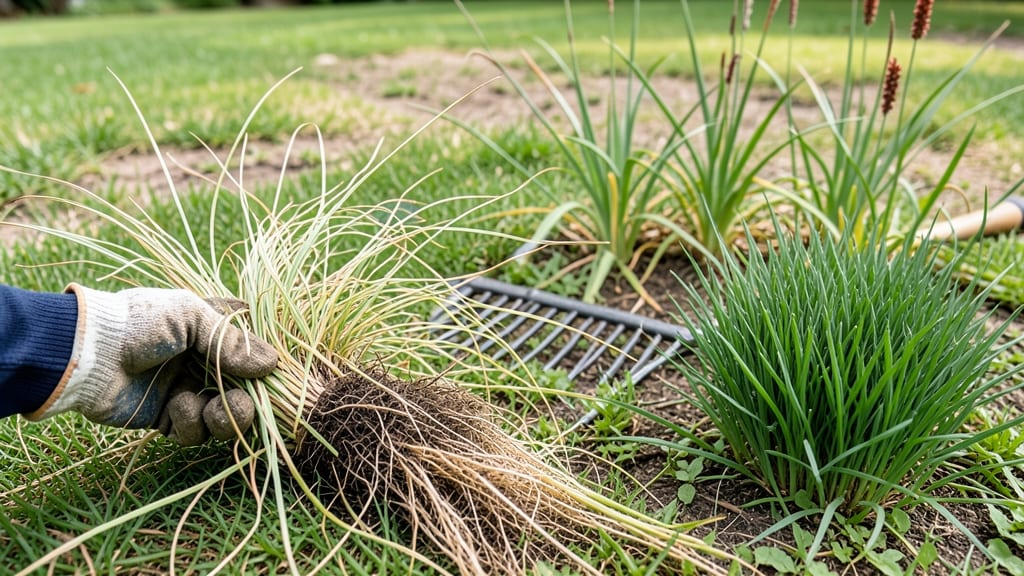
Your lawn’s long stringy grass in lawn isn’t just ugly—it’s outcompeting your turf for water and food. 🌱 I’ve wrestled with wiregrass and nutgrass for years, and the key to victory starts with proper identification and a targeted attack plan.
Most homeowners mistake it for regular grass, but these invaders spread aggressively through underground runners. The result? Patchy, weak lawns that never look their best. My yard went from 50% bare spots to lush green in just two growing seasons after I learned the right approach.
You’ll tackle it with organic smothering, spot treatments, and cultural fixes that keep it from creeping back. The secret? A combination of pre-emergent barriers, proper mowing height, and soil health—no harsh chemicals required unless you’re dealing with a severe infestation.
Let’s get rid of this sneaky weed once and for all—your lawn’s health depends on it.
The Hidden Triggers Behind Grass Growth
That unsightly long, stringy grass creeping across your lawn isn’t just an aesthetic nuisance—it’s often a symptom of deeper issues lurking beneath the surface. Understanding why it happens is the first step to reclaiming a lush, even lawn.
Let’s break down the science behind those pesky, tangled strands and uncover the real culprits.
Too much of a good thing can backfire when it comes to lawn care. Excessive nitrogen—the primary nutrient in most fertilizers—can trigger rapid, uneven growth.
While nitrogen fuels green blades, an overabundance causes grass to stretch vertically rather than spread horizontally, leading to those stringy, weak stalks that flop over.
Even worse? Imbalanced nutrients (like too little phosphorus or potassium) disrupt root development. Without strong roots, grass blades become taller, thinner, and more prone to bending under wind or foot traffic. Think of it like a skyscraper with a weak foundation—it’ll sway and stretch instead of standing tall.
Pro Tip: 💡 Test your soil before fertilizing! A simple DIY soil test kit (or a lab analysis) reveals exactly what your lawn needs. If nitrogen levels are sky-high, reduce applications and focus on a balanced 3-part fertilizer (e.g., 10-10-10).
Watering is a double-edged sword. Inconsistent moisture—whether from drought stress or overwatering—can send your grass into survival mode, producing long, spindly growth to reach for hydration.
- Underwatering: Grass blades stretch upward to access moisture deeper in the soil, resulting in tall, weak stems that lack structural integrity.
- Overwatering: While it seems counterintuitive, soggy soil deprives roots of oxygen, forcing grass to grow quickly and erratically to escape the waterlogged zone.
- Uneven watering: Spots with more moisture (like near sprinkler heads or low-lying areas) grow faster, creating a patchwork of tall, stringy grass.
Fix It: 🌡️ Aim for 1–1.5 inches of water per week (including rain), delivered in deep, infrequent sessions (e.g., 2–3 times per week). Early morning watering (4–8 AM) minimizes evaporation and fungal risks. If your lawn has thatch buildup, aerate to improve water penetration.
Your mower might be accidentally encouraging that stringy growth. Here’s how:
- Cutting too short: When you scalp your lawn (removing more than ⅓ of the blade height), grass plants go into stress mode, producing long, weak shoots to recover quickly.
- Inconsistent mowing height: Switching between tall and short cuts confuses the grass, leading to uneven, stretched-out regrowth.
- Skipping mowing entirely: Grass enters its reproductive phase, sending up seed stalks (those stringy, floppy stems) to spread.
Actionable Fix: ⏰ Set your mower to the highest recommended height for your grass type (e.g., 3–4 inches for Kentucky bluegrass, 2–3 inches for Bermuda). Never remove more than ⅓ of the blade at once, and mow regularly (every 5–7 days in growing season) to maintain even growth.
Grass is a sun-lover, and when it’s shaded for too long, it starts playing tricks to survive. Trees, buildings, or even overgrown grass itself can block sunlight, causing:
- Elongated stems: Grass stretches toward any available light, creating weak, stringy blades that flop over.
- Thinner blades: Limited energy from photosynthesis leads to underdeveloped, fragile grass.
- Weed takeover: Shady spots often attract broadleaf weeds with stringy growth (like creeping Charlie), which outcompete your lawn.
Solutions: 🌳 If shade is permanent, choose shade-tolerant grasses (e.g., fine fescue or zoysia). For temporary shade (like new tree saplings), thin the canopy or use reflective mulch near the trunk to redirect light. In extreme cases, consider removing the shade source if it’s non-essential.
Each of these factors—nutrient overload, watering blunders, mowing missteps, and shade stress—can independently or collectively trigger that unruly, stringy grass. The good news? Once you identify the root cause, you can correct it with targeted fixes and restore a lawn that’s short, dense, and proud.
Fixing Stringy Grass Messes
Now that you know why your lawn looks like a tangled mess of stringy grass, it’s time to tackle the problem head-on. The good news? With the right approach, you can restore a lush, healthy lawn—without breaking the bank or your back.
Below, we’ll break down practical solutions tailored to the root causes of your grassy woes, from overwatering to poor soil health. Plus, we’ll share prevention tips to keep your lawn looking sharp for years to come.
If your grass is growing long and stringy due to excess moisture, the first step is to adjust your watering habits and improve drainage.
💦 Step 1: Check Your Watering Schedule
- Water deeply but less frequently—aim for 1–1.5 inches per week, including rainfall.
Use a rain gauge or tuna can to measure. - Water early in the morning (before 10 AM) to reduce evaporation and fungal risks. - Avoid daily light watering, which encourages shallow roots and weak growth.
🏗️ Step 2: Improve Soil Drainage
If your lawn sits in a soggy puddle after rain, it’s time to boost drainage:
- Aerate compacted soil with a core aerator (rent one if needed) to let water penetrate deeper.
- Add organic matter like compost or peat moss to sandy soil to help retain moisture without suffocating roots.
- Consider a French drain or sloped grading if water pools in low spots.
✂️ Step 3: Mow Higher and Sharper
- Raise your mower blade to 3–4 inches—taller grass shades soil, reducing moisture loss and weed growth.
- Keep blades sharp to avoid tearing grass, which stresses it further.
Stringy, weak grass often signals a lack of key nutrients. A quick soil test (available at garden centers) can pinpoint deficiencies, but here’s a general fix:
📊 Step 1: Test Your Soil
- Grab a soil test kit (or send a sample to your local extension office).
- Look for low nitrogen (N), phosphorus (P), or potassium (K)—these are the holy trinity for grass health.
💪 Step 2: Fertilize Smartly
- For nitrogen deficiency (yellowing, weak growth):
- Apply a slow-release nitrogen fertilizer (like 24-0-4) in early spring and fall.
- Use composted manure or grass clippings as a natural nitrogen source.
- For phosphorus deficiency (purple stems, slow growth):
- Add bone meal or a balanced fertilizer (like 10-10-10) in early spring.
- For potassium deficiency (weak roots, disease susceptibility):
- Use wood ash or a potassium-rich fertilizer (like 0-0-50) in late summer.
🌿 Step 3: Overseed for Thickness
- Thin or bare spots? Overseed with a high-quality grass seed (like Kentucky Bluegrass or Fescue) in early fall.
- Use a spreader for even coverage and lightly rake to ensure seed-soil contact.
If crabgrass, clover, or grubs are stealing nutrients from your grass, it’s time for a targeted offense.
🔪 Step 1: Pull or Spot-Treat Weeds
- Hand-pull weeds (like dandelions) when soil is moist.
- Use a vinegar spray (1 gallon vinegar + 1 oz dish soap) for organic weed control.
- Apply a pre-emergent herbicide (like corn gluten meal) in early spring to block weed seeds.
🐜 Step 2: Combat Grubs and Insects
- Check for grubs by digging a small section of lawn—if you see white, C-shaped larvae, treat with beneficial nematodes or milky spore powder.
- For armyworms or chinch bugs, use neem oil or an insecticidal soap for organic control.
Once your lawn is back on track, lock in those gains with these easy habits:
💡 Pro Tip 1: Mow Like a Pro
- Never remove more than ⅓ of the grass blade in one mowing—this stresses the plant.
- Alternate mowing patterns to prevent soil compaction.
🌡️ Pro Tip 2: Monitor Moisture Levels
- Step on your lawn—if footprints stay visible for more than a few seconds, it’s time to water (or fix drainage).
- Use a moisture meter for high-tech tracking.
✨ Pro Tip 3: Feed Seasonally
- Spring: Focus on nitrogen for green-up.
- Fall: Prioritize potassium for root strength before winter.
- Avoid fertilizing in extreme heat—it burns grass.
🎯 Pro Tip 4: Aerate Annually
- Spring or fall aeration keeps soil loose and roots breathing.
- Top-dress with compost after aerating for extra nutrients.
With consistent care, you should notice:
- 1–2 weeks: Less stringy, weaker growth as you adjust watering.
- 3–4 weeks: Thicker, greener grass after fertilizing and overseeding.
- 6–8 weeks: A fully revived lawn if pests/weeds were the main issue.
Remember: Patience is key—lawns don’t transform overnight, but with these steps, you’ll be well on your way to a lush, string-free carpet of green! 🌿💚
Frequently asked questions
Is long stringy grass the same as nutgrass or wiregrass?
Not always! While nutgrass (also called nutsedge) and wiregrass often appear stringy, they have key differences. Nutgrass has three-sided stems and grows in clumps, while wiregrass is smooth, wiry, and spreads via underground runners. Test by pulling: nutgrass resists easily, while wiregrass leaves behind fibrous roots. True grass (like Bermuda) can also grow stringy if stressed.
Will mowing higher actually stop stringy growth?
Setting your mower to 3-4 inches forces grass to grow wider rather than tall. This strengthens roots and shades out weeds. The key is consistency—never remove more than ⅓ of the blade at once. For shade-tolerant grasses like fine fescue, you can go even taller (4-5 inches) to prevent stringiness.
How do I know if my stringy grass is a weed or just stressed grass?
Check the roots and growth pattern:
- Weeds (like nutgrass) have fibrous or creeping roots and spread aggressively.
- Stressed grass has shallow roots and grows uniformly tall when overwatered or fertilized. Dig up a small patch—if you find multiple plant types, you’ve got weeds. If it’s all one type, it’s likely your lawn grass reacting to poor care.
Can I use vinegar to kill stringy grass without harming my lawn?
Vinegar works for spot treatments but requires precision. Mix 1 gallon white vinegar + 1 oz dish soap and apply only to stringy grass (not your desired lawn). For large areas, use a dropper or sponge to avoid overspray. Warning: Vinegar kills all plants it touches—test on a small patch first and avoid windy days.
How long until my lawn stops growing stringy after fixing the problem?
Results vary by cause:
- Watering/drainage fixes: Notice improvement in 1-2 weeks.
- Fertilization/overseeding: Thicker growth in 3-4 weeks.
- Weed removal: Full recovery takes 6-8 weeks as new grass fills gaps. Consistency is key—stick with your new routine for at least 2 growing seasons to see permanent change.