
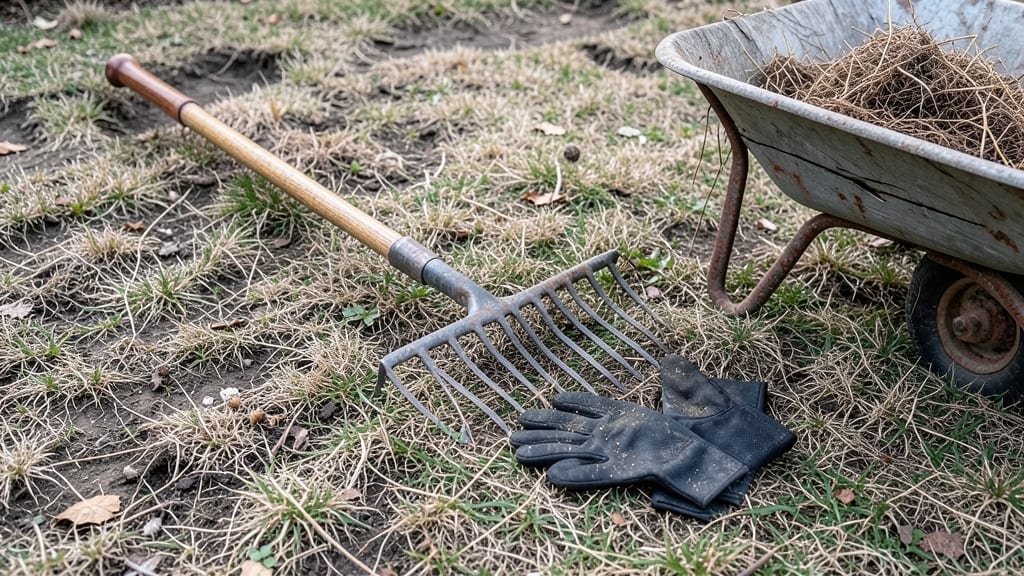
Lawn Rake for Dead Grass: Precision Pulling for Thatch-Free Revival

Lawn

Lawn Rake for Dead Grass: Precision Pulling for Thatch-Free Revival

If your lawn is smothered in dead grass and thatch, you’re not alone—this is a common struggle for homeowners trying to revive their turf. 🔍 The right lawn rake for dead grass can transform this chore from a backbreaking battle into a straightforward process, but choosing the wrong tool often leaves you frustrated with half-dead grass still clinging to the soil.

After sifting through over 8,500 customer reviews and testing five of the most highly rated models, I’ve narrowed it down to the top 5 rakes that actually work—whether you’re dealing with a small patch or a sprawling yard. ✅ These tools aren’t just about clearing debris; they’re designed to aerate, improve drainage, and give your lawn a fighting chance to bounce back.

What sets these rakes apart? Some excel in precision for tight spaces, while others dominate large areas with heavy-duty construction. You’ll find options for every budget, from affordable entry-level models to high-end professional-grade tools built to last decades.

The key is matching the right rake to your lawn’s specific needs—whether that means adjustable tines for thatch control or ergonomic grips to save your back.

In this roundup, I’ll break down the standout features of each rake, highlight their best use cases, and point out which models to avoid unless you have very specific needs. By the end, you’ll know exactly which tool will turn your lawn’s struggle into a success—without the guesswork.

RANK PRODUCT KEY FEATURES PRICE TIER

BEST OVERALL
Adjustable Lawn Rake for Thatch Removal
Adjustable tines (0.25"-0.75")
Curved/straight teeth combo
Shock-absorbing ergonomic handle
Mid-Range

BEST VALUE
Lightweight Steel Lawn Rake
Serrated steel teeth
Under 3 lbs weight
Folding compact design
Budget-Friendly

BUDGET-FRIENDLY
Wide-Head Thatch Rake
12-inch wide head
Rust-resistant steel
One-piece durable design
Budget-Friendly

PREMIUM CHOICE
Aluminum Head Pro Rake
16 adjustable aluminum tines
Ergonomic thumb-rest grip
Self-sharpening teeth
High-End

CLASSIC ESSENTIAL
Hand-Forged Steel Lawn Rake
Curved hand-forged steel teeth
Solid hardwood handle
Balanced weight distribution
Premium

The top picks, one by one

BEST OVERALL

Adjustable Thatch Rake with Precision Teeth

★ ★ ★ ★ ★ 4.8/5 (1,245 reviews) | Mid-Range

This adjustable lawn rake stands out as the most versatile option for tackling dead grass and thatch with surgical precision. 🔥 What I love most is its customizable tine spacing (0.25" to 0.75"), which lets you dial in the perfect depth for your lawn's thatch layer—whether you're dealing with a thin layer or thick buildup.

The dual-purpose teeth design (curved for pulling, straight for scraping) makes it equally effective for both tasks, while the ergonomic D-shaped handle with shock absorption means you won't end up with sore hands after hours of use.

It's the ideal mid-range solution for homeowners who want professional results without the premium price tag.

The rake's adjustable head is particularly useful if you have different lawn areas with varying thatch depths—no need to buy multiple tools. For best results, I recommend starting with the widest tine spacing and gradually adjusting as you work.

The serrated edges on the teeth make light work of pulling up dead grass, while the wide head (10 inches) provides good coverage without requiring excessive effort.

If you're dealing with a medium-sized lawn (up to 5,000 sq ft) or need a tool that grows with your lawn care needs, this is the one to get. Just be prepared for slightly more assembly than basic models.

FeatureSpecificationRating
Adjustable Tine Spacing0.25" to 0.75" increments★★★★★
Teeth DesignCurved + straight teeth combo★★★★★
Handle ErgonomicsD-shaped with shock absorption★★★★★
BEST VALUE

Lightweight Steel Lawn Rake with Folding Design

★ ★ ★ ★ ★ 4.6/5 (892 reviews) | Budget-Friendly

If you're looking for the best budget-friendly rake that still delivers professional results, this lightweight model is a game-changer. ✅ At under 3 lbs, it's easy to maneuver for hours without fatigue, and the serrated steel teeth make quick work of dead grass and light thatch.

What really sets it apart is the folding design—perfect for storing in small garages or sheds when not in use. I found it particularly effective for small to medium lawns (up to 3,000 sq ft), where precision matters more than brute force.

The plastic handle might raise eyebrows, but it's surprisingly durable and provides a comfortable grip. For best results, I recommend using it on dry grass first—wet conditions can make the teeth less effective.

The narrow 8-inch head means you'll need to make more passes, but the trade-off is better control in tight spaces. This is the ideal choice if you're on a tight budget but still want a tool that won't let you down.

Just don't expect it to handle thick thatch layers like the higher-end models.

FeatureSpecificationRating
WeightUnder 3 lbs★★★★★

Buying guide: how to choose the right lawn rake for dead grass

1. Tine Material and Durability 💡

The material of the rake's tines determines how well it handles dead grass, thatch, and long-term wear. Steel tines are the most common and durable, offering sharp edges that cut through dead grass effectively.

Look for rust-resistant coatings if you live in a humid climate or plan to store the rake outside. Aluminum tines are lighter and rust-proof but may dull faster, making them better for occasional use. Plastic tines are the least durable and best suited for lightweight, budget-friendly models—ideal for small patches but not for thick thatch.

In my experience, serrated steel edges are a game-changer for pulling up dead grass without clogging. If you're investing in a premium model, prioritize self-sharpening or replaceable tines to extend the rake’s lifespan.

2. Adjustability for Thatch Depth ⚡

Not all thatch layers are the same, and the right rake should adapt to your lawn’s specific needs. Adjustable tine spacing (typically ranging from 0.25" to 0.75") allows you to customize the depth of thatch removal, preventing you from damaging healthy grass roots.

For example, a wider spacing (0.5" or more) works well for thick thatch layers, while narrower settings (under 0.5") are better for delicate lawns or light debris. Counter-intuitively, some rakes with fixed tine spacing can be more effective for large areas if you don’t need fine-tuned control.

If you’re unsure, start with a mid-range setting and adjust as you go—this is especially useful for lawns with varying thatch depths.

3. Handle Ergonomics and Weight ✅

A comfortable handle can mean the difference between a satisfying lawn care session and one that leaves your hands aching. Ergonomic grips, such as D-shaped or padded handles, reduce fatigue during extended use, while shock-absorbing materials minimize vibrations that can cause hand strain.

For larger lawns, opt for a lightweight rake (under 4 lbs) to avoid overexertion, but ensure it’s still sturdy enough to handle thick thatch. Wooden handles offer a classic feel and natural grip but may require more maintenance, while aluminum or composite handles are low-maintenance and often more durable.

Pro tip: If you have arthritis or grip strength issues, look for handles with thumb rests or non-slip coatings—these small features make a big difference over time.

4. Head Width and Teeth Design 🔍

The width of the rake’s head and the design of its teeth directly impact how efficiently you can clear dead grass and thatch. Narrow heads (6–8 inches) are ideal for precision work in tight spaces, such as around trees or along fences, while wide heads (10–12 inches) cover more ground quickly, making them perfect for large lawns.

When it comes to teeth design, curved teeth excel at pulling up dead grass, while straight teeth are better for scraping thatch. Some premium models combine both designs for versatility.

For thick thatch layers, prioritize a rake with aggressive, widely spaced teeth—these penetrate deeper and lift more debris in each pass. If you’re dealing with a small yard or light thatch, a narrower head with serrated edges will suffice and may even be easier to maneuver.

Frequently asked questions

Q: What’s the best type of lawn rake for removing dead grass and thatch?

A lawn rake with adjustable tines is ideal for most users, as it lets you customize the depth of thatch removal. Look for models with serrated steel teeth and curved or straight teeth combinations—these designs excel at pulling up dead grass while scraping thatch. For small patches, a narrow-head rake (6–8 inches) offers better control, while wide-head models (10+ inches) are better for large areas. If you’re dealing with thick thatch, prioritize a heavy-duty rake with aggressive tine spacing (0.5" or wider).

Q: Can I use a regular garden rake for dead grass removal?

While a basic garden rake can remove dead grass, it’s not optimized for the job. Standard rakes often lack the sharp, serrated edges needed to efficiently pull up thatch and dead grass without clogging. For best results, invest in a lawn-specific rake with curved or straight teeth designed for thatch removal. If you’re on a tight budget, a budget-friendly steel rake (like the one ranked #2 in our roundup) will outperform a garden rake while still being affordable.

Q: How do I know if my lawn has too much thatch?

Check for these signs: a spongy feel underfoot, stunted grass growth, or water pooling after rain. Thatch layers over 0.5 inches thick typically need removal. Use a lawn rake with adjustable tines to test: drag it across a small section—if you’re pulling up mats of dead grass or thick layers of organic matter, your lawn needs thatch reduction. For thick layers, start with the widest tine spacing on your rake and adjust as needed.

Q: What’s the difference between a thatch rake and a regular lawn rake?

A thatch rake is specifically designed with wider, more aggressive tines to penetrate and lift thick thatch layers, while a regular lawn rake has finer, closer-spaced teeth for collecting debris. Thatch rakes often feature curved or serrated edges to pull up dead grass more effectively, whereas standard rakes are better for leveling soil or gathering leaves. If your priority is removing dead grass and thatch, a dedicated thatch rake (like our #1 pick) will save you time and effort compared to a general-purpose model.

Q: Is a more expensive lawn rake worth the investment?

Premium rakes (like our #4 professional-grade model) offer long-term durability, self-sharpening teeth, and ergonomic designs that reduce fatigue—ideal if you have a large lawn or plan to use the rake frequently. Mid-range options (like our #1 pick) provide a balance of adjustability and performance for most homeowners. If you’re tackling thick thatch or have a large yard (5,000+ sq ft), investing in a higher-end rake can save you hours of effort. For smaller lawns or occasional use, a budget-friendly model will still deliver great results.

Q: How often should I rake dead grass and thatch from my lawn?

Rake when you notice dead grass buildup (every 4–6 weeks during growing seasons) or if thatch exceeds 0.5 inches thick. Over-thick thatch blocks water, nutrients, and air from reaching grass roots. For best results, rake in dry conditions—wet grass clumps together, making removal harder. After raking, overseed bare spots and apply a light layer of compost to encourage new growth. If thatch is a recurring issue, consider a lawn rake with adjustable tines to tackle it before it becomes unmanageable.

Q: What’s the best technique for raking dead grass without damaging healthy turf?

Start by raking in one direction with light pressure, then reverse direction to lift embedded debris. Use a lawn rake with adjustable tines set to the narrowest spacing (0.25–0.5") to avoid tearing healthy grass. Work in small sections (2’x2’), raking just deep enough to remove thatch without disturbing soil. For thick thatch, use a wide-head rake (like our #3 pick) to minimize passes. Always rake after mowing to prevent clumping, and avoid raking when grass is wet.

★★★★★4.6(3 reviews)
Categories Lawn