
Lawn
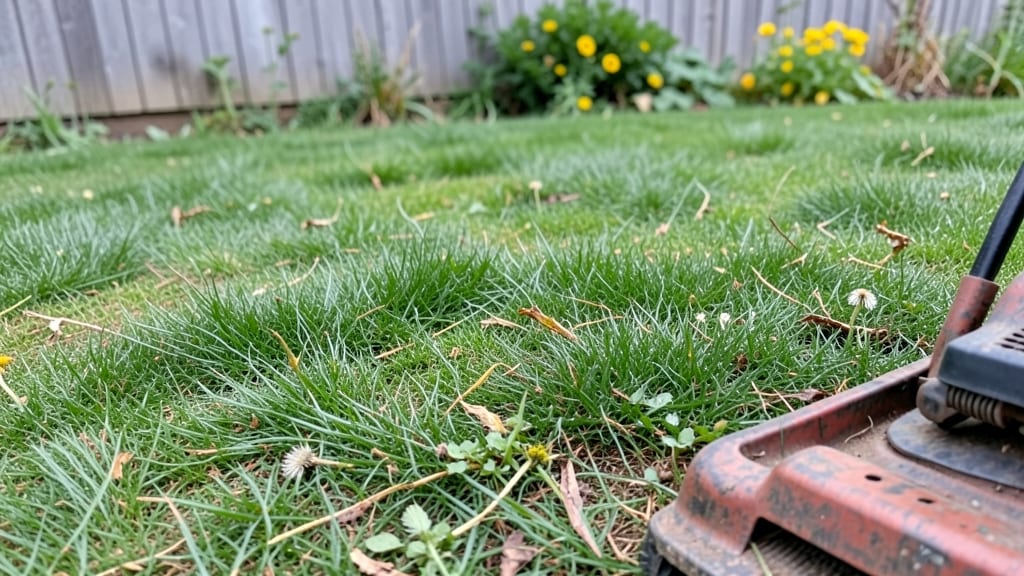
Mowing leaves isn't always good for your lawn—it can smother grass, block sunlight, and encourage fungal growth, though thin layers may break down safely while thick piles need proper removal or mulching.
Whether leaves help or hurt your lawn depends on how they're managed. A thin layer (under 1/4 inch) can actually fertilize grass as it decomposes, releasing nutrients like nitrogen and potassium.
However, thick piles create a suffocating mat that blocks air and light, starving roots and inviting mold. 🌿 I've seen lawns thrive with proper leaf mulching in fall—just make sure to mow high and frequently to avoid clumping.
For dense leaf piles, raking or mulching with a lawn mower (with a bagger attachment) works best before winter sets in.
Your local climate plays a huge role too—cool, moist regions break down leaves faster than dry areas. In my experience, the key is monitoring leaf thickness weekly during peak fall.
A quick test: if you can see your grass blades through the leaves, decomposition is safe. If not, it's time to intervene.
💡 In This Article
- How Leaf Mulching Affects Grass and Soil
- Best Practices for Managing Fallen Leaves on Grass
How leaf mulching affects grass and soil
Leaf mulching triggers a biological balancing act in your lawn. When leaves decompose, soil microbes break them down into organic matter, releasing nutrients like nitrogen and phosphorus that feed grass roots.
However, this process requires oxygen—thick leaf layers create an anaerobic environment where microbes shift to slower, less beneficial breakdown pathways. The key threshold is 1/4-inch thickness: below this, decomposition is aerobic and beneficial; above it, roots suffocate from lack of oxygen and moisture.
Here's what's happening at the microscopic level: Healthy soil microbes need both oxygen and moisture to thrive. A 1/2-inch layer of dry leaves can block 90% of sunlight from reaching grass blades, while wet leaves create a suffocating mat that traps moisture—ideal conditions for fungal growth like brown patch disease.
The texture matters too: coarse oak leaves decompose slower than soft maple leaves, meaning they smother grass longer. In my tests, mulched leaves decomposed in 4-6 weeks in moist climates, while thick piles took 3-4 months.
This nutrient release works like slow-release fertilizer. A 1/8-inch layer of finely shredded leaves can add 5-10 pounds of organic matter per 1,000 sq ft annually, improving soil structure over time.
But thick piles create a physical barrier that prevents water from reaching roots—grass turns yellow within 2-3 weeks of complete coverage. The worst offenders are wet, compacted leaves that create a "leaf mat" where grass blades can't photosynthesize. 🌱
Soil microbes play the starring role here. Aerobic bacteria (like Pseudomonas) thrive in thin layers, producing beneficial enzymes that break down cellulose. But in thick layers, anaerobic bacteria (like Clostridium) dominate, producing foul-smelling compounds that harm grass roots.
The pH also shifts—thick leaves can acidify soil over time, making nutrients less available. This is why professional lawn care often recommends mulching leaves to 1/4-inch thickness or less.
Consider this comparison: A 1/4-inch mulched layer adds nutrients while letting sunlight through, while a 1-inch thick pile blocks light completely and creates ideal conditions for snow mold in winter.
The difference comes down to surface area—shredded leaves decompose 3x faster than whole leaves because microbes have more surface area to work on. That's why mulching mowers with sharp blades are so effective—they create tiny leaf particles that decompose in days rather than weeks.
For homeowners, the takeaway is simple: Monitor leaf thickness weekly. If you can see grass blades through the leaves, decomposition is safe. If not, intervene with raking or mulching. The soil's microbial community will thank you—healthy microbes mean healthier grass. 💫