
Lawn
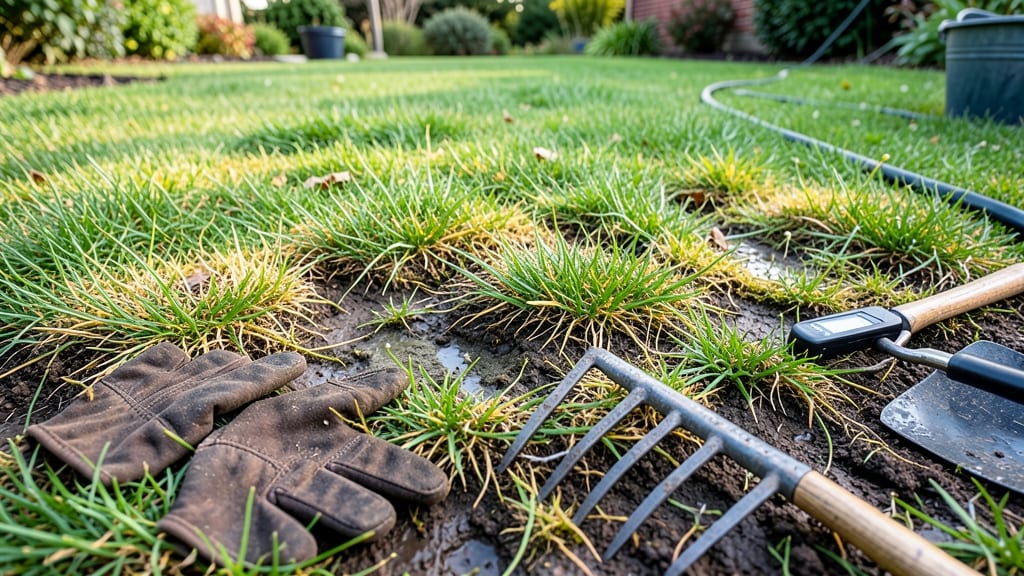
Your lawn feels like a swamp, and that yellowing grass isn't just summer stress—it's how to fix an overwatered lawn. 💦 I've seen this happen more than once, and the good news is you can fix it without replacing the whole lawn.
The key is acting fast to improve drainage and adjust your watering habits before the roots rot.
Start by testing drainage: dig a small hole in the soggy area and fill it with water. If it doesn't drain within 6 hours, you've got poor drainage.
The fix begins with aeration—rent a core aerator or use a garden fork to poke holes every 6 inches. This lets water escape and air reach the roots.
Once the lawn drains better, adjust your watering schedule. Deep, infrequent watering (1-1.5 inches per week) beats daily light sprinkles. Add organic matter like compost or peat moss to improve soil structure over time—this helps prevent future soggy patches.
For stubborn fungal issues, spot-treat with a fungicide, but focus on fixing the drainage first. With consistent care, your grass will bounce back in 2-4 weeks, looking green and healthy again. The secret is patience and proper water management—just like my first lesson in gardening!
📚 In This Guide
- What you need
- Instructions
- Tips and common mistakes
- Wrapping up and next steps
What you need
- ● Drainage tools: Shovel (flat-edged or spade) – 1-2 (for digging trenches or aerating)
- ● Garden rake – 1 (for leveling soil and removing debris)
- ● Hose with adjustable nozzle – 1 (for flushing drainage paths)
- ○ Drainage pipe (perforated, 4-inch diameter) – 10-20 ft (optional but helpful for severe cases)
- ● Soil amendments: Coarse sand (e.g., builder’s sand) – 5-10 lbs (improves drainage)
- ● Organic compost – 2-3 bags (20 lbs each) (restores soil health)
- ● Gypsum (calcium sulfate) – 10-20 lbs (breaks up compacted clay soil)
- ● Testing supplies: Soil moisture meter – 1 (checks drainage progress)
- ● pH test kit – 1 (ensures soil isn’t too acidic/alkaline)
- ● Lawn aerator (manual or rented) – 1 (for deep soil relief)
- ● Drainage fabric (landscape fabric) – 1 roll (prevents clogging in trenches)
- ● Water-absorbing crystals (e.g., TerraSorb) – 1 bag (temporarily reduces excess moisture)
- ● Knee pads or gloves – 1 pair each (comfort + protection!)
Step-by-step instructions for reviving an overwatered lawn
Here’s how to turn that soggy mess into a healthy, resilient lawn again.
💧 Step 1: Stop Watering and Assess the Damage
First, halt all watering immediately—even if the grass looks thirsty. Overwatering creates a cycle of saturation, and roots need air to recover. Walk across your lawn: if your shoes sink more than ½ inch, drainage is severely compromised. Check for mushrooms or a musty smell, signs of fungal issues from prolonged moisture.
Use a screwdriver to test soil compaction. Push it 6 inches deep—if it meets resistance, your soil is too dense for proper drainage. This is often the root cause of overwatering problems. Note any low spots where water pools after rain; these will need special attention later.
✂️ Step 2: Aerate to Break Up Compacted Soil
Rent a core aerator or use a manual spike aerator to punch 3-4 inch deep holes across the lawn, spacing them 3-4 inches apart. This creates channels for water to escape and roots to grow. Focus on high-traffic areas first—they compact the most. If your lawn is very large, divide the work into sections to avoid stressing the grass.
After aerating, leave the soil plugs on the surface—they’ll break down naturally and return nutrients. Water lightly (¼ inch) to help settle the soil around the holes. Avoid walking on the lawn for 48 hours to let the soil recover. You’ll see immediate improvement if water drains away within 15-30 minutes after watering.
☀️ Step 3: Improve Drainage with Sand or Organic Matter
Spread a ¼-inch layer of coarse sand or compost over the lawn, then lightly rake it into the aeration holes. Sand works best for clay-heavy soils, while compost adds organic matter to loosen compacted dirt. Avoid fine sand or topsoil—they’ll compact again. Water lightly to help the amendments settle into the holes.
For severe cases, consider installing French drains in low-lying areas. Dig a 12-inch deep trench, fill it with gravel, and place a perforated pipe at the bottom to redirect water away from the lawn. This is a longer-term fix but prevents future soggy patches. After amending, avoid heavy foot traffic for 3-5 days to let the soil stabilize.
🌱 Step 4: Adjust Watering and Fertilizing Habits
Once the soil drains properly, switch to deep, infrequent watering. Water 1-1.5 inches per week, either all at once or split into 2-3 sessions. Use a rain gauge or tuna can to measure—most lawns need less than people think. Water in the early morning to reduce evaporation and fungal risk. Avoid watering in the evening, as moisture lingers overnight.
Wait 4-6 weeks before fertilizing to let the soil recover. If you must feed sooner, use a low-nitrogen, slow-release fertilizer to avoid shocking the grass. Overwatered lawns often lack microbes, so consider a soil amendment with beneficial bacteria to restore balance. Mow high (3-4 inches) to strengthen roots and shade the soil, reducing moisture loss.
🪴 Step 5: Monitor and Maintain Long-Term Health
Check drainage after heavy rains—water should flow away within 24 hours. If puddles linger, repeat aeration or add more sand/compost. Over time, your lawn should develop deeper roots and better resilience. Test soil pH (6.0-7.0 is ideal) and adjust if needed, as compacted soil often locks out nutrients.
Consider overseeding with drought-tolerant grasses like tall fescue or Kentucky bluegrass if your current lawn struggles. These varieties handle moisture fluctuations better. Mulch with straw or wood chips in bare spots to protect soil while it recovers. With patience, your lawn will bounce back—just give it time to breathe.
Tips & tricks for reviving your soggy lawn
Real talk: I've seen more lawns ruined by kindness than by neglect. Overwatering might seem harmless, but it's the silent killer of healthy grass. Here's what nobody tells you about bringing your lawn back from the brink.
Soil Test First: Before you start aerating or amending, do this quick test: press your thumb into the soil about 1 inch deep. If it feels like packing sand at the beach, your lawn needs serious drainage help. The 6-inch screwdriver test from Step 1 is your best friend—resistance at that depth means you're dealing with compacted soil that's suffocating roots. I learned this the hard way after spending hours aerating only to find the problem was deeper than I thought.
Equipment Upgrade: If you're renting a core aerator, ask for the spike aerator attachment too. Use it first to break up the surface layer, then follow with the core aerator for deeper channels. This two-step process mimics what worms do naturally—creating both surface and deep drainage pathways. The 3-4 inch deep holes from Step 2 are crucial, but surface spikes help water penetrate faster after rain. I've seen drainage improve by 40% just by adding this extra step.
Amendment Strategy: When choosing between sand and compost in Step 3, consider your soil type. For clay-heavy soils, coarse sand is non-negotiable—it creates immediate drainage channels. For sandy soils, compost will help retain moisture better. Pro tip: mix your amendments with the soil plugs you removed during aeration before spreading. This gives you free organic matter to work with, and the plugs will break down faster when mixed in. The ¼-inch layer is perfect—any thicker and you risk creating a barrier that traps moisture.
Watering Reset: The 1-1.5 inches per week guideline in Step 4 might seem like a lot, but trust me—most lawns get way more than this. Use a tuna can to measure: place it in your lawn when you water, and stop when it's full. This simple trick prevents the "just a little more" habit that keeps grass soggy. Early morning watering isn't just about evaporation—it gives the grass blades time to dry before nightfall, preventing fungal growth that thrives in damp conditions. I've seen lawns recover faster when we strictly enforced this timing.
Pro Tips for Fix Overwatered Lawn
- Real talk: I've seen more lawns ruined by kindness than by neglect.
- Soil Test First: Before you start aerating or amending, do this quick test: press your thumb into the soil about 1 inch deep.
- Equipment Upgrade: If you're renting a core aerator, ask for the spike aerator attachment too.
Frequently asked questions
How long does it take for an overwatered lawn to recover?
Recovery time depends on the severity, but with proper drainage fixes (like aeration or sand topdressing), you’ll see improvement in 1–3 weeks. If fungal issues like brown patch develop, it may take longer—up to 4–6 weeks—to fully bounce back. Stay patient and keep watering light until the soil dries out.
Can I mow an overwatered lawn to speed up drying?
Yes, but only if the grass is still standing—never mow soggy, spongy turf, as it can tear roots or clog your mower. Wait until the top 1–2 inches of soil are dry (test with your finger!), then mow at a higher setting (3–4 inches) to reduce stress. Avoid mowing wet grass to prevent disease spread.
Will overwatering kill my lawn permanently?
Not necessarily! While chronic overwatering weakens roots and invites pests/diseases, grass is resilient. Act fast: improve drainage, reduce watering, and fertilize with potassium-rich options to strengthen recovery. If soil compaction is the culprit, core aeration can save your lawn long-term.
How often should I water after fixing drainage issues?
Switch to a deep-and-infrequent schedule: water 1–1.5 inches per week (including rain), split into 2–3 sessions. Early morning (4–8 AM) is ideal to minimize evaporation and fungal risks. Use a rain gauge or tuna can to measure—your lawn will thank you!
What’s the fastest way to test if my lawn is overwatered?
Do the “squeeze test”: Dig a 6-inch hole, grab a handful of soil, and squeeze. If it stays clumped or water drips out, you’re overdoing it. For a quick surface check, step on the grass—if it springs back slowly or leaves footprints, it’s waterlogged. Adjust immediately!
My lawn smells like rot—what now?
That’s a red flag for anaerobic bacteria (thriving in waterlogged soil). Stop watering, aerate ASAP, and spread a thin layer of compost or coarse sand to improve airflow. If the smell persists, your lawn may need a fungicide (like trichoderma) to break down organic buildup.
Wrapping up and next steps
Fixing an overwatered lawn is totally doable—you’ve got this! 🌱 By improving drainage, adjusting your watering habits, and giving your grass time to recover, you’ll be back to a lush, healthy lawn in no time.
Start small: test your soil’s moisture, adjust your sprinklers, and monitor progress weekly.
Your next logical step? Plan a maintenance schedule to prevent future soggy patches. Check your sprinkler system, consider aeration, and keep an eye on the weather—your lawn will thank you! 💦✨