
Lawn
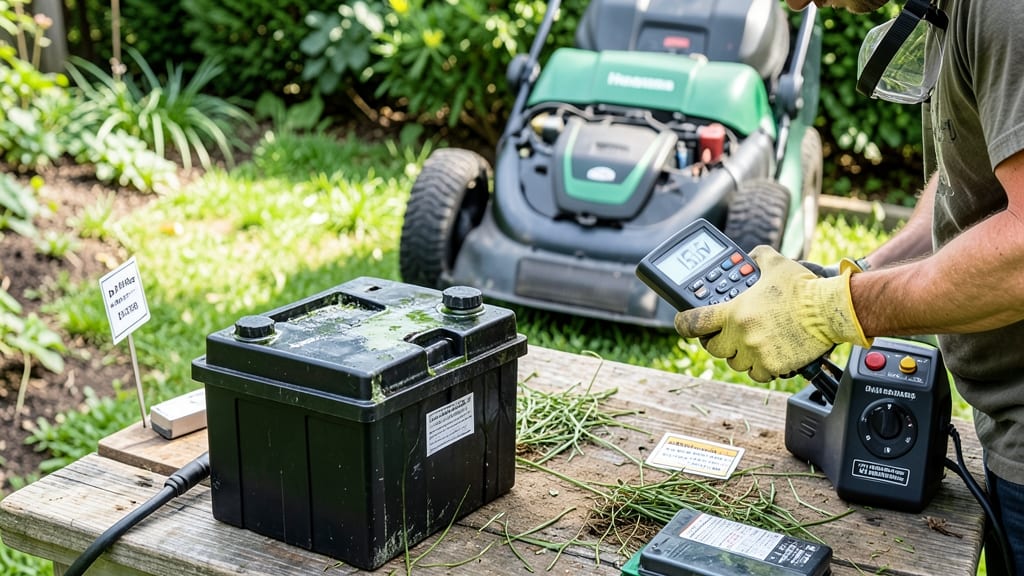
You can overcharge a lawn mower battery, and doing so risks permanent damage like reduced capacity, overheating, or complete failure. Always stick to manufacturer-recommended voltage and charging times.
Overcharging triggers harmful chemical reactions inside the battery, like sulfation and electrolyte breakdown, which degrade performance over time. 🔥 The heat buildup can warp internal components, while excess gas buildup may even cause dangerous pressure buildup.
I’ve seen batteries swell or leak acid when left charging too long—it’s a clear sign the damage is already done.
To protect your battery, use a charger with automatic shut-off features or a smart charger that maintains the right voltage. Most lawn mower batteries need 12.6–14.4 volts—never exceed that.
I always check the battery’s health by looking for signs like corrosion on terminals or a slow charge time, which often means it’s been overworked.
💡 In This Article
- How Overcharging Damages Lawn Mower Batteries
- Safe Charging Practices for Lawn Mower Batteries
How overcharging damages lawn mower batteries
When you overcharge a lawn mower battery, you trigger a chain reaction inside that starts with sulfation—a process where lead sulfate crystals form on the battery plates. These crystals act like insulation, blocking the flow of electricity and reducing the battery's capacity to hold a charge.
Think of it like rust forming on metal, but inside your battery. Over time, this buildup can shrink the battery's lifespan by up to 50%, meaning it won’t hold power as long between charges.
The heat generated during overcharging accelerates this damage. A fully charged battery can reach temperatures above 122°F (50°C), but prolonged overcharging can push it even higher. This heat warps plastic components and dries out the electrolyte solution, which is a mix of sulfuric acid and water.
When the water evaporates too quickly, the acid becomes more concentrated, corroding the battery’s internal parts and reducing its overall efficiency. 🔥 The result? A battery that starts but struggles to power your mower for long periods.
Gas buildup is another hidden danger. Overcharging produces excess hydrogen gas, which can cause the battery to swell or even rupture. I’ve seen batteries with cracked casings from this pressure—it’s not just a performance issue, but a safety hazard.
The acid inside can leak, damaging nearby surfaces and even causing burns. This is why modern chargers include safety features like automatic shut-off when the battery reaches full capacity.
Corrosion on the battery terminals is often the first visible sign of overcharging. The excess heat and chemical reactions create a conductive paste that eats away at the metal connectors.
This not only weakens the electrical connection but also forces your mower to work harder to start, putting extra strain on the starter motor. Over time, this can lead to complete failure of the battery or even the starter system.
What most people don’t realize is how quickly this damage accumulates. Even a few extra hours of charging beyond the recommended time can start the sulfation process.
For example, a 6-amp-hour battery might only need 2-3 hours to fully charge, but leaving it plugged in for 8+ hours can cause irreversible harm. The key is to monitor the charging process and remove the battery once it’s fully charged.
To put it simply, overcharging doesn’t just reduce your battery’s performance—it shortens its life dramatically. A well-maintained battery can last 3-5 years, but one that’s frequently overcharged might fail in as little as 1-2 years.
The damage isn’t always obvious at first, but the cumulative effect over time is undeniable. 💫