
Lawn
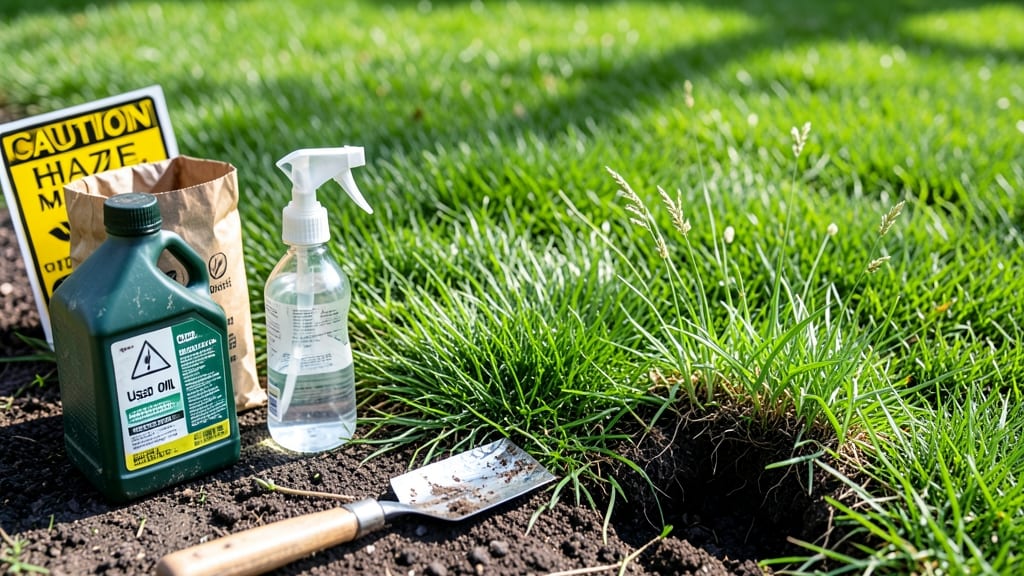
You should never use old motor oil to fertilize your lawn because it contains dangerous toxins like heavy metals and hydrocarbons that destroy soil life, kill plants, and pollute water supplies. Safe alternatives include organic compost, manure, or slow-release fertilizers that nourish grass without harming the environment.
Motor oil contains harmful additives like zinc, lead, and polycyclic aromatic hydrocarbons (PAHs) that disrupt beneficial soil microbes and accumulate in plants. 🌱 These chemicals don't break down naturally—they leach into groundwater over time, creating long-term contamination risks.
Even small amounts can alter soil pH and nutrient balance, making it impossible for grass to thrive. The Environmental Protection Agency (EPA) explicitly prohibits using motor oil as fertilizer due to these dangers.
For healthy lawn growth, consider organic options like composted leaves or grass clippings, which add nutrients gradually. Worm castings provide balanced nutrition without chemical buildup, while bone meal supplies phosphorus for root development. 💫 These alternatives improve soil structure while supporting beneficial microorganisms that keep your lawn resilient.
Always test your soil first to determine specific nutrient needs.
💡 In This Article
- Toxic Chemicals in Motor Oil and Their Impact on Soil Health
- Safe Organic Fertilizer Alternatives for Lawns
Toxic chemicals in motor oil and their impact on soil health
Motor oil isn't just a lubricant—it's a complex chemical cocktail designed to withstand extreme heat and pressure. The additives that make it effective in engines become deadly in soil.
For example, zinc dialkyldithiophosphate (ZDDP), a common anti-wear additive, contains zinc (up to 10,000 ppm)—a heavy metal that accumulates in soil and blocks plant nutrient uptake.
Lead, another frequent additive, persists for decades and can reach concentrations of 50-200 ppm in contaminated soils, far exceeding safe levels for plant growth.
The real danger lies in polycyclic aromatic hydrocarbons (PAHs), which form when oil breaks down. These compounds are known carcinogens that disrupt soil microbes—the tiny organisms responsible for breaking down organic matter and cycling nutrients.
At concentrations as low as 10 ppm, PAHs can reduce microbial activity by 40-60%, starving your lawn of essential nutrients. 🌱 The smell of motor oil lingering in your soil isn't just unpleasant—it's a warning sign that these toxic compounds are already at work.
What makes motor oil particularly insidious is its persistence. Unlike organic fertilizers that decompose within months, motor oil components can remain in soil for years or even decades. When it rains, these toxins don't stay put—they leach into groundwater, where they can contaminate drinking water supplies.
A single quart of motor oil can pollute 250,000 gallons of water, according to EPA estimates. The visual evidence? Yellowish oil slicks on puddles and a sheen on soil surfaces that won't wash away with water.
Even when plants don't show immediate signs of distress, the long-term effects are devastating. Motor oil disrupts the soil's natural nitrogen cycle by inhibiting nitrifying bacteria, which are crucial for converting organic nitrogen into plant-available forms.
Without these microbes, your lawn becomes dependent on synthetic fertilizers—creating a vicious cycle of chemical dependency. The texture of motor oil-contaminated soil also changes, becoming hydrophobic (water-repellent) and compacted, making it nearly impossible for grass roots to penetrate.
Consider this comparison: A healthy lawn soil contains 10,000-100,000 microbial cells per gram, while motor oil-contaminated soil may have fewer than 1,000 cells per gram. That's a 99% reduction in beneficial soil life—equivalent to sterilizing your lawn's foundation.
The visual difference is striking: Healthy soil has a dark, crumbly texture with earthy aromas, while contaminated soil appears greasy, smells like gasoline, and repels water like a freshly waxed car surface.
For those wondering about "natural" motor oil alternatives, even biodegradable motor oils contain synthetic additives that break down into toxic byproducts. The only truly safe option is to keep motor oil out of your garden entirely.
If you've already used motor oil on your lawn, the best course of action is to remove the top 6-12 inches of soil and replace it with clean, organic matter—a costly but necessary step to restore your lawn's health. 💫