
Lawn
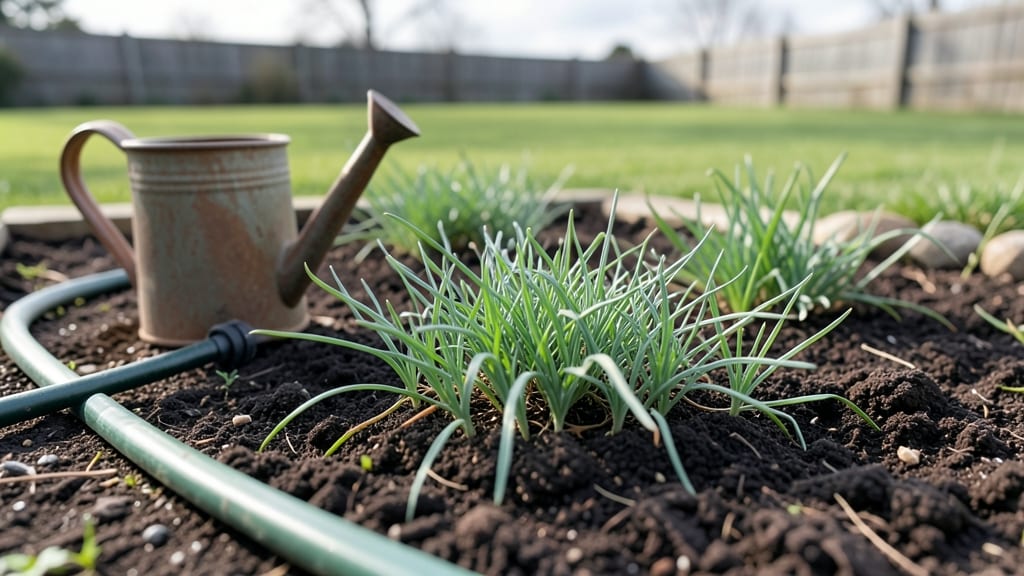
Overwatering new grass seed is a common mistake that smothers seeds, triggers rot, and invites fungal diseases like Pythium. To prevent this, maintain even moisture—never soggy—by watering lightly 2-3 times daily for 10-15 minutes until sprouts appear, then reduce to 1 inch per week once established.
Overwatering creates a suffocating environment where seeds can't breathe, and excess moisture blocks sunlight from reaching the soil surface. 🌱 The real danger isn't just drowning the seeds—it's the fungal infections that thrive in waterlogged conditions, turning your fresh planting into a moldy mess.
I've seen entire lawns fail because someone assumed "more water = better growth," but seeds need air almost as much as moisture.
Here's the trick: your soil should feel like a damp sponge, not a swamp. Stick your finger in—if water drips out, you're overdoing it. For clay soil, water in shorter bursts to avoid pooling, while sandy soil may need more frequent light waterings to prevent drying too fast.
The key is consistency, not saturation.
💡 In This Article
- How Overwatering Damages New Grass Seed Growth
- Perfect Watering Schedule for New Grass Seed Success
How overwatering damages new grass seed growth
When you drown new grass seed in water, you're essentially suffocating it. Seeds need oxygen to activate enzymes that break down stored nutrients during germination. Excess water displaces air from soil pores, creating anaerobic conditions where seeds can't breathe.
This oxygen deprivation slows metabolic processes by up to 70%, delaying or preventing sprouting entirely. The worst part? Even if seeds eventually break through, they'll be weak and prone to disease.
Fungal pathogens like Pythium and Rhizoctonia thrive in waterlogged soil, forming cottony white mats that smother emerging seedlings.
These fungi produce toxins that rot seed coats before roots can develop. 🌱 What most gardeners don't realize is that fungal spores are always present in soil—they only become dangerous when moisture levels exceed 60% saturation.
At this point, spores germinate within 24-48 hours, creating a deadly race against time for your seeds.
The chemical damage goes deeper than just fungi. Overwatering leaches vital nutrients like nitrogen and phosphorus from the root zone, starving seedlings before they establish.
The soil's natural microbial balance shifts too—beneficial bacteria that help break down organic matter get crowded out by anaerobic microbes that produce harmful byproducts like methane. This creates a toxic environment where even healthy seeds struggle to survive.
Root rot develops when water pools around seeds, cutting off oxygen to embryonic roots. The first sign is seeds that sprout but then collapse into mushy brown masses. In severe cases, you'll see a crust form on the soil surface as water evaporates, trapping heat and accelerating decay.
The irony? Many gardeners think they're helping by keeping soil wet, but they're actually creating the perfect storm of suffocation, disease, and nutrient loss.
Here's what's actually happening at the cellular level: seeds contain enzymes that require oxygen to convert starches into sugars for energy. Without it, these enzymes become inactive, and the seed enters a state of suspended animation.
Meanwhile, fungal hyphae grow at rates of 1-2 inches per day in saturated conditions, outpacing any potential seedling growth. The result? Your carefully planted seeds become a buffet for soil-borne pathogens instead of thriving new grass.
To visualize the ideal moisture balance, think of a damp sponge that wrings out clean—not dripping wet. Soil should hold moisture like a well-wrung cloth, with air spaces remaining between particles. This 60% moisture saturation gives seeds just enough hydration while maintaining oxygen flow.
Anything beyond this threshold turns your lawn into a petri dish for fungal growth. The key is consistency: keep that sponge-like moisture until seeds sprout, then gradually reduce water as roots develop.