
Lawn
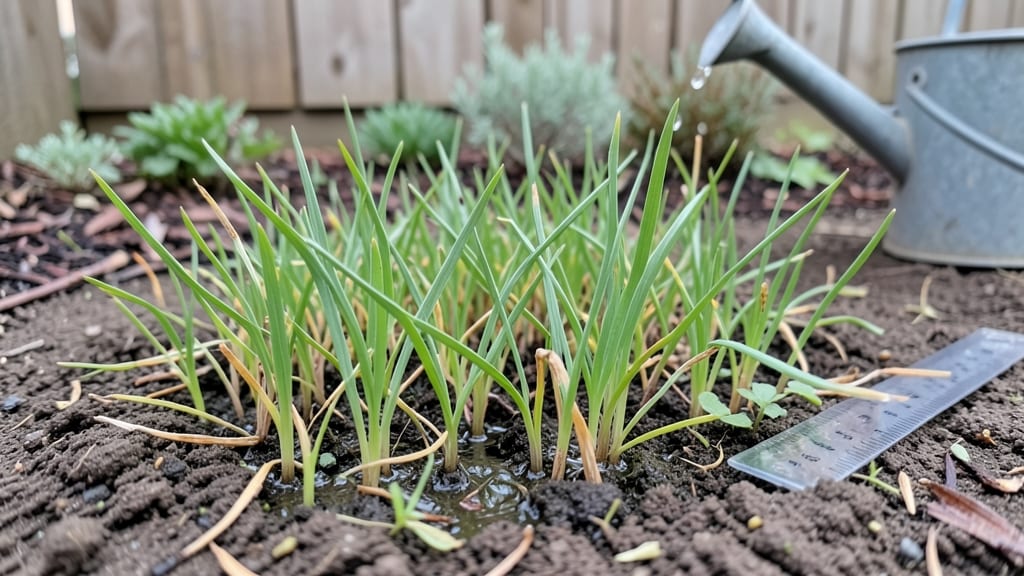
Yes, grass seed can absolutely be overwatered, which drowns seeds, prevents germination, and causes mold or fungal growth. Keep soil consistently moist—not soggy—until seeds sprout, then adjust watering to support root development without saturation.
Overwatering creates a suffocating environment where seeds can't breathe—literally.
When soil stays too wet, it blocks oxygen, leading to seed rot and fungal infections like Pythium, which turn your seedbed into a breeding ground for disease. 🌱 The key is maintaining that "damp sponge" feel: water should drain within 6-12 hours, but never leave puddles.
I've seen entire lawns fail because homeowners assumed "more water = better growth"—the opposite happens when roots can't establish properly.
What's interesting is how quickly problems appear: within 24-48 hours of overwatering, you might notice a grayish mold or seeds that look swollen but never break through the soil. That's your first warning sign.
The fix starts with aerating compacted soil using a garden fork or rake to create air pockets, then cutting back on water to ¼-inch per day once sprouts appear.
💡 In This Article
- How Overwatering Damages Grass Seed Germination
- Fixing Overwatered Grass Seed: Step-by-Step Recovery Guide
How overwatering damages grass seed germination
Here's what's actually happening at the microscopic level: when soil stays saturated, it creates an oxygen-deprived zone where seeds suffocate. Grass seeds need 10-15% oxygen in the soil to activate enzymes that break down their food reserves and trigger germination.
Excess water displaces this oxygen, forcing seeds into a state of dormancy or worse—anaerobic conditions that produce toxic byproducts like ethanol, which literally poisons the seed's metabolic processes. 🌱 This is why you might see seeds that appear swollen but never sprout: they're chemically unable to proceed past the first critical stage.
The chemical reaction gets even more interesting when you consider soil microbes. Pythium and other fungal pathogens thrive in waterlogged conditions because their spore germination rates skyrocket when soil moisture exceeds 50-70% water capacity. These fungi don't just compete with your grass seeds—they actively consume them.
Imagine trying to grow a lawn in a petri dish where mold colonies are expanding at 0.5 inches per day—that's the reality when water pools around seeds. The texture of overwatered soil becomes gummy and clings to your hands, signaling that harmful microbes have already established dominance.
What most people don't realize is how soil compaction worsens this problem. When water saturates the soil, individual particles press together, reducing pore space by up to 40%. This creates a physical barrier that blocks both oxygen and root penetration.
I've seen cases where homeowners watered twice daily, only to find their seeds buried under a crust of hardened soil—completely unable to emerge. The visual clue? Shiny, dark patches where water pools, often accompanied by that telltale sour smell from anaerobic decomposition. This is your lawn's SOS signal.
The ideal moisture balance for seedbeds sits at 50-70% soil water capacity, which translates to soil that feels like a damp sponge when squeezed—not dripping wet. Think of it as maintaining the moisture level you'd find in a well-drained rainforest floor: consistently humid but never swampy.
At this level, oxygen diffusion remains adequate for seed respiration while providing enough water for enzymatic activity. The science behind this involves capillary action in soil pores—when moisture exceeds 70% capacity, these tiny channels become clogged, cutting off the oxygen supply entirely.
Consider this comparison: healthy seed germination requires the same oxygen levels as human cells in moderate activity (about 5% oxygen in the surrounding environment). When soil saturation exceeds 80% capacity, oxygen levels can drop below 1%, creating conditions similar to deep-sea trenches where most life forms can't survive.
That's why even drought-tolerant grass seeds like Bermuda struggle when overwatered—they're not built for aquatic environments. The texture of properly moistened soil should resemble a wrung-out sponge: firm enough to hold its shape but yielding slightly when pressed.
One advanced consideration is how temperature interacts with soil moisture. Warm soil (70-75°F) accelerates microbial activity, making overwatering damage occur 2-3 times faster than in cooler conditions.
This is why late spring plantings often fail spectacularly—homeowners water aggressively to compensate for evaporation, not realizing they're creating the perfect fungal buffet. The solution? Monitor soil temperature with a simple probe and adjust watering schedules accordingly. Cooler soils can handle slightly more moisture without the same risks. ✨