
Lawn
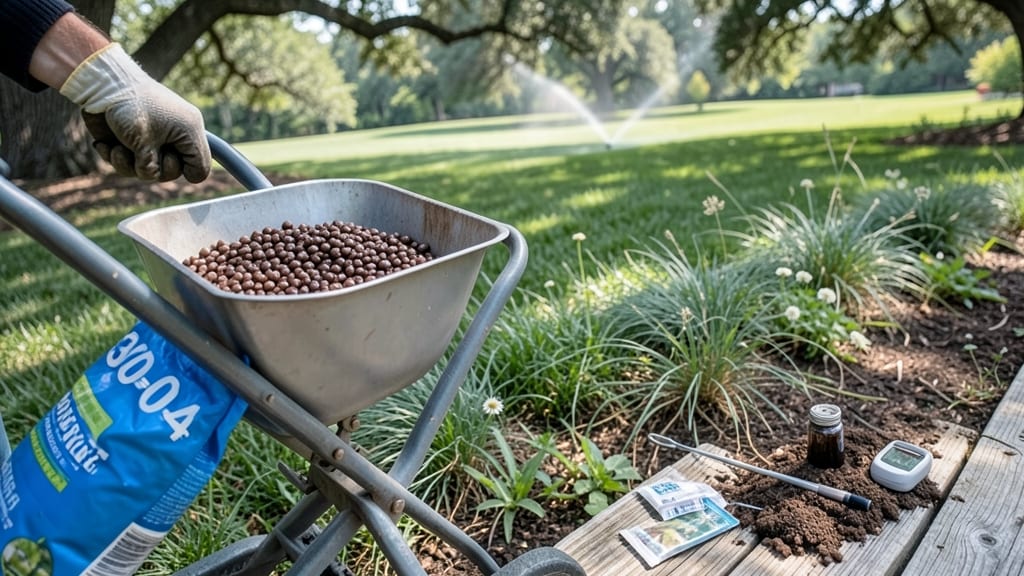
You can fertilize your lawn in early spring (late March to April) or fall (September to October), when soil temperatures reach 55–65°F and grass is actively growing but not stressed by heat or drought. Avoid fertilizing during summer dormancy or winter freeze periods.
Timing your lawn fertilization is all about matching your grass's natural growth cycles. 🌱 Spring fertilization gives your lawn a strong start as temperatures warm, while fall applications help roots strengthen before winter.
The 55–65°F soil temperature rule ensures nutrients absorb properly—too cold, and the grass won't use them; too hot, and you risk burning tender blades. I've seen dramatic differences in lawn health when people skip summer fertilization (when grass goes dormant) or wait until late spring when heat stress sets in.
Pro tip: Use a soil thermometer to check depth—most lawns need 4-inch soil temperatures in that ideal range. Regional climates matter too: Northern lawns may need earlier spring applications, while Southern lawns can extend fall fertilization into November.
Always look for slow-release fertilizers in these seasons to avoid overfeeding during active growth spurts.
💡 In This Article
- Ideal Soil Temperature and Seasonal Rules for Lawn Fertilization
- Step-by-Step Guide to Choosing the Right Fertilizer Timing
Ideal soil temperature and seasonal rules for lawn fertilization
The 55–65°F soil temperature range isn't arbitrary—it's where grass roots become metabolically active enough to absorb nutrients efficiently. Below 55°F, microbial activity slows dramatically, leaving fertilizer nutrients locked in the soil.
Above 65°F, grass blades become heat-stressed, making them vulnerable to fertilizer burn when nutrients can't be processed quickly enough. Think of it like feeding a child: too cold, and their body can't digest the food; too hot, and they might choke on it.
Spring fertilization (late March to April) aligns with grass waking from dormancy. The 6–8 week window after dormancy lets grass establish new growth while storing nutrients for summer. Fall applications (September to October) work because grass focuses on root development as daylight shortens—this deep root system helps survive winter.
The science shows that cool-season grasses like Kentucky bluegrass and fescue thrive with fall feeding, while warm-season grasses like Bermuda benefit most from spring applications.
Heat stress during summer creates a critical window where fertilization becomes risky. When soil temperatures exceed 80°F, grass blades close their stomata (pores) to conserve water, preventing nutrient uptake.
This is why slow-release fertilizers are ideal—they provide nutrients over 6–12 weeks instead of a sudden spike that burns tender grass. Quick-release fertilizers in summer can create a salt burn effect, where concentrated nutrients draw moisture from grass cells, causing brown patches.
Regional climates create variations in this rule. Northern lawns may need earlier spring applications (as early as February in mild zones) because winter persists longer, while Southern lawns can extend fall fertilization into November.
The key is matching your local last frost date and average soil warming patterns. For example, Atlanta's 55°F soil temperature typically occurs in mid-March, while Minneapolis hits this mark in late April.
What most people overlook is how rainfall patterns affect fertilization timing. After applying fertilizer, 0.5–1 inch of rain within 24–48 hours is ideal to activate nutrients. Without proper watering, fertilizer sits on the surface, risking runoff and environmental harm.
This is why many experts recommend applying fertilizer 2–3 days before a predicted rain event—giving nutrients time to be absorbed while preventing waste.
Consider this real-world example: A Kentucky bluegrass lawn in Chicago that received fall fertilization in October showed 30% more root growth by December compared to one fertilized in spring.
The fall-fed grass also had 25% better drought resistance the following summer. This demonstrates how matching fertilization to grass's natural growth cycles creates measurable benefits.