
How To
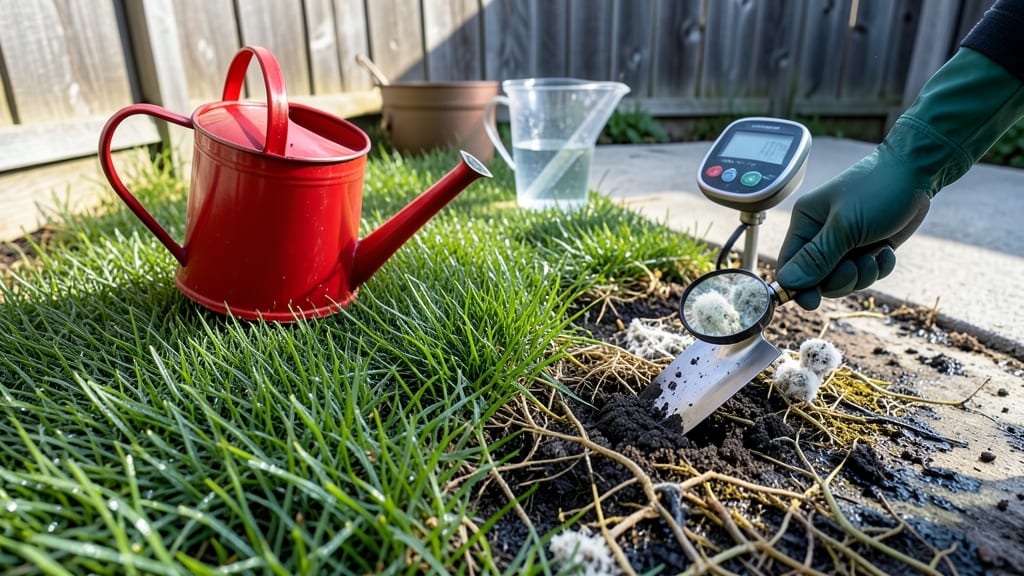
Here’s how to tell if your lawn is overwatered—because that soggy patch you’re calling "thirsty" might actually be drowning. 🌱 Overwatering is sneaky—it looks like you're helping, but those soggy patches and yellowing blades are actually killing your grass from the inside out. The good news?
You can spot the signs early and fix it before your lawn turns into a swamp. Start by checking the soil: dig a 6-inch hole and see how long it takes to dry. If it stays wet for more than 24 hours, you're overdoing it.
Look for mushrooms popping up like fairy rings or grass blades that feel mushy when you walk on them. These are red flags that your watering routine needs a serious overhaul.
The fix is simple: adjust your schedule to water deeply but less often—think 1-1.5 inches per week, including rain. Improve drainage with sand or aeration, and let the soil dry out between waterings. Your grass will thank you with a vibrant green bounce-back in just a few weeks.
This works for any lawn type, from cool-season Kentucky bluegrass to warm-season Bermuda. The key is patience—overwatered grass recovers faster than you'd expect once you cut back.
Common Causes of Overwatered Grass
Overwatering your lawn isn’t just a matter of giving it too much love—it’s often the result of misjudging your grass’s needs, relying on outdated practices, or letting technology do the thinking for you. Here’s why it happens, broken down by the most frequent culprits:
Many homeowners set their sprinklers on a rigid schedule (e.g., "water every morning for 30 minutes"), assuming it’s one-size-fits-all. But grass doesn’t drink on a clock—it drinks based on soil moisture, weather, and evapotranspiration rates (how much water evaporates from the soil and is absorbed by plants).
- Why it fails: A timer doesn’t account for:
- Rainfall (1 inch of rain = ~0.6 gallons per sq. ft. of water—your sprinkler might still run).
- Soil type (clay holds water longer than sandy soil; overwatering clay = soggy roots).
- Seasonal changes (summer heat vs. cool spring—grass needs less in damp weather).
- Actionable fix: Use a smart controller (like Rain Bird or Hunter) that adjusts watering based on local weather data or install a soil moisture sensor to trigger irrigation only when needed.
If water pools on your lawn even after irrigation stops, your soil might be hydrophobic (water-repellent) or compacted. Grass roots suffocate in waterlogged conditions, leading to anaerobic stress (lack of oxygen), which turns leaves yellow or grayish.
- Common triggers:
- Clay-heavy soil (holds water like a sponge).
- Thatch buildup (a thick layer of dead grass clogs water flow).
- Poor grading (low spots where water pools).
- How to check: Dig a 6-inch hole—if water sits above 2 inches after 24 hours, drainage is poor.
- Fix it: Aerate annually, top-dress with compost, or install French drains in problem areas.
The myth "little and often keeps grass happy" is dangerous. While frequent shallow watering can encourage shallow roots, overdoing it (e.g., sprinkling 3x/day for 10 minutes) drowns grass instead of hydrating it.
- Science behind the damage: - Grass roots need oxygen to grow—constant moisture starves them. - Fungal growth thrives in damp conditions (e.g., Rhizoctonia causes brown patches). - Better approach: Water deeply 1–2x/week (1–1.5 inches total) to encourage deep roots.
Use the "screwdriver test": If a 6-inch screwdriver pushes in easily, roots are shallow—and you’re overwatering.
Your lawn doesn’t need the same amount of water in July vs. April. Yet, many homeowners keep sprinklers on the same setting year-round.
- Key factors:
- Temperature: Hot, windy days evaporate water faster (grass needs more).
- Humidity: High humidity = less evaporation (grass needs less).
- Wind: Blows water away from roots, making it seem like more is needed.
- Quick fix: Adjust sprinkler run times by 10–15 minutes based on the [local evapotranspiration rate](https://www.wateruseitwisely.com/outdoor/evapotranspiration.asp) (check your county’s water authority).
Leaky sprinkler heads, misaligned nozzles, or overspray (watering sidewalks instead of grass) waste gallons daily. Even a small leak (like a broken head) can add up to 10,000+ gallons/year.
- Red flags:
- Muddy spots where water pools.
- Uneven wetness (some areas soggy, others dry).
- Higher water bills with no explanation.
- DIY check: Walk your lawn with a bucket test—place buckets under sprinkler zones. If a zone collects >0.25 inches/hour, it’s overwatering.
Not all grass loves water equally. Cool-season grasses (like Kentucky bluegrass) need more in summer, while warm-season grasses (like Bermuda) thrive with less but hate soggy conditions.
- Overwatering risks by type:
- Fescue/Bluegrass: Prone to disease (e.g., dollar spot) if kept too wet.
- Zoysia/Bahia: Suffocate in anaerobic soil, turning brown.
- Solution: Research your grass type’s optimal moisture range (e.g., Bermuda: 1–1.5 inches/week max).
Stick your finger 2 inches into the soil—if it’s damp, stop watering. If it’s bone-dry, you’ve been underwatering (but check for drainage issues first!). 💡
Key takeaway: Overwatering is rarely about how much you water—it’s about when, how, and why. Adjusting for soil, weather, and grass type cuts waste by 30–50% while keeping your lawn lush.
How to Fix Overwatered Lawn Damage
Overwatering can turn your lush lawn into a soggy mess, but the good news is that with the right steps, you can revive it—and even prevent future mishaps.
Below, we’ll map out practical fixes based on the most common signs of overwatering, along with prevention tips to keep your grass healthy and happy. Let’s get your lawn back on track!
If your lawn feels squishy underfoot like a waterlogged sponge, it’s a clear sign of excess moisture. Here’s how to drain and recover:
🔥 Step 1: Stop Watering Immediately
Cut off the water supply right away to prevent further damage. Let the soil dry out naturally—this might take a few days, depending on your climate.
👨🍳 Step 2: Aerate the Soil
Compacted soil worsens drainage. Rent a core aerator (or use a manual aerator for small areas) to create holes that allow water and air to penetrate deeper. Focus on high-traffic or low-lying spots.
🥘 Step 3: Rake and Level
Use a lawn rake to break up sodden thatch and redistribute soil. If there are low spots where water pools, add a thin layer of topsoil or compost to even it out.
⏰ Step 4: Water Deeply and Infrequently
Once the soil is dry, switch to a deep watering schedule:
- Water 1–1.5 inches per week (including rainfall).
- Water early in the morning (4–8 AM) to reduce evaporation and fungal risks.
- Let the top 2–3 inches of soil dry out between waterings.
Overwatering creates the perfect breeding ground for fungi. Here’s how to tackle it:
🔥 Step 1: Improve Airflow
Fungi thrive in damp, shaded areas. Trim overgrown grass and thin out dense foliage (like bushes or trees) to let air circulate.
🌡️ Step 2: Apply Fungicide (If Needed)
For stubborn fungal spots (like brown patch or dollar spot), use a broad-spectrum fungicide labeled for lawns. Follow the instructions carefully—overapplying chemicals can harm your grass.
🎯 Step 3: Adjust Watering Habits
- Avoid late-day watering (evening moisture promotes fungus).
- Use a sprinkler with adjustable settings to target only the lawn (not sidewalks or driveways).
- Consider a soaker hose for deep, slow watering that mimics rainfall.
If your lawn has uneven discoloration (yellowing or straw-like brown patches), it’s likely suffering from root stress or disease.
💡 Step 1: Test Your Soil
Use a DIY soil test kit (available at garden centers) to check pH and nutrient levels. Overwatering often masks nutrient deficiencies—especially nitrogen, potassium, and phosphorus.
🍎 Step 2: Fertilize Smartly
- Apply a slow-release, balanced fertilizer (like 16-4-8 or 10-10-10) to replenish nutrients.
- For iron-deficient grass, use an iron supplement (like iron chelate) for a quick green-up.
- Avoid over-fertilizing—this can burn roots if soil is still soggy.
✨ Step 3: Overseed Bare Spots
If patches are completely dead, rake out the damaged areas and overseed with a drought-tolerant grass seed (like tall fescue or Kentucky bluegrass). Keep the soil moist (but not soggy) until new growth appears.
Once your lawn recovers, lock in those healthy habits to avoid repeat damage:
💡 Use a Rain Sensor or Smart Sprinkler
- Install a rain sensor on your sprinkler system to auto-shut off during rainfall.
- Upgrade to a smart sprinkler controller (like Rachio or Orbit) to adjust watering based on weather forecasts.
📊 Check Soil Moisture Regularly
- Stick your finger 2–3 inches into the soil—if it’s damp, skip watering.
- Use a moisture meter for precision (especially in clay-heavy soils).
🌡️ Water at the Right Times
- Morning (4–8 AM) is ideal—it reduces evaporation and fungal risks.
- Avoid watering at night—wet grass overnight invites disease.
🔥 Adjust for Grass Type
Different grasses have different needs:
- Cool-season grasses (like Kentucky bluegrass) need more frequent, light watering.
- Warm-season grasses (like Bermuda or Zoysia) prefer deep, infrequent watering.
Need a fast reference? Here’s a one-stop guide for common overwatering issues:
| Problem | Quick Fix | Prevention Tip |
|---|---|---|
| Mushy, spongy grass | Aerate + stop watering | Test soil drainage before planting |
| Fungal growth (mold/mushrooms) | Improve airflow + fungicide | Water early, avoid evening sessions |
| Yellow/brown patches | Soil test + fertilize | Overseed bare spots ASAP |
| Weeds taking over | Pull weeds + adjust mowing height | Keep grass at 3–4 inches tall |
| Slow recovery after rain | Rake + level low spots | Install a French drain if needed |
Before watering, press a sponge into the soil:
- If water beads up on top, your lawn is already saturated.
- If the sponge absorbs water quickly, it’s time to hydrate.
By following these steps, your lawn will bounce back stronger—and you’ll become a watering pro in no time! 💦🌿
Frequently asked questions
What does soggy grass feel like when I walk on it?
Overwatered grass feels spongy or mushy underfoot, almost like walking on a wet carpet. If your shoes sink slightly or leave deep impressions, that’s a clear sign the roots are drowning. Even worse, it may smell musty or earthy from anaerobic soil conditions.
Are mushrooms in my lawn a definite sign of overwatering?
Yes! Mushrooms (especially fairy ring fungi) thrive in waterlogged soil where grass roots can’t get enough oxygen. These circular growths appear when excess moisture creates the perfect environment for fungal spores to sprout. If you see them, cut back watering immediately and improve drainage.
How can I tell if my sprinkler system is overwatering?
Check for these red flags: uneven wetness (some areas soggy while others dry), water pooling on driveways/sidewalks, or higher water bills with no explanation. Use the bucket test—place buckets under sprinkler heads. If they collect >0.25 inches/hour, you’re overwatering that zone.
Will my lawn recover if I stop watering immediately?
Yes, but recovery time varies. Cool-season grasses bounce back faster (2-4 weeks) than warm-season varieties (4-6 weeks). The key is to let the top 2-3 inches of soil dry out completely before resuming watering—this prevents root rot and fungal growth.
Can overwatering cause weeds to take over my lawn?
Weeds like crabgrass and dandelions love damp conditions where grass struggles. Overwatering weakens grass roots, creating gaps that weeds exploit. Fix it by improving drainage, aerating compacted soil, and mowing higher (3-4 inches) to shade out weeds.