
Lawn
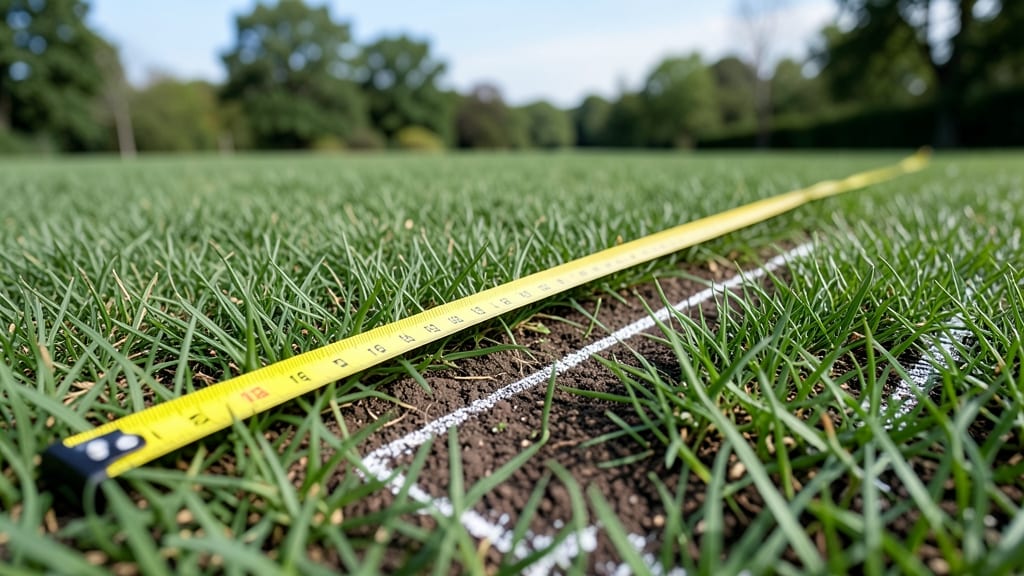
Understanding your average lawn size is the key to designing a space that works for you—whether you’re dreaming of a lush green carpet 🌱 or a vibrant garden oasis.
Picture this: You’ve finally decided to add flower beds or a vegetable patch, only to realize your yard is half the size you thought. Or worse, you’ve overbought mulch or sod because you guessed wrong. Knowing your lawn’s dimensions saves time, money, and frustration—so you can plant with confidence.
Lawn sizes vary wildly depending on where you live, the type of property, and even your climate. A suburban half-acre in Texas won’t match the sprawling estate lawns of New England, and that matters when choosing plants, calculating irrigation, or deciding how many shrubs to tuck into the edges.
Below, we’ll break down what “average” looks like and how to use those numbers to create a landscape that fits your life.
Ready to stop guessing and start designing? You’ll learn how to measure your yard accurately, pick the right plants for your space, and avoid common mistakes that turn a great idea into a costly headache.

How to measure your lawn’s square footage for planting
Before you can transform your yard into a vibrant garden or maintain a lush lawn, you need to know its exact square footage.
This measurement determines how much grass seed, mulch, or plant material you’ll need—and whether your space is better suited for dwarf shrubs or sprawling perennials. Without accurate calculations, you risk buying too much (wasting money) or too little (leaving bare spots).
Let’s break down the process for both rectangular and irregular-shaped lawns.
Grab a tape measure, a notebook, and a pencil—you’ll also need a calculator or smartphone app for quick math. Start by sketching a rough outline of your lawn on paper. This visual helps you identify sections that might need separate measurements, like curved edges or odd angles.
For larger yards, break the space into smaller rectangles or triangles to simplify calculations. Remember, precision here saves headaches (and dollars) later when ordering supplies.
Step-by-Step Guide to Measuring Your Lawn’s Square Footage
- Step 1: Measure the length and width of your lawn in feet. For rectangular yards, use a tape measure along the longest sides. Record these numbers.
- Step 2: Calculate the area of a rectangular lawn using the formula: Length × Width = Square Footage. Example: A 50-foot-long by 30-foot-wide lawn = 1,500 sq ft.
- Step 3: For irregular shapes, divide the lawn into smaller rectangles or triangles. Measure each section separately, then add the square footage together.
- Step 4: Use the triangle area formula for odd-shaped sections: (Base × Height) ÷ 2. Measure the base and height perpendicular to it.
- Step 5: For curved edges, estimate the average width of the curve and multiply by the length. Alternatively, use a wheel measuring tool (like a garden wheel) for accuracy.
- Step 6: Add up all sections to get your total square footage. Round up to the nearest whole number to account for small errors or future expansion.
Pro Tip: Use a laser measuring tool for large or hard-to-reach areas to save time and improve accuracy.
Once you’ve calculated your lawn’s total square footage, this number becomes the foundation for every planting or landscaping decision.
For example, a 5,000 sq ft lawn might accommodate a mix of clover ground cover (which requires less maintenance) and ornamental grasses along the edges, while a 15,000 sq ft yard could support a full vegetable garden, shrubbery, and a small orchard.
Always check the plant spacing guidelines on seed packets or plant tags—these tell you how many plants or how much seed to use per square foot.
Let’s say you’re planting perennial flowers like coneflowers or black-eyed Susans. Most perennials need 12–24 inches of space between plants to thrive. For a 2,000 sq ft lawn, you’d need roughly 8–16 plants per 100 sq ft, depending on the variety.
Multiply your total square footage by this ratio to avoid overcrowding. Overplanting leads to competition for nutrients and water, while underplanting leaves unsightly gaps. Balance is key!
Square footage also dictates how much mulch or sod you’ll need. A standard 3-inch layer of mulch covers about 100 sq ft per cubic foot. For a 1,000 sq ft lawn, you’d need 10 cubic feet of mulch.
Similarly, sod is sold by the square foot, so a 5,000 sq ft lawn requires 5,000 sq ft of sod—no math shortcuts here! Always order 5–10% extra to account for trimming or future repairs.
Understanding your lawn’s size helps with irrigation planning too. Larger lawns may need a drip irrigation system or soaker hoses to ensure even water distribution, while smaller yards might only require a sprinkler or hose-end attachment.
Calculate water needs by multiplying your square footage by the watering rate of your system. For example, a 1,500 sq ft lawn with a sprinkler that covers 500 sq ft per hour would take 3 hours to water fully.
Don’t overlook microclimates within your lawn. A south-facing slope may receive more sun and dry out faster, while a north-facing corner might stay shady and moist. Divide your lawn into sun/shade zones and measure each area separately.
This helps you choose the right grass type or plant varieties. For instance, fine fescue thrives in shady spots, while Kentucky bluegrass loves full sun.
If your lawn has steep inclines or uneven terrain, consider breaking it into terraces or contour lines for accurate measurements. Use a level tool to identify slopes and adjust your calculations accordingly.
Terraced lawns also help prevent erosion and make maintenance easier. For example, a hillside lawn might require 10% more seed to ensure full coverage on sloped areas.
Finally, document your measurements and notes in a garden journal. Include sketches of your lawn’s layout, sun exposure maps, and plant placement ideas. This reference guide becomes invaluable for future seasons—whether you’re replanting, expanding your garden, or troubleshooting growth issues.
With your square footage in hand, you’re ready to design a lawn that’s as functional as it is beautiful.
Best plants for common lawn sizes: small (under 5,000 sq ft) vs. large (over 10,000 sq ft)
Your lawn’s square footage isn’t just about how much sod to buy—it determines which plants thrive without overwhelming your space. A small yard (under 5,000 sq ft) needs compact, high-impact plants, while large yards (over 10,000 sq ft) can handle sprawling perennials and trees.
Let’s match your space to the perfect low-maintenance greenery.
For small lawns, prioritize drought-resistant grasses like Buffalo grass or Zoysia, which stay lush with minimal water. Pair them with clumping perennials like Black-eyed Susans or Coneflowers—they add color without stealing space.
In large yards, shade-tolerant perennials like Hostas or Hydrangeas thrive under mature trees, while ornamental grasses (e.g., Miscanthus) add texture without competing for sunlight.
| Plant Type | Best For | Space Needs | Water Needs | Sunlight |
|---|---|---|---|---|
| Drought-Resistant Grasses | Small Yards (<5,000 sq ft) | Compact (1-3 ft spread) | Low (1x/week) | Full Sun (6+ hrs) |
| Clumping Perennials | Small Yards | Moderate (2-4 ft spread) | Medium (2x/week) | Partial Sun (3-6 hrs) |
| Shade-Tolerant Perennials | Large Yards (>10,000 sq ft) | Sprawling (4-6 ft spread) | Medium (2x/week) | Partial Shade (3-4 hrs) |
| Ornamental Grasses | Large Yards | Tall (3-6 ft height) | Low (1x/week) | Full Sun (6+ hrs) |
| Ground Covers | Both Sizes | Creeping (spreads 1-2 ft/year) | Low (1x/week) | Sun to Shade |
For small yards, ground covers like Creeping Thyme or Clover are game-changers—they suppress weeds while adding fragrance and texture. In large yards, mix native shrubs (e.g., Arborvitae) for privacy with pollinator-friendly flowers like Milkweed to support local ecosystems.
Both spaces benefit from mulch to retain moisture and reduce weeds, but large yards can afford thicker layers (3-4 inches) for deeper root protection.
Don’t forget vertical space! In tight yards, trellises with climbing roses or Clematis add drama without footprint. For sprawling lawns, small trees like Japanese Maple create focal points. Always check mature plant sizes—a 6-foot shrub in a 10x10 ft bed will quickly become a problem!
Pro tip: Use container gardening for small yards to swap out seasonal plants (e.g., Pansies in winter, Geraniums in summer). For large yards, group plants by water needs to simplify irrigation. Start with 2-3 signature plants per zone to avoid overwhelming your space.
🌱