
Lawn
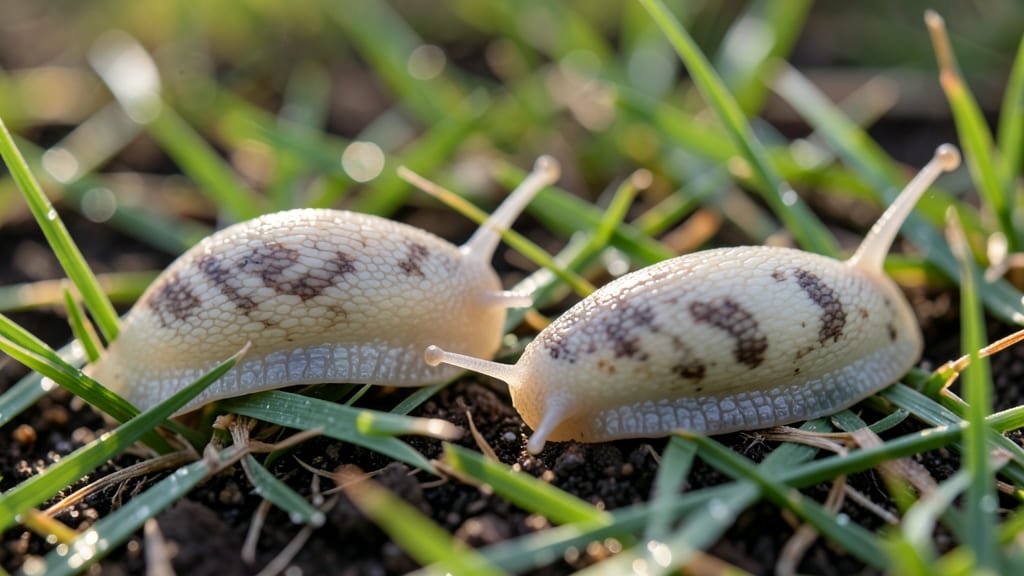
Slugs are bad for your lawn because they devour grass blades, young seedlings, and leafy vegetables, leaving behind irregular holes and unsightly damage that can stunt plant growth or kill plants entirely—especially in damp conditions.
These slimy pests aren't just annoying—they're destructive. 🐌 They target tender new growth first, creating jagged edges on leaves and leaving behind a silvery slime trail that signals their presence. Their feeding patterns weaken plants over time, making them more susceptible to disease.
What makes them particularly troublesome is their rapid reproduction cycle; a single slug can lay hundreds of eggs in a season, turning a small problem into a full-blown infestation within weeks.
Most damage occurs at night when slugs emerge from hiding spots like thick mulch or dense ground cover. They thrive in shady, moist areas where morning dew lingers, making early spring and late summer their peak activity periods.
Without intervention, they can completely defoliate young plants or create unsightly brown patches in lawns that take weeks to recover.
💡 In This Article
- How Slugs Destroy Lawns and Gardens
- Natural Ways to Keep Slugs Off Your Lawn
How slugs destroy lawns and gardens
Slugs attack lawns and gardens with surgical precision, targeting the most vulnerable parts of plants. They use their file-like radula—a ribbon of tiny teeth—to scrape away grass blades at the base, creating irregular holes that weaken the plant's root system.
On seedlings, they consume entire leaves down to the midrib, leaving only the tough central vein. This feeding pattern creates a "windowpane" effect on leaves, where only the transparent veins remain intact. 🌱
Their damage isn't just cosmetic—it's physiological. When slugs feed on grass blades, they sever the plant's vascular system, causing it to wilt and turn brown within 24-48 hours.
In gardens, they prefer tender vegetables like lettuce and hostas, often consuming 50% of a young plant's foliage in a single night. The slime trail they leave behind isn't just a telltale sign—it contains mucus that can spread fungal diseases between plants, creating secondary damage.
Slugs thrive in conditions that mimic their natural rainforest habitats: high humidity, shade, and moisture. They're most active during twilight hours when temperatures drop to 60-75°F, making early morning or late evening the prime times to spot them.
Their ability to reproduce rapidly—laying 20-40 eggs per clutch and up to 500 eggs per season—means a single slug can create a population explosion in just a few months. This is why you might see damage one week but no visible slugs the next.
What makes them particularly effective lawn destroyers is their behavior. Unlike many pests, slugs don't just feed—they create "highways" through mulch and debris, making it easier for subsequent generations to find food.
Their preference for shaded, damp areas means they often concentrate their damage in the same spots year after year, creating permanent brown patches that resist regrowth. The combination of their feeding habits, reproductive speed, and habitat preferences makes them one of the most persistent lawn pests.
Consider this comparison: A single slug can consume 0.1-0.2 square feet of lawn per night, while a moderate infestation (about 10 slugs per 100 square feet) can defoliate a lawn completely in 3-5 nights.
The economic impact is significant too—studies show lawn damage from slugs costs homeowners $50-$200 annually in lost grass and replacement plants. Their damage isn't just aesthetic; it creates weak points in your lawn that allow weeds to take hold more easily.
Their nocturnal habits and preference for moisture mean they often go undetected until the damage is already done. Many homeowners first notice slug damage when they see their carefully maintained lawn develop irregular brown patches that don't respond to watering or fertilizing.
By then, the slugs have already moved on to new feeding grounds, making eradication more difficult. 🌧️