
Lawn
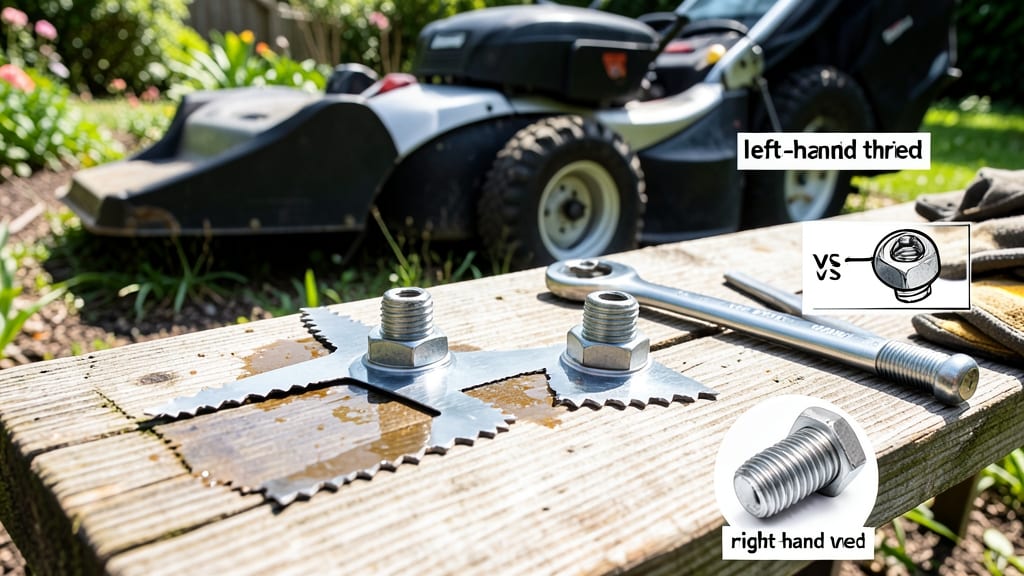
Lawn mower blades are not reverse threaded—most use standard right-hand threads. However, some commercial-grade or older models may feature left-hand threads, so always verify before tightening. Check the blade bolt’s direction to confirm threading orientation before installation or adjustments.
Most lawn mower blades use standard right-hand threads because they follow conventional hardware design, which simplifies manufacturing and maintenance.
The exception occurs in certain commercial or vintage models where left-hand threads prevent accidental loosening during operation—a critical safety feature when blades spin at high speeds. 🔧 To avoid damaging threads or stripping bolts, always inspect the bolt head's direction before attempting to tighten or loosen, and use the correct socket wrench size for your model.
Many mower manuals specify threading orientation, but visual confirmation is the most reliable method.
If you're unsure about your mower's threading, a quick test exists: try turning the bolt clockwise to tighten it. If it resists or turns counterclockwise instead, you're likely dealing with left-hand threads. This simple check can save time and prevent costly mistakes during blade maintenance or replacement.
💡 In This Article
- Why Some Lawn Mower Blades Use Left-Hand Threads
- How to Identify and Handle Reverse-Threaded Lawn Mower Blades
Why some lawn mower blades use left-hand threads
Lawn mower blades spin counterclockwise when viewed from above, which creates a unique engineering challenge for manufacturers. Left-hand threads solve this by requiring the bolt to turn clockwise to tighten—matching the blade's natural rotation.
This design prevents accidental loosening during operation, a critical safety feature when blades spin at 3,000-3,600 RPM on most residential mowers. The counteracting force from the spinning blade would otherwise gradually loosen standard right-hand threads over time, increasing vibration and wear risks.
The physics behind this involves torque direction and friction. When a blade spins counterclockwise, it generates a force that tries to rotate the bolt counterclockwise as well. Left-hand threads convert this rotational force into a tightening action, creating what engineers call "self-locking" behavior.
This is particularly important in commercial mowers where blades operate continuously for hours, experiencing significant centrifugal forces. The thread angle (typically 60 degrees) and material hardness (often grade 8 bolts) work together to maintain tension under these extreme conditions.
Manufacturers implement left-hand threads strategically—typically in high-end or commercial models where safety and longevity are priorities. For example, Scag and John Deere commercial mowers frequently use this design, while most consumer-grade models stick with right-hand threads for simplicity.
The decision often comes down to cost versus performance: left-hand threads require specialized bolts and assembly processes, adding $5-$15 per blade to production costs. This explains why you'll rarely see them on basic push mowers but commonly find them on zero-turn radius models.
There's also a historical aspect to consider. Early mower designs used left-hand threads because they were easier to manufacture with the tools available at the time.
As technology advanced, many manufacturers shifted to right-hand threads for standardization, but some brands maintained the left-hand design for its proven reliability in demanding applications. The choice ultimately depends on balancing operational safety with maintenance convenience—something every homeowner should weigh when selecting replacement blades or tools.
Visual identification is key to understanding why threading matters. Look at the bolt head: if it has a left-facing arrow or counterclockwise threading pattern when viewed from the blade side, you're dealing with left-hand threads.
This design choice isn't just about safety—it's about creating a system where the blade's natural motion works with the threading to maintain secure attachment. The result is less vibration, reduced maintenance needs, and longer blade life, which translates to better cutting performance over time.