
Mower
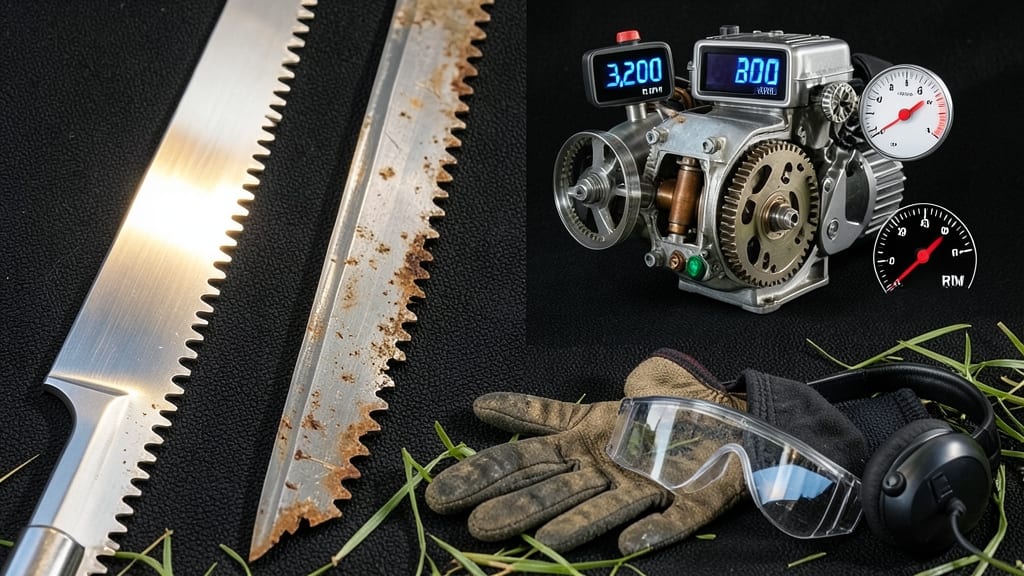
How fast does a lawn mower blade spin? It typically operates at 2,800 to 3,500 RPM for most residential models, with commercial-grade mowers reaching 3,500 to 4,000 RPM. Smaller engines (under 15 HP) typically operate at the lower end, while high-performance engines hit higher speeds for finer cuts.
Understanding these RPM ranges helps you choose the right mower for your yard size and grass type. 🌱 For example, a walk-behind mower with a 12 HP engine will typically spin at 2,800 RPM, ideal for medium-sized lawns, while a zero-turn mower with a 25 HP engine can reach 4,000 RPM, perfect for large, intricate landscapes.
The faster speeds also reduce the risk of scalping—when blades cut grass too short—while slower RPMs may require more passes for a clean cut.
What’s interesting is how blade pitch plays a role. Blades with a steeper angle (like 40-42°) can handle higher RPMs without losing efficiency, while flatter blades (32-36°) may struggle above 3,200 RPM.
Always check your mower’s manual for recommended RPM ranges to avoid damaging the engine or reducing blade life.
💡 In This Article
- Lawn Mower Blade RPM by Engine Type and Cutting Needs
- How Blade Speed Affects Grass Cut Quality and Safety
Lawn mower blade RPM by engine type and cutting needs
The RPM of your lawn mower blade isn't random—it's directly tied to your engine's horsepower and the blade's design. Here's what's actually happening: The engine's crankshaft spins at a set speed (measured in RPM), and the blade's pitch (angle) determines how efficiently it converts that rotation into cutting power.
A 12-15 HP walk-behind mower typically spins blades at 2,800-3,200 RPM because its engine is optimized for balance between power and fuel efficiency. 🔥 This speed works perfectly for most residential grass types, delivering a clean cut without excessive vibration.
Now, let's talk about the differences between mower types. A riding mower with a 18-22 HP engine usually operates at 3,000-3,500 RPM, giving you more cutting power for larger lawns.
The blades on these models often have a 36-40° pitch, which helps them handle the higher RPMs without losing efficiency.
Meanwhile, zero-turn mowers with 25+ HP engines can reach 3,500-4,000 RPM—their wider blades and more powerful engines allow for faster cutting speeds, which is crucial for their maneuverability and ability to handle thick grass.
The key factor here is that higher RPMs mean each blade pass does more work, reducing the number of passes needed for a perfect cut.
What most people don't realize is how blade pitch affects these RPM ranges. A blade with a 40-42° pitch can handle higher RPMs better because it creates more lift and cutting action per rotation.
In contrast, a flatter blade (32-36°) might struggle above 3,200 RPM because it relies more on sheer speed than lift. This is why you'll often see commercial mowers with steeper blades—they're built to handle the higher RPMs needed for large-scale lawn care.
For homeowners, matching your blade pitch to your mower's RPM range ensures you get the cleanest cut without unnecessary strain on the engine.
Consider these key factors when choosing a mower:
- Lawn size: Smaller yards (½ acre) can handle 2,800-3,200 RPM mowers, while larger properties benefit from 3,500+ RPM models.
- Grass type: Thick, coarse grass (like Bermuda) needs higher RPMs (3,500+) for efficient cutting.
- Cutting style: Mulching requires slightly higher RPMs (3,000-3,500) to break down grass clippings properly.
The science behind this involves centrifugal force and blade dynamics. At higher RPMs, the blades experience more centrifugal force, which helps them cut through grass more effectively. However, too much speed can cause scalping (cutting grass too short) or even damage the blade over time.
This is why most manufacturers recommend specific RPM ranges for their models—it's all about finding that sweet spot where cutting efficiency meets engine safety. 💫
For example, a Honda HRX217VKA (17 HP) typically spins at 3,200 RPM, perfect for medium-sized lawns, while a Cub Cadet ZT1 42 (21 HP) can hit 3,800 RPM, ideal for large, complex landscapes.
Understanding these differences helps you select a mower that matches both your yard's needs and your cutting preferences.