
Mower
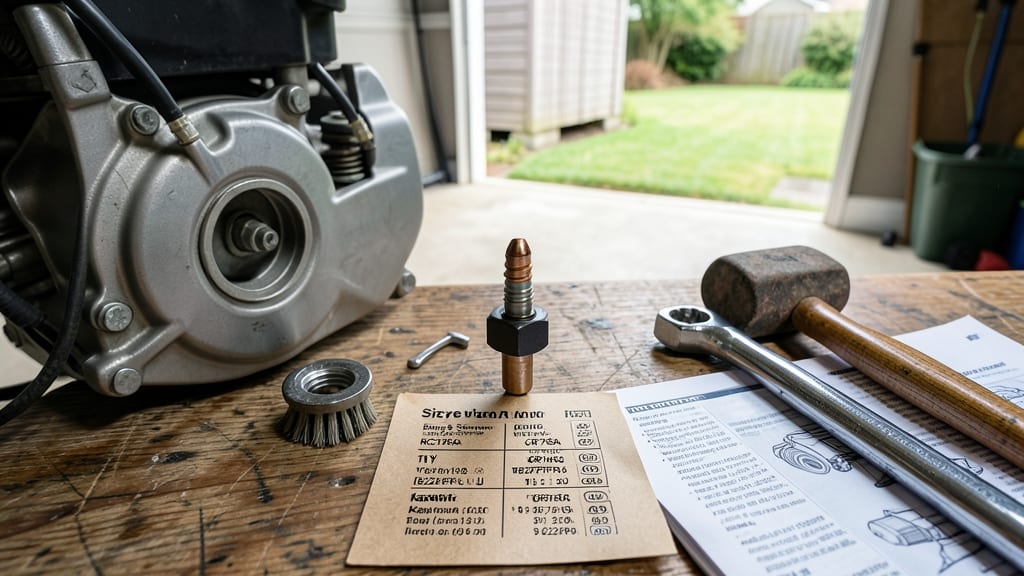
Lawn mower spark plug sizes vary by engine model—typically ranging from 0.022 to 0.035 inches—with specific brands like Briggs & Stratton, Honda, and Toro requiring precise gaps. Always check the owner’s manual or engine label for exact specs before replacement.
The right spark plug gap ensures your mower starts reliably and runs efficiently. 🔥 Different engines need different gaps—too wide, and you risk misfires; too narrow, and you'll struggle with ignition.
For example, a Briggs & Stratton engine might need 0.028 inches, while a Honda could require 0.030 inches. Always use a feeler gauge for accuracy, and never guess—even a 0.001-inch difference can affect performance. I’ve seen many DIYers skip this step, leading to poor combustion and wasted fuel.
Most manufacturers print the correct plug size on the engine label, usually near the spark plug wire. If you’re unsure, cross-reference your mower’s model number with a brand-specific replacement chart.
Electric trimmers often use smaller plugs (0.020 inches), while larger gas-powered mowers might need 0.035 inches for better power output. Pro tip: If your mower’s running rough, a misaligned gap could be the culprit—double-check before blaming the fuel or air filter!
💡 In This Article
- How to Find Your Lawn Mower’s Exact Spark Plug Gap
- Top Spark Plug Brands and Replacement Charts by Engine Type
How to find your lawn mower’s exact spark plug gap
The first step to getting your spark plug gap right is locating the engine label—usually a small metal or plastic plate near the spark plug wire or under the hood.
This label contains critical details like the model number, engine type, and often the recommended spark plug size (e.g., NGK BPR6ES or Champion RC14YC).
If the label is missing or faded, check the owner’s manual under the "specifications" section, where manufacturers list exact measurements like 0.028 inches for Briggs & Stratton or 0.030 inches for Honda engines.
Once you’ve identified the correct plug, use a feeler gauge—a thin metal strip with calibrated thickness—to measure the gap. Slide the gauge between the plug’s electrodes (the two metal prongs). If it fits snugly without bending, you’ve matched the manufacturer’s spec.
For example, a 0.035-inch gap for a Toro mower requires a feeler gauge of that exact thickness. 🔧 If the gap is too wide, bend the ground electrode slightly inward; if too narrow, gently pry it outward. Never use pliers—they can damage the delicate electrode coating.
Why does this matter? The spark plug gap directly affects combustion efficiency. A gap that’s too wide (e.g., 0.040 inches instead of 0.030) creates a weaker spark, leading to misfires and poor fuel economy.
Conversely, a gap that’s too narrow (e.g., 0.020 inches) can cause pre-ignition, where the fuel-air mixture ignites prematurely, damaging the engine over time. This is why even a 0.001-inch difference can make a noticeable impact on performance.
Pro tip: If your mower’s running rough or stalling, a misaligned gap is often the culprit before you blame the fuel or air filter. I’ve seen DIYers overlook this simple check, wasting time and money on unnecessary repairs.
Always double-check the gap after replacing a plug—even if the new one claims to be "pre-gapped," manufacturing tolerances can vary slightly. For instance, a Champion RC14YC might arrive with a gap of 0.030 inches, but bending it to 0.032 inches could improve performance in high-altitude conditions.
For electric trimmers or smaller engines, the gap is typically tighter (0.020–0.025 inches), while larger gas-powered mowers often need a wider gap (0.030–0.035 inches) to handle higher compression ratios. This variation is why cross-referencing your mower’s model number with a brand-specific chart is essential.
For example, a Honda HRX217VKA requires a 0.030-inch gap, while a Briggs & Stratton 503564 needs 0.028 inches. Always verify before installing!
Don’t forget to clean the plug while you’re at it. Carbon buildup or oil fouling can disguise the actual gap, leading to incorrect measurements. Use a wire brush to remove debris, then wipe the electrodes with a clean rag.
A properly gapped and clean plug ensures your mower starts on the first pull and runs smoothly all season long. 💫