
Mower
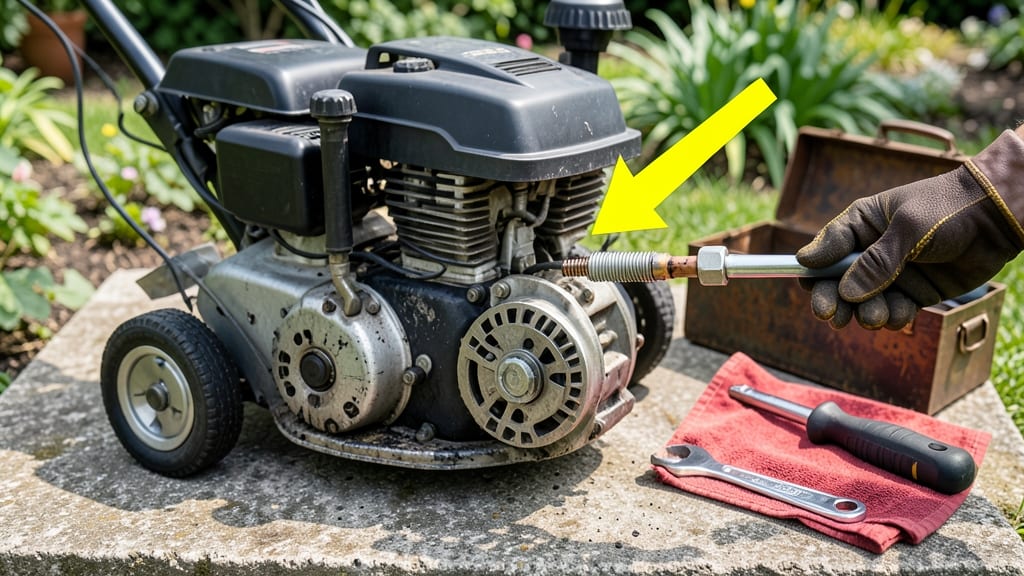
Where the spark plug is on a lawn mower depends on the engine type, but it’s usually found under a black rubber cap or plastic cover on the engine’s side near the air filter housing or cylinder head. Always verify your mower’s engine type (2-cycle vs 4-cycle) for exact placement.
The spark plug’s location varies based on whether your mower has a 2-cycle or 4-cycle engine, but you’ll almost always find it on the engine’s side. 🔥 For 4-cycle engines, look under the air filter housing or near the cylinder head—these are common landmarks.
On 2-cycle engines, the plug might be tucked under a different cover, often near the carburetor. Pro tip: If you can’t spot it, check your owner’s manual or look for the spark plug wire leading to the plug—it’s your visual guide.
Safety first: Always disconnect the spark plug wire before handling the plug, and let the engine cool completely if it’s been running. Once you locate it, you can easily remove the plug for maintenance or troubleshooting.
This simple access point is why spark plugs are one of the easiest components to maintain on your mower.
💡 In This Article
- Identifying Spark Plug Locations by Lawn Mower Engine Type
- Step-by-Step Guide to Finding Your Lawn Mower’s Spark Plug
Identifying spark plug locations by lawn mower engine type
The spark plug's location on your lawn mower depends entirely on whether you're dealing with a 2-cycle or 4-cycle engine, as these designs dictate the engine's overall architecture.
In 4-cycle engines (most common in modern lawn mowers), the spark plug sits prominently on top of the cylinder head, often protected by a black rubber boot or plastic cover.
This placement makes it easily accessible from the side of the engine, typically near the air filter housing where you'll see the spark plug wire leading directly to it. The cylinder head in these engines is usually a rectangular metal block with cooling fins, making the plug's location visually distinct.
For 2-cycle engines (often found in older or smaller mowers), the spark plug may be positioned differently due to the engine's compact design. Here, you'll commonly find it tucked under a different cover near the carburetor, sometimes even on the opposite side of the engine.
The key visual landmark is the spark plug wire—follow it from the ignition coil to its endpoint, which will lead you directly to the plug.
In both engine types, the plug is almost always on the engine's side rather than the top, which makes it easier to access without removing the entire engine cover. 🔥
The engine's shaft orientation also plays a role in spark plug placement. In vertically shafted engines (where the crankshaft runs vertically), the plug is usually positioned higher up near the air filter.
Conversely, in horizontally shafted engines, the plug might be lower and closer to the ground, sometimes requiring you to kneel or lie down to access it.
This variation is why checking your mower's manual or engine label is always a good idea—it often includes a simple diagram showing the plug's location.
One common misconception is that the spark plug is always near the air filter, but this isn't always true. While the air filter housing is a reliable landmark for 4-cycle engines, 2-cycle engines might have the plug closer to the exhaust port or even near the flywheel housing.
The exhaust port is typically a round metal pipe with cooling fins, and if the plug isn't near the air filter, this is a good secondary spot to check.
Always remember that the spark plug wire is your best friend—it’s a direct visual guide to the plug's location, no matter the engine type.
Understanding these differences can save you time during maintenance. For example, if your mower has a 4-cycle engine with a vertical shaft, the plug is likely within easy reach from the side.
But if it's a 2-cycle engine with a horizontal shaft, you might need to remove a side panel or even the air filter housing to access it. This is why knowing your mower's engine type is the first step in locating the spark plug efficiently. 💫
Here’s a quick comparison to help you visualize:
- 4-Cycle Engines: Plug near air filter housing or cylinder head, often protected by a rubber boot
- 2-Cycle Engines: Plug near carburetor or exhaust port, sometimes under a different cover
- Vertical Shaft Engines: Plug positioned higher, closer to the top of the engine
- Horizontal Shaft Engines: Plug positioned lower, sometimes near the ground
If you're still struggling to locate the plug, don’t hesitate to consult your mower’s manual—it often includes a labeled diagram of the engine, making the process much simpler.
Many modern mowers also have the engine type and spark plug location printed on a sticker near the oil fill cap or under the hood. This small detail can save you from unnecessary guesswork and frustration. ✨