
Lawn
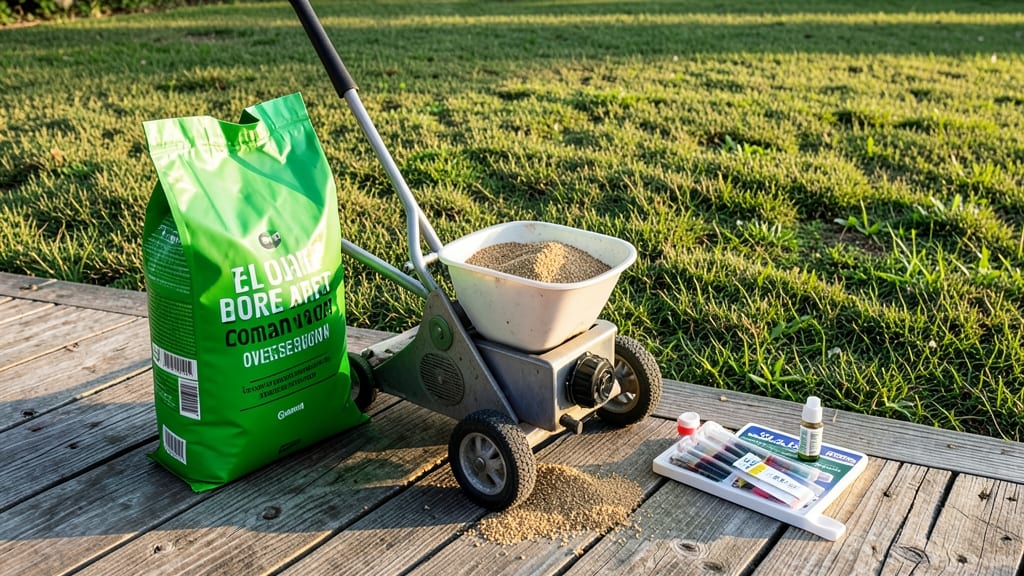
To fertilize an overseeded lawn, wait 4-6 weeks after seeding when the grass reaches 3-4 inches tall and soil temperatures stay above 60°F for at least 7 days. Use a starter fertilizer with high phosphorus for root development before switching to balanced lawn fertilizer.
Timing matters because cool-season grasses like fescue or ryegrass need warm soil to establish strong roots. 🌱 When soil temperatures dip below 60°F, fertilizer nutrients become less available, slowing growth. I always check soil temps with a simple thermometer—it’s the best way to avoid over- or under-fertilizing.
The high-phosphorus starter helps new roots grow quickly, while a balanced fertilizer later maintains healthy growth.
For best results, apply starter fertilizer in early fall or late spring when days are warm but nights stay cool. This timing gives young grass the energy it needs without stressing it. Water lightly before and after application to help nutrients soak in evenly.
💡 In This Article
- Soil Temperature and Grass Growth Phases for Fertilizing
- Step-by-Step Fertilizer Application Timeline for Overseeded Lawns
Soil temperature and grass growth phases for fertilizing
The ideal soil temperature for fertilizing overseeded lawns is 50-60°F, where cool-season grasses like fescue and ryegrass thrive. Below 50°F, microbial activity slows, reducing nutrient availability by up to 30%.
This is why we always wait for consistent warmth—when soil stays above 60°F for 7+ days, roots grow 2-3 times faster due to increased enzymatic activity in the soil.
Grass growth follows distinct phases: germination (7-14 days), tillering (3-4 weeks), and root establishment (4-6 weeks). Phosphorus-heavy starter fertilizers (like 10-20-10 blends) accelerate this last phase by promoting root branching.
Without proper phosphorus, roots may develop shallow and weak, leaving grass vulnerable to drought or disease. Think of phosphorus as the "foundation builder" for your lawn's skeleton.
Cool-season grasses respond dramatically to temperature shifts. At 70°F, growth accelerates but roots struggle to keep up, while at 80°F+, grass can go dormant. This is why early fall or late spring timing is perfect—days are warm enough for growth, but nights stay cool to prevent stress.
A soil thermometer (just $15) is your best friend here to track these subtle changes.
Here's what happens if you fertilize too early: young grass may burn from concentrated nutrients in cool soil. Too late, and you miss the critical root-building window. The 3-4 inch height rule ensures grass has enough leaf surface to absorb nutrients efficiently.
At this stage, roots typically extend 4-6 inches deep, anchoring the plant properly.
Consider this example: In Zone 5, overseeding in early September gives grass 6-8 weeks of warm soil before winter. Apply starter fertilizer when soil hits 60°F (usually mid-September), then switch to a 24-4-6 balanced fertilizer in early spring when soil warms again.
This two-phase approach mirrors how professional turf managers build resilient lawns.
For visual learners, imagine roots as a tree's branches—phosphorus is the water that helps them spread wide. Without it, your lawn stays shallow-rooted, like a sapling struggling in drought.
The 4-6 week window after seeding is your chance to give those roots the boost they need before they have to fend for themselves.