
Fertilization
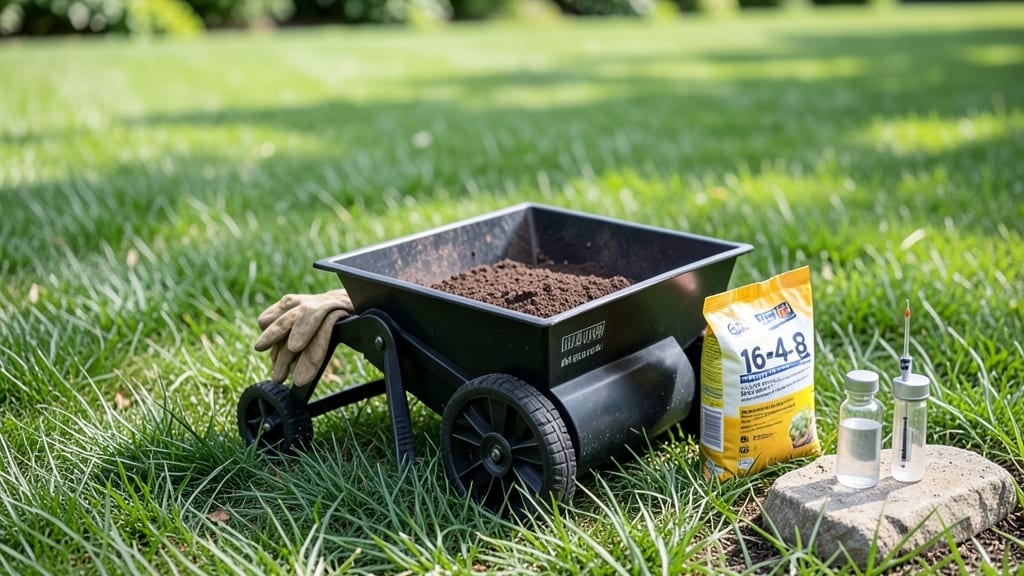
To fertilize lawns in Ohio, time applications for early spring (March–April), late spring (May–June), and fall (September–October), adjusting for regional climate zones and soil test results—Northern Ohio lawns thrive with early spring feedings, while Southern Ohio benefits from late spring and fall applications to strengthen cold resistance.
Ohio's diverse climate—spanning USDA zones 5b to 6b—means your fertilization schedule should align with local frost dates and grass types. Cool-season grasses like Kentucky bluegrass and fescue need that early spring boost to kickstart growth after winter dormancy, while warm-season grasses like Bermuda respond better to late spring feedings when soil warms. 🌱 I always recommend testing soil in fall or early spring to avoid over-fertilizing—Ohio State University's soil reports can reveal whether your lawn needs more nitrogen for greening or phosphorus for root development.
For best results, split applications into three key windows: the first in early spring to wake up dormant grass, the second in late spring to support summer growth, and the third in fall to build resilience before winter. Slow-release fertilizers work well for early and fall feedings, while quick-release options can help during the rapid growth phase of late spring.
Pro tip: Water thoroughly after each application to help nutrients penetrate the soil.
💡 In This Article
- Ohio’s Climate Zones and Ideal Fertilization Timing
- Soil Testing and Fertilizer Application Best Practices
Ohio’s climate zones and ideal fertilization timing
Ohio’s USDA hardiness zones—ranging from 5b in the northern regions to 6b in the southern parts—create distinct microclimates that directly impact when and how you should fertilize.
In Northern Ohio (zones 5a-5b), where winters are colder and frost lingers until mid-April, cool-season grasses like Kentucky bluegrass and fescue need that early spring feeding (late March to early April) to break dormancy and establish strong roots before summer heat.
The soil typically thaws by mid-March in these areas, making it the perfect window to apply fertilizer before the grass starts actively growing.
Conversely, Southern Ohio (zones 6a-6b) experiences milder winters with later frost dates (mid-to-late April) and warmer soil temperatures earlier in the season.
Here, the focus shifts to late spring (May-June) fertilizations to support rapid growth during peak summer months, followed by a fall application (September-October) to strengthen cold resistance.
Warm-season grasses like Bermuda and zoysia, common in Southern Ohio, thrive with this schedule because they rely on soil temperatures above 60°F to activate growth—something that happens reliably by late May in these zones.
The key difference lies in how each grass type responds to temperature shifts. Cool-season grasses grow best when soil temps are between 60-75°F, while warm-season varieties prefer 80-95°F.
This is why Northern Ohio lawns often show signs of stress if fertilized too late in spring—the grass may not have enough time to utilize nutrients before summer dormancy sets in.
Meanwhile, Southern Ohio lawns benefit from that late spring boost because the extended growing season allows grasses to fully metabolize the fertilizer before winter.
Here’s what’s actually happening at the grass root level: Fertilizer provides essential nutrients like nitrogen, which grasses convert into chlorophyll for photosynthesis. In early spring, this process jumpstarts growth after winter dormancy. In fall, it helps grasses build up carbohydrates to survive freezing temperatures.
The timing ensures nutrients are available when the grass is actively growing—not when it’s dormant or stressed by extreme heat or cold.
Consider these regional variations when planning your schedule:
- Northern Ohio (Columbus, Cleveland): Prioritize early spring (March-April) and fall (September-October) applications, with a light touch in late spring if needed.
- Southern Ohio (Cincinnati, Dayton): Focus on late spring (May-June) for summer growth and fall (September-October) for winter hardiness.
- Transition zones (Toledo, Akron): Split feedings evenly between early spring and fall, adjusting based on soil test results.
What most people don’t realize is that Ohio’s climate variability means your lawn’s needs can shift dramatically even within a 50-mile radius.
For example, a lawn in zone 5b might need fertilizer 2-3 weeks earlier than one in zone 6a—this is why local frost date records from the National Oceanic and Atmospheric Administration (NOAA) are your best friend for planning.
Always check 3-4 weeks before your target fertilization date to confirm soil conditions.