
Fertilization
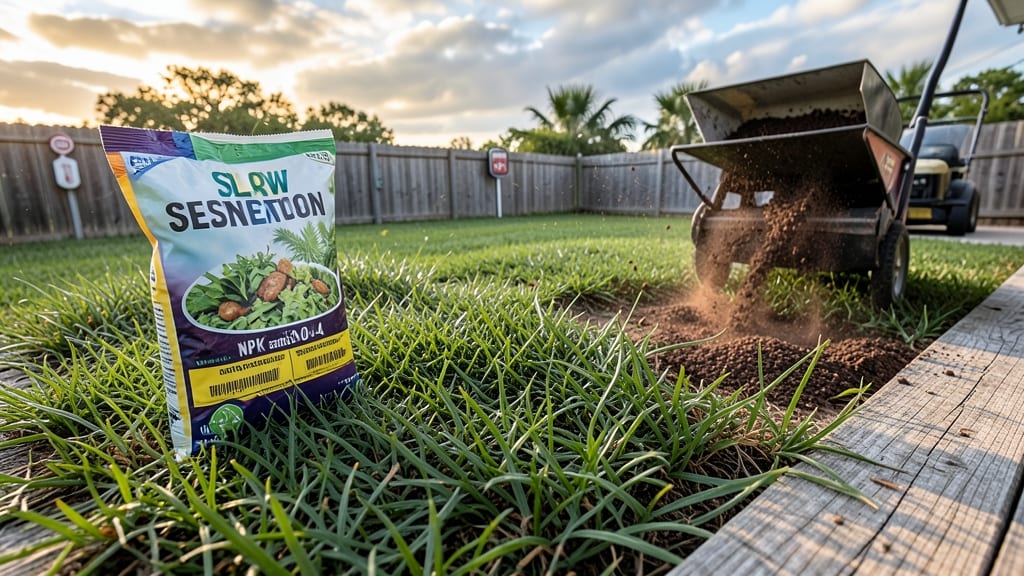
Should you fertilize your Florida lawn in March or wait until October? The answer depends on your grass type and the heat ahead — and getting it wrong can mean burned patches or wasted money.
Florida’s warm-season grasses like St. Augustine and Bermuda thrive when fed at the right times, but summer’s brutal sun turns fertilizer into a stressor. Too early, and you’ll shock your 🌱; too late, and weeds take over. The best schedule balances growth with survival, and it’s not what you’d guess.
Most gardeners overlook how Florida’s climate zones split the state into two distinct lawn-care worlds. North Florida’s cooler springs demand an early start, while Central and South Florida can wait until after the first real heat wave.
I’ll break down the exact months for each zone, plus the one trick that saves you from brown patches.
You’ll also learn how to spot over-fertilization (yellow tips are your first warning), when to skip feeding entirely, and why a slow-release fertilizer in fall is the game-changer for hurricane-proof grass. Let’s get your lawn feeding on a timeline that actually works.
Best fertilization schedule for Florida warm-season grasses by month
Florida’s warm-season grasses—like St. Augustine, Bermuda, and Zoysia—thrive with precise fertilization timing. Unlike northern lawns, Florida’s year-round growing season means fertilizing too late or too early can stress your grass or waste nutrients.
The key is feeding during active growth phases while avoiding summer heat and hurricane season disruptions.
Most Florida lawns need 3-4 fertilizer applications per year, timed to align with grass growth cycles. Slow-release fertilizers (like organic options or polymer-coated granules) reduce burn risks and provide steady nutrients. Quick-release fertilizers can work in emergencies but require careful watering to prevent damage.
Pre-emergence herbicides for weeds should be applied before weed seeds germinate, typically in late winter (February) for crabgrass and early summer (June) for other summer weeds. Always check the product label for Florida-specific timing, as weather patterns vary by region.
| Month | Fertilizer Action | Fertilizer Type | Notes | |||||||||||||||||
|---|---|---|---|---|---|---|---|---|---|---|---|---|---|---|---|---|---|---|---|---|
| January | Light feed (if needed) | Slow-release | Post-hurricane recovery; avoid if soil is waterlogged. | |||||||||||||||||
| February | Pre-emergent herbicide | N/A | Apply before crabgrass seeds sprout. | |||||||||||||||||
| March | Full feed (high nitrogen) | Slow-release (16-4-8) | Kickstart spring growth; water deeply after. | |||||||||||||||||
| April | Maintenance feed | Slow-release | Light application to sustain growth. | |||||||||||||||||
| May | Skip (summer dormancy prep) | N/A | Avoid fertilizing during drought or heat stress. | |||||||||||||||||
| June | Pre-emergent herbicide | N/A | Target summer weeds like nutsedge. | |||||||||||||||||
| July–August | Skip (hurricane season) | N/A | Grass goes dormant; fertilizing can attract pests. | |||||||||||||||||
| September | Light feed (post-hurricane) | Slow-release | Rebuild roots after storm damage. | |||||||||||||||||
| October | Full feed (fall root growth) | Slow-release (10-0-10) | Strengthen roots before winter; water in evening. | |||||||||||||||||
How Florida’s climate zones affect your lawn fertilizer timingFlorida’s climate zones—North, Central, and South—create distinct conditions for your lawn’s nutrient needs. North Florida’s cooler winters (USDA Zones 8a-9a) allow earlier spring fertilization, while South Florida’s year-round warmth (Zones 10a-11) demands careful summer adjustments. Humidity and rainfall patterns also shift how quickly grass absorbs nutrients and when weeds take over. In North Florida, where mornings can still be chilly into March, I recommend starting fertilizations in early April to align with grass growth. Meanwhile, South Florida’s longer growing season means I often skip summer fertilizing entirely to prevent stress from heat and humidity. Central Florida falls somewhere in between, balancing both extremes. Here’s how these zones impact your fertilizer timing, nutrient absorption, and weed control—plus the adjustments you’ll need to make:
In North Florida, I prioritize early spring fertilization (March-April) to jumpstart growth after winter dormancy. The cooler temps mean nutrients absorb more efficiently, but I always follow up with pre-emergent herbicides in February to block summer weeds like crabgrass. Rainfall here is moderate, so I avoid overwatering post-fertilization to prevent runoff. For Central Florida, humidity is the biggest challenge. I apply fertilizer in February-March and again in September-October, timing it for the early morning to let grass blades dry before afternoon humidity peaks. This reduces fungal risks like brown patch disease. A light application in December helps grass recover from summer stress. In South Florida, I skip summer fertilizing entirely—the heat and humidity create ideal conditions for fungal growth and nutrient burn. Instead, I focus on January-February and September, using organic options like compost or fish emulsion to improve soil structure. Pre-emergent in December is critical here, as weeds germinate year-round. Regardless of zone, I always test soil pH (aim for 6.0-7.0) before fertilizing. North Florida soils often need lime, while South Florida’s sandy soils benefit from sulfur. Adjusting your approach by zone ensures your lawn gets the right nutrients—without wasting money or harming grass health. 🌱 |