
Lawn
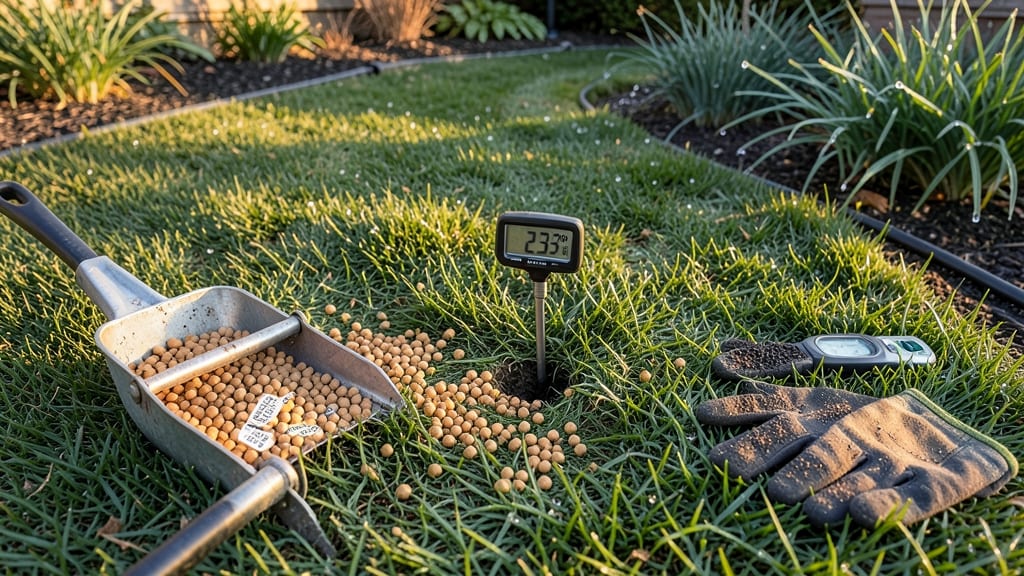
It’s too hot to fertilize lawn when daytime temperatures consistently exceed 85°F (29°C), as heat stress can burn grass roots and reduce nutrient absorption. Wait until early morning or late evening to apply fertilizer only when temps drop below 80°F (27°C).
High summer temperatures don’t just make fertilization uncomfortable—they can actually harm your lawn. 🌡️ When soil heats up, grass roots struggle to absorb nutrients, and fertilizers like nitrogen can burn delicate blades or evaporate before they’re used.
I’ve seen grass turn brown within days after fertilization in peak heat, even with the best products. The key is timing: cooler mornings or evenings give your lawn time to process nutrients without stress.
For summer care, opt for slow-release fertilizers that provide steady nutrients over weeks, not quick bursts. Pair this with deep watering after application to help roots absorb what they need.
If your grass looks wilted or yellow, it’s already signaling heat stress—hold off on fertilizing until temperatures drop below 80°F (27°C) and stay there for a few days.
💡 In This Article
- How Heat Affects Grass and Fertilizer Absorption
- Best Fertilization Practices for Summer Lawn Care
How heat affects grass and fertilizer absorption
When temperatures climb above 85°F (29°C), grass roots experience cellular stress that disrupts their ability to absorb water and nutrients. The heat accelerates respiration rates in roots, causing them to "burn" energy just to survive rather than grow.
This is why you might notice blades turning yellow or crispy at the edges after fertilization during heatwaves—it’s not just the fertilizer, but the roots’ inability to process it properly. 🔥
Soil microbes, which break down organic fertilizers into usable forms, also slow down in extreme heat. These beneficial bacteria and fungi thrive between 60-80°F (15-27°C), but above 90°F (32°C), their activity drops by up to 50%.
This means nitrogen in quick-release fertilizers can volatilize (turn into gas) before roots have a chance to absorb it, while phosphorus and potassium may leach deeper into the soil, becoming unavailable to the grass.
Even slow-release fertilizers can overheat, causing granules to break down too quickly and release all nutrients at once.
The salt content in many fertilizers becomes especially problematic in heat. When soil is dry and hot, salts concentrate near the surface, creating a hypertonic environment that draws moisture out of grass roots—a process called "osmotic stress."
This is why you’ll often see brown patches or wilting after fertilizing in summer, even with high-quality products. The roots simply can’t compete with the salt’s dehydrating effects when temperatures are extreme. 💫
Evaporation rates also skyrocket in summer heat, with up to 0.25 inches (6mm) of water lost per day from soil surfaces. This means any moisture or dissolved nutrients from fertilizer are quickly lost to the atmosphere before roots can access them.
Even if you water thoroughly after applying fertilizer, the heat will continue to push those nutrients deeper into the soil profile, where they’re no longer available to the grass’s shallow root system.
Consider this: in a study by the University of Georgia, lawns fertilized at 90°F (32°C) showed 30% less nutrient uptake compared to those fertilized at 75°F (24°C). The difference comes down to root membrane permeability—heat makes these membranes more rigid, reducing their ability to transport nutrients into the plant.
This is why waiting for cooler temperatures isn’t just about comfort; it’s about giving your grass the best chance to actually use what you’re applying. ✨
Even the fertilizer’s physical form matters. Granular fertilizers, which release nutrients slowly, can become "sticky" in heat, clumping together and reducing surface area for microbial breakdown. Liquid fertilizers, while faster-acting, evaporate almost immediately in 85°F+ (29°C+) conditions, leaving your lawn high and dry.
The solution? Apply fertilizers when soil temperatures (measured 4 inches (10cm) deep) are below 75°F (24°C)—this is often in early spring or late fall, not summer.