
Lawn
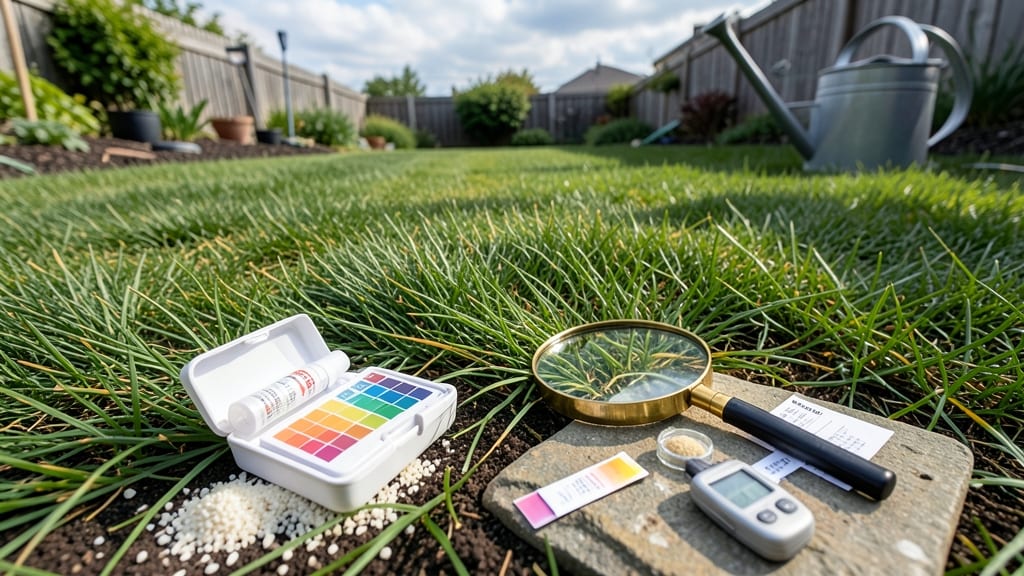
Those rusty streaks on your lawn aren’t rust—they’re a sign of too much iron in lawn, and fixing it is simpler than you’d expect. 🌱 I’ve seen this happen after overzealous fertilizing or acidic soil, and the good news is that the solution doesn’t require a chemistry degree.
Just a few targeted steps can restore that deep green within weeks.
The problem starts when iron becomes too available—think of it like a metal overload in your soil. Too much fertilizer, especially high-phosphorus types, or naturally acidic soil (common in pine-heavy areas) triggers this.
The yellowing or orange-brown patches aren’t healthy; they’re your lawn screaming for balance. The fix? Simple soil adjustments that work fast.
You’ll need a soil test kit (or a local extension service) to confirm iron levels, then adjust with lime (to raise pH) or sulfur (to lower it). Organic matter like compost helps too—it dilutes the iron while feeding grass roots.
Within 4-6 weeks, those streaks fade, and your lawn regains its rich color. No more guessing what’s wrong.
Prevention is just as easy: test soil before fertilizing, stick to low-iron fertilizers in acidic areas, and top-dress with compost annually. If patches persist after adjusting pH, it might be time to call a pro—some iron issues hide deeper than soil amendments can reach.
Hidden Causes Of Iron Overload
Iron overload in your lawn isn’t just a random mishap—it’s usually the result of specific (and sometimes sneaky) factors. Understanding these root causes helps you fix the problem and prevent it from happening again. Let’s break down the science behind why your grass might be turning into a rusty mess.
Iron is a key nutrient for grass, but too much of a good thing can backfire. Most synthetic iron-based fertilizers (like those containing ferrous sulfate) are designed to boost green color—but they don’t always break down evenly.
If you’ve been applying them too frequently or at higher-than-recommended doses, excess iron can accumulate in the soil.
- Why it happens: Grass absorbs only what it needs. Leftover iron stays in the soil, where it oxidizes (reacts with oxygen) and forms those unsightly rust-colored streaks when it reaches the surface.
- Actionable clue: Check your fertilizer label for iron content (often listed as Fe or ferrous sulfate). If you’ve applied it more than 2–3 times per year, you may be overdoing it.
- Pro tip: 💡 Switch to a slow-release organic fertilizer (like cottonseed meal) to avoid iron spikes. These release nutrients gradually, reducing waste.
Waterlogged soil is a double-edged sword—it can leach away essential nutrients or trap excess iron in place, depending on the situation. If your lawn has clay-heavy or compacted soil, water doesn’t drain efficiently, creating pockets where iron builds up.
- Why it happens: Iron is highly soluble in water but binds tightly to clay particles. When soil stays soggy, iron doesn’t wash away—it gets concentrated in certain areas, then oxidizes when exposed to air (like after mowing or rain).
- Actionable clue: Test your soil’s drainage rate: Dig a 6-inch hole, fill it with water, and time how long it takes to drain. If it takes more than 6 hours, you’ve got poor drainage.
- Pro tip: ✨ Improve drainage by aerating your lawn in fall (when grass is actively growing) and top-dressing with sand or compost to loosen compacted soil.
Soil pH is like the thermostat for nutrient availability. If your lawn’s pH is too low (acidic), iron becomes overly soluble and gets absorbed in excess.
Conversely, if the pH is too high (alkaline), iron binds tightly to soil particles and won’t dissolve—but when you do add iron (via fertilizer), it can create hotspots of over-absorption.
| pH Level | Iron Behavior | Grass Reaction |
|---|---|---|
| Below 6.0 (Acidic) | Iron dissolves easily → excess uptake | Yellowing, rust streaks, leaf burn |
| 6.0–7.5 (Ideal for grass) | Iron is balanced and available | Healthy green growth |
| Above 7.5 (Alkaline) | Iron binds to soil → deficiency symptoms until fertilizer is added, then over-application | Pale yellow grass (until iron is added), then rust streaks |
- Why it happens: Most grasses (like Kentucky bluegrass and fescue) thrive in slightly acidic to neutral soil (pH 6.0–7.0). Outside this range, iron either floods or starves the roots.
- Actionable clue: Grab a soil test kit (or send a sample to your local extension office) to check pH. If it’s below 6.0, you may need to raise it with lime; if it’s above 7.5, sulfur or peat moss can help lower it.
- Pro tip: 🌡️ For acidic soil, avoid iron fertilizers entirely—opt for chelated iron (like iron EDTA) in small doses to prevent buildup.
Watering habits can amplify iron problems in two ways: overwatering (which leaches nutrients unevenly) and underwatering (which concentrates iron at the surface). Sprinkler systems, in particular, can create hotspots where water pools, dissolving and redistributing iron.
- Why it happens:
- Overwatering: Excess water pushes iron deeper but can also bring it back up through capillary action, leaving rusty deposits on blades.
- Underwatering: Dry soil crusts over, trapping iron near the surface. When you finally water, it oxidizes and stains.
- Sprinkler patterns: If your system has uneven coverage, some areas get more water (and thus more dissolved iron) than others.
- Actionable clue: Check for water puddles after irrigation. If you see low spots where water pools, those are prime rust-streak zones.
- Pro tip: ⏰ Water deeply but infrequently (1–1.5 inches per week, including rain). Use a rain gauge or tuna can to measure—most sprinklers overapply by 30–50%!
Here’s a surprising culprit: your lawn tools. Iron-rich metals (like old mower blades, rake teeth, or edging shears) can rust over time and leave behind microscopic iron particles. When you mow or dethatch, these particles get scattered across your lawn, oxidizing into visible streaks.
- Why it happens: Stainless steel resists rust, but carbon steel or cast iron tools corrode when exposed to moisture and grass acids. Even minor rust can flake off during use.
- Actionable clue: Inspect your tools for orange-brown deposits or pitting. If your mower deck or rake has visible rust, it’s time to upgrade.
- Pro tip: 🔧 Swap out old tools for stainless steel or aluminum versions.
Fix Rusty Grass Naturally
Excess iron in your lawn can turn vibrant green grass into an unsightly rust-colored mess, but the good news is that you can restore its lush appearance with the right approach.
Below, we’ll break down practical solutions tailored to the root causes—whether it’s over-fertilization, poor soil pH, or watering issues—along with prevention tips to keep your lawn healthy long-term.
If your lawn has too much iron (often from synthetic fertilizers or iron supplements), the first step is to flush out the excess and balance the soil.
🍳 Step 1: Test Your Soil
Before making changes, confirm whether iron buildup is the real issue.
- DIY test: Use a soil test kit (available at garden centers) to check iron and pH levels.
- Professional test: For accuracy, send a sample to a local extension office or lab.
- 💡 Pro Tip: If iron levels are high but pH is above 7.0, the iron is less available to grass—focus on adjusting pH first.
👨🍳 Step 2: Flush the Soil Excess iron can be rinsed away with water.
- Deep watering: Water your lawn deeply (1–1.5 inches) over 2–3 days to leach out excess minerals.
- Rainfall alternative: If rain is forecasted, let nature do the work—just avoid compacting the soil afterward.
- ⚠️ Warning: Don’t overdo it—waterlogging can harm roots.
Aim for moist, not soggy, soil.
🥘 Step 3: Adjust Fertilizer Use
- Switch to organic: Replace synthetic iron-heavy fertilizers with organic options (like compost, worm castings, or slow-release organic fertilizers).
- Avoid iron supplements: Skip iron sulfate or chelated iron unless a soil test confirms a deficiency (not excess).
- 🎯 Prevention Tip: Follow the "less is more" rule—over-fertilizing is a top cause of rusty grass.
Split applications into smaller, frequent doses instead of one big feeding.
Iron becomes more available (and problematic) when soil pH is too low (acidic). If your lawn has rusty patches but a pH below 6.0, raising the pH can help.
🔪 Step 1: Raise pH with Lime
- Test first: Confirm pH with a test kit (ideal range for most grasses: 6.0–7.0).
- Apply dolomitic lime: Sprinkle 1–2 pounds per 100 sq. ft. (follow package instructions) and water thoroughly.
- Re-test in 3–6 months: pH changes take time—monitor and reapply if needed.
- 💡 Pro Tip: Use pelletized lime for even distribution and less waste.
⏰ Step 2: Wait Before Fertilizing
- Wait 4–6 weeks after liming before adding fertilizer to avoid nutrient lockout (lime can temporarily bind nutrients).
- Use a balanced fertilizer (like 10-10-10) if grass looks weak after pH adjustment.
Poor watering habits can concentrate iron in certain areas, leading to rusty streaks.
🚰 Step 1: Water Evenly & Deeply
- Early morning watering: Water before 10 AM to reduce evaporation and fungal growth.
- Deep, infrequent watering: 1–1.5 inches per week (including rain) encourages deep roots and dilutes iron buildup.
- 🌧️ Avoid light, frequent watering: Shallow watering keeps iron near the surface, worsening discoloration.
🏗️ Step 2: Improve Drainage (If Needed)
- Check for low spots: If water pools in areas, level the lawn or add sand to improve drainage.
- Aerate compacted soil: Use a core aerator in spring/fall to help water and nutrients penetrate evenly.
Once your lawn is back to green, keep it that way with these easy maintenance habits:
| Problem | Solution | How Often |
|---|---|---|
| Over-fertilizing | Use organic, slow-release fertilizer | Every 8–12 weeks |
| Low pH (acidic soil) | Apply lime every 1–2 years | Spring or fall |
| Poor watering habits | Deep watering 2–3x per week | Adjust for rain/season |
| Iron-rich fertilizers | Switch to iron-free or low-iron options | Year-round |
| Thatched buildup | Dethatch in spring/fall | Every 1–2 years |
- 💡 Pro Tip: Mow high (3–4 inches) to shade soil and reduce iron oxidation from sunlight.
- ✨ Bonus: Overseed bare patches in early fall with iron-tolerant grasses like tall fescue or Kentucky bluegrass.
By tackling the root cause—whether it’s excess iron, pH imbalance, or poor watering—your lawn can bounce back to a rich, rust-free green in just a few weeks. And with these preventive steps, you’ll keep those pesky red streaks at bay for good!
Frequently asked questions
Why does my lawn have rust-colored streaks if I haven’t used iron fertilizer?
Those streaks likely come from other iron sources like rusting metal tools (rakes, mower blades) or acidic soil making naturally occurring iron more available. Even rainwater can carry iron from nearby soil or roof runoff, depositing it as your lawn dries.
How long does it take to fix iron overload in lawn soil?
With proper adjustments like lime application or deep watering, you’ll typically see improvement in 4-6 weeks. For severe cases, it may take up to 3 months for the grass to fully recover and regrow. Consistency is key—don’t expect overnight results.
Can I use vinegar to lower iron in my lawn?
No, vinegar (acetic acid) will only make the problem worse by further lowering your soil’s pH and increasing iron solubility. Instead, use pelletized lime to safely raise pH levels. Vinegar can also harm grass blades and beneficial soil microbes.
Will compost help reduce excess iron in my lawn?
Yes! Adding 2-3 inches of compost helps dilute concentrated iron while improving soil structure. The organic matter binds some iron, making it less available to grass. Spread it evenly in fall and lightly rake in for best results.
When should I call a professional for lawn iron issues?
If rusty patches persist after 3 months of proper soil testing and pH adjustment, or if your soil test shows extremely high iron levels (>100 ppm), it’s time to consult a lawn care specialist. They can analyze deeper soil layers or recommend targeted amendments.