
Lawn
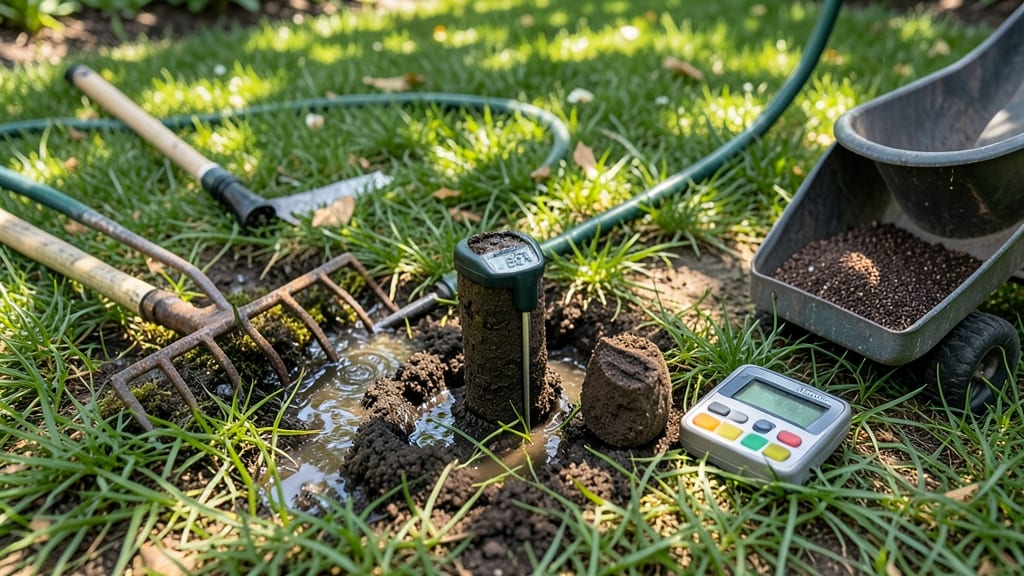
Your lawn's moss problem starts with acidic soil that grass simply won't tolerate. 🌱 I've battled this exact issue in my own yard—what looks like green ground cover is actually a sign your lawn is struggling to compete, especially in shady, damp spots where grass just can't thrive.
The real culprits are usually a mix of low sunlight, poor drainage, and acidic soil that moss loves but grass hates. My yard had all three, and once I tested the pH and adjusted it with lime, the moss started disappearing within weeks.
The key is understanding which factors are at play in your specific lawn.
You'll end up with a lawn that stays green year-round, not just patches of moss pretending to be grass. The fix involves simple steps like spreading lime, improving drainage, and choosing the right grass varieties for your climate and sunlight conditions.
This works for any lawn type, whether you're dealing with a small patch or a whole yard full of moss. Let's get your lawn back to being the star of the show instead of moss's playground.
The hidden causes behind lawn moss
If your lawn is turning into a patchy, spongy carpet of moss instead of a lush green lawn, the problem likely stems from a few key factors—most of which are tied to your soil’s health and environmental conditions.
Understanding why moss thrives where grass struggles is the first step to reclaiming your yard. Let’s break down the science behind those sneaky green intruders.
🌧️ Too Much Shade and Poor Sunlight
Moss loves shade because it thrives in low-light conditions where grass can’t compete. Unlike grasses, which rely on photosynthesis and need at least 4–6 hours of direct sunlight daily, moss can survive with just dappled light or partial shade.
If your lawn has tall trees, dense shrubs, or north-facing slopes blocking sunlight, moss will quickly move in to fill the gaps.
Why it happens: Moss spores land on your soil and germinate when moisture and shade create the perfect conditions. Grass, however, weakens and dies back in these areas, leaving bare spots that moss happily colonizes. Evergreen trees (like pines, spruces, or firs) are notorious for this—their year-round foliage casts deep shade, making moss a common nuisance in their drip lines.
Pro tip: 💡 If your lawn has shady spots, consider shade-tolerant grasses like fine fescue or creeping red fescue, which can outcompete moss over time.
💦 Excess Moisture and Poor Drainage
Moss isn’t just a shade lover—it’s a water enthusiast. It thrives in consistently damp or soggy conditions, while most lawn grasses prefer well-drained soil.
If your yard holds water after rain, has compacted soil, or sits in a low-lying area, moss will take over like a sponge soaking up the excess.
Why it happens: Poor drainage leads to anaerobic (low-oxygen) soil, which grass roots can’t tolerate. Moss, however, doesn’t need roots—it absorbs water directly through its leafy structure. When soil stays wet for long periods, fungal diseases and thatch buildup also weaken grass, giving moss an even bigger advantage.
Pro tip: 🌡️ Test your soil’s drainage by digging a 6-inch hole and filling it with water. If it drains in less than 6 hours, your soil is fine. If it takes longer, you may need to amend with sand or organic matter to improve aeration.
🍄 Acidic Soil pH Disrupts Grass Growth
Moss doesn’t just tolerate acidic soil—it loves it. Most moss species prefer a soil pH between 4.5 and 6.0, while optimal grass growth occurs in a neutral to slightly acidic range (6.0–7.5).
If your soil is too acidic, grass struggles to uptake essential nutrients like nitrogen, phosphorus, and potassium, leaving it weak and moss-prone.
Why it happens: Acidic soil develops from organic decay (like fallen pine needles), over-fertilization with acidic fertilizers, or natural mineral composition. Evergreen trees (especially pines) contribute to acidity by dropping needles that break down into tannins, further lowering pH. When grass can’t thrive, moss fills the void.
Pro tip: ✨ Test your soil’s pH with a home test kit or lab analysis. If it’s below 6.0, apply lime (calcium carbonate) in the fall to raise the pH gradually. Avoid quick fixes—over-lime can create its own problems!
🌿 Lack of Competition and Thin Grass
Moss doesn’t invade healthy, dense grass—it moves in where grass is weak, sparse, or already dying. If your lawn has bare patches, thin spots, or areas with thatch buildup, moss spores will latch on and spread rapidly. Without a strong grass canopy, there’s nothing to block its growth.
Why it happens: Thin grass often results from poor mowing habits, overwatering, nutrient deficiencies, or pest damage. When grass roots aren’t deep or dense enough, they can’t compete with moss for space and resources. Compaction from foot traffic or heavy equipment also weakens grass, making moss a common "filler" in high-traffic areas.
Pro tip: 🎯 Overseed bare spots in early fall with a high-quality grass seed mix and use a starter fertilizer to encourage rapid growth. This creates a competitive barrier against moss.
🍂 Seasonal Factors and Cool Climates
Moss isn’t just a year-round pest—it’s a seasonal opportunist. It thrives in cool, moist conditions, making early spring and late fall its peak growing seasons. In regions with mild winters and high humidity (like the Pacific Northwest or UK), moss can dominate lawns year-round.
Even in warmer climates, moss may appear in shady, damp microclimates where grass struggles.
Why it happens: During cooler months, grass growth slows down, while moss photosynthesizes efficiently in low temperatures. If your lawn stays damp in winter or spring, moss will spread aggressively before grass recovers. Evergreen lawns in cooler climates are especially vulnerable because they don’t get the "reset" of a hot, dry summer to suppress moss.
Pro tip: ⏰ Time your lawn care—aerate in early fall to improve drainage, and apply lime in late fall to combat acidity before moss gets a foothold in spring.
How to Fix Your Mossy Lawn
Now that you know why moss thrives in your lawn, let’s tackle it head-on with practical, science-backed solutions tailored to your acidic soil and evergreen grass challenges. The good news? Moss doesn’t have to win.
With the right approach, you can reclaim a lush, green lawn—and keep it that way. Below are targeted fixes for each root cause, plus prevention tips to stop moss from creeping back.
---
Moss loves acidic soil (pH below 6.0), while most grasses prefer neutral to slightly acidic (6.0–7.0). If your soil is too sour, moss will outcompete your grass. Here’s how to safely adjust pH without harming your lawn:
#### 🔥 Step 1: Test Your Soil (Again!) Before adding lime, confirm your pH with a home test kit (like LaMotte or Luster Leaf) or send a sample to your local Cooperative Extension Service. Moss thrives at pH 4.5–5.5, so aim for 6.0–6.5 for cool-season grasses.
#### 🍳 Step 2: Apply Dolomitic Lime (Best for Acidic Soil) - Why dolomitic? It contains calcium and magnesium, which also replenish nutrients moss depletes. - How much? Follow package instructions, but a general rule: - Mild moss (small patches): 10–20 lbs per 1,000 sq ft. - Severe moss (large areas): 20–30 lbs per 1,000 sq ft. - When? Early fall or spring (avoid summer heat).
Spread evenly with a broadcast spreader, then water lightly to help it sink into the soil.
#### ⏰ Step 3: Re-Test in 2–3 Months Lime takes time to work. Retest your soil pH after 8–12 weeks and reapply if needed. Goal: Keep pH between 6.0–6.5 to discourage moss.
#### 💡 Pro Tip: - Avoid quicklime (calcium oxide)—it’s too harsh and can burn grass. - For organic lawns, use pelletized chicken manure or wood ash (sparingly) as a natural lime alternative.
---
Shady, waterlogged areas are moss magnets. If your lawn has poor drainage or compacted soil, moss will take over. Here’s how to fix it for good:
#### 👨🍳 Step 1: Aerate to Break Up Compaction - When? Early fall (ideal for cool-season grasses). - How? Rent a core aerator (the kind that pulls out soil plugs) or hire a pro. - Focus on: Areas where moss is thickest—these are likely compacted.
#### 🥘 Step 2: Top-Dress with Sand or Compost After aerating, spread a ¼-inch layer of: - Sand (coarse, like #9 granite sand) – Improves drainage. - Compost (screened, weed-free) – Adds nutrients and organic matter. - Mix: 50% sand, 50% compost for best results. - Water in to help it settle.
#### 🔪 Step 3: Install a French Drain (For Severe Waterlogging) If your lawn sits in a low spot or has clay soil, consider: - A perforated drain pipe buried in a trench with gravel. - Swales (shallow ditches) to redirect water away from mossy areas. - Pro Tip: Plant deeper-rooted grasses (like tall fescue) in problem spots—they tolerate wetter conditions better than moss.
---
Moss spreads because your grass is weak, thin, or struggling. Strengthen your lawn so it crowds out moss naturally:
#### 🌡️ Step 1: Choose the Right Grass Seed If your lawn is bare or patchy, overseed with: - Fine fescue (shade-tolerant, low-maintenance). - Kentucky bluegrass (competitive, spreads quickly). - Perennial ryegrass (fast germinator, great for repair). - Avoid: Cheap grass mixes with high weed seed content—they can bring more problems.
#### 🎯 Step 2: Fertilize Smartly (But Not Too Much!) - Spring (early): Apply a slow-release, balanced fertilizer (10-10-10 or 16-4-8). - Fall (late): Use a high-nitrogen, low-phosphorus fertilizer to encourage root growth. - Avoid: Over-fertilizing with high phosphorus—it can make moss worse!
#### ✨ Step 3: Mow High & Leave Clippings - Mowing height: 3–4 inches (taller grass shades out moss). - Never remove clippings (they return nutrients to the soil). - Sharpen mower blades—dull blades tear grass, stressing it and inviting moss.
---
Once you’ve treated your lawn, keep moss at bay with these long-term strategies:
| Problem | Solution | When to Do It | |---------------------------|------------------------------------------------------------------------------|----------------------------| | Shady areas | Overseed with shade-tolerant grass (fine fescue) or add mulch (wood chips). | Early fall or spring. | | High foot traffic | Aerate + top-dress annually.
Use artificial turf in high-use spots. | Early fall. | | Poor drainage | Install French drains or swales. Plant deep-rooted ground covers. | Before next rain season. | | Acidic soil | Reapply lime every 2–3 years.
Monitor pH with tests. | Early fall or spring. | | Thin grass | Overseed every 1–2 years. Use pre-emergent in spring to block weeds. | Early fall (best) or spring. |
#### 💡 Bonus: Natural Moss Repellents (Optional) If moss keeps returning in small spots, try: - Iron sulfate (kills moss on contact, but use carefully—it can harm grass if overapplied). - Corn gluten meal (pre-emergent that also fertilizes—apply in early spring). - Vinegar spray (50/50 mix) – Only for small patches (kills moss but also nearby grass).
--- Final Reminder: 🌟 Patience is key! Moss removal takes 3–6 months to see full results. Stick with your plan, and your lawn will outgrow moss for good.
Frequently asked questions
Why does moss grow better than grass in my shady yard?
Moss thrives in shade because it requires only dappled light to photosynthesize, while most grasses need at least 4-6 hours of direct sunlight daily. Evergreen trees like pines create deep shade that blocks sunlight, creating perfect moss-growing conditions while weakening grass. The solution? Plant shade-tolerant grasses like fine fescue or use mulch to compete with moss.
How often should I test my soil pH if moss keeps coming back?
Test your soil pH every 2-3 years or whenever moss reappears. Acidic soil (pH <6.0) is moss's favorite environment. After applying lime, retest in 8-12 weeks to verify the pH reached 6.0-6.5. Regular testing helps you adjust treatments before moss gets established again.
Will aerating my lawn really help with moss problems?
Aeration breaks up compacted soil, which improves drainage and oxygen flow to grass roots. Moss loves waterlogged conditions, so better aeration creates an environment where grass can outcompete it. For best results, aerate in early fall and follow up with a ¼-inch layer of sand or compost.
Can I use vinegar to kill moss without harming my grass?
Vinegar (50/50 mix with water) can kill moss, but it will also damage surrounding grass. For small patches, spot-treat carefully. Better alternatives include iron sulfate (selective moss killer) or corn gluten meal (natural pre-emergent). Always test any treatment on a small area first to avoid unintended damage.
What's the fastest way to see results when treating moss?
The quickest visible improvements come from removing existing moss with a rake or string trimmer, then overseeding with fast-growing grass like perennial ryegrass. Combine this with lime application and proper watering. While complete moss elimination takes 3-6 months, you'll see grass filling in within 4-6 weeks with consistent care.