
Pests and Diseases
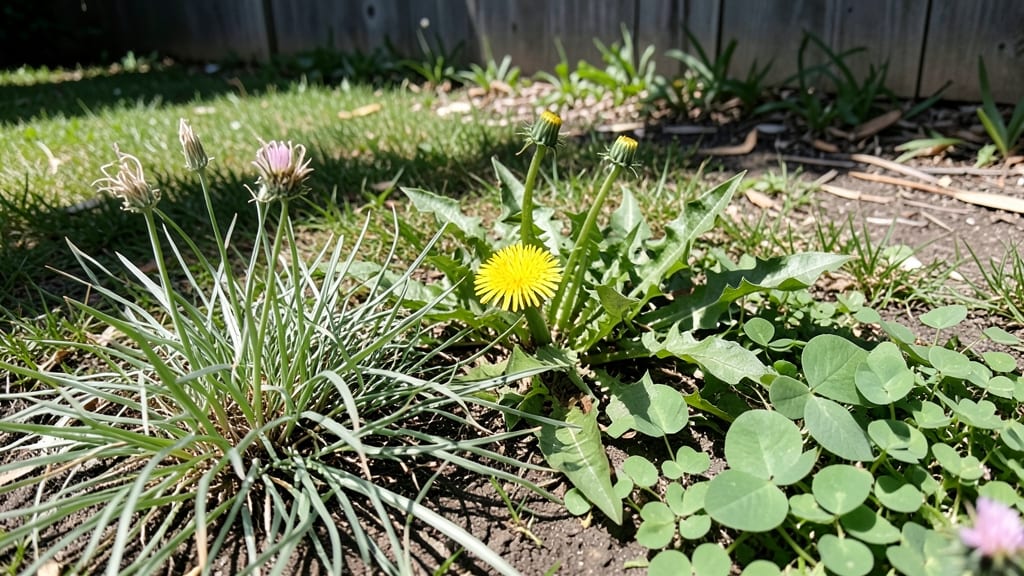
Sunlight acts like a natural switch for weeds—some thrive in bright conditions while others take over when shade creeps in. 🌱 For instance, dandelions often wilt under intense midday sun but bounce back in partial shade, while crabgrass struggles in dense turf but explodes when sunlight breaks through.
The trick is understanding your lawn's light conditions to outsmart these opportunistic plants before they become a problem.
This isn't just about sunlight versus shade—it's about timing. Weeds like chickweed and plantain actually germinate more aggressively in cool, damp conditions with filtered light, making early spring and fall critical windows for intervention.
By adjusting mowing heights or strategically planting taller grasses, you can starve weeds of the light they crave while giving your lawn the competitive edge.
💡 In This Article
- How Sunlight Shapes Weed Growth Patterns
- Best Light-Based Weed Control Strategies
How sunlight shapes weed growth patterns
Weeds like crabgrass and chickweed have evolved sophisticated light-detection systems that trigger rapid growth when sunlight hits their leaves. These plants use specialized cells called photoreceptors to measure light intensity, activating growth hormones when exposed to 6+ hours of direct sunlight daily.
For example, crabgrass can grow 1-2 inches per day in full sun, while chickweed thrives in partial shade with just 30-50% sunlight penetration. The key difference lies in their photosynthesis efficiency—crabgrass has a higher rate in bright light but struggles when shaded by taller grasses.
The shade-tolerant weeds like plantain and dandelions employ a different survival strategy: they grow longer, thinner stems to reach sunlight through dense turf. Plantain, for instance, can extend its stems up to 12 inches when competing for light, while dandelions develop deeper taproots to access moisture in compacted soil.
These adaptations explain why they dominate in lawns with thin grass coverage or under tree canopies where sunlight filters through at less than 20% intensity. The trade-off? They grow slower in full sun due to water stress from their exposed leaves.
Light competition isn't just about intensity—it's about spectral quality. Weeds like clover respond strongly to blue light wavelengths (400-500nm), which trigger chlorophyll production, while red light (600-700nm) promotes stem elongation.
This is why clover spreads aggressively in morning sunlight (rich in blue) but may slow in afternoon heat when red light dominates. Understanding these spectral preferences lets you time interventions—like mowing or mulching—when weeds are most vulnerable to light deprivation.
Another critical factor is light duration. Most weeds require at least 4-6 hours of sunlight to complete their life cycle, but some like henbit can thrive with just 2-3 hours in cool seasons. This explains why winter weeds often take over when grass growth slows.
The solution? Maintain a dense, healthy lawn that blocks 90% of light penetration to the soil—this starves weed seeds before they germinate. Even a 1-inch-thick mulch layer can reduce light by 80%, creating an inhospitable environment for most weeds.
What most people overlook is how seasonal light changes affect weed behavior. During summer solstice, when days exceed 14 hours of sunlight, weeds like crabgrass enter a growth frenzy, while in winter (with 8-10 hours of light), shade-tolerant species like violets dominate.
This seasonal shift explains why spring and fall are the best times for preemptive weed control—when light conditions are transitional and weeds are most sensitive to disruption.
For practical application, observe your lawn's light patterns: Measure sunlight exposure at different times using a light meter (10,000-20,000 lux = full sun). If your lawn receives less than 50% sunlight in key areas, focus on shade-tolerant grass species like fine fescue.
Conversely, full-sun areas should feature tall fescue or Kentucky bluegrass, which outcompete weeds by blocking 70-80% of light at their base. 🌿