
Lawn
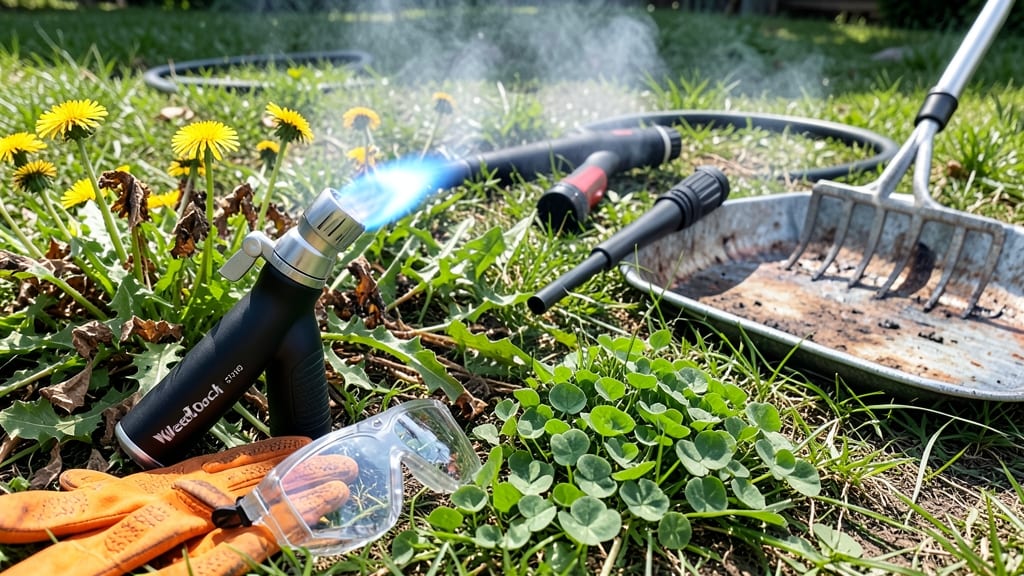
When stubborn weeds take over your lawn, burning lawn weeds with a controlled flame can clear them in minutes instead of hours of pulling. ✨ I used this method after years of battling dandelions and crabgrass—it’s the fastest way to get a clean slate before reseeding or overseeding.
The key is working with a propane torch or flame weeder on a calm day with no wind. You’ll need protective gloves, goggles, and a water source nearby—safety first, because fire spreads faster than you think. Most weeds die instantly, while grass recovers better than you’d expect.
What you’ll end up with is a weed-free lawn ready for new grass or mulch in 24-48 hours. The charred weeds break down quickly, and the heat even kills weed seeds in the soil for a cleaner start next season.
This works best for small to medium lawns and in dry conditions. For large areas or wet grass, alternative methods like vinegar spraying or solarization might be safer. Let’s get those weeds gone!
📚 In This Guide
- What you need
- Instructions
- Tips and common mistakes
- Wrapping up and next steps
What you need
- ● Fire-resistant tools: 1 long-handled metal rake (for clearing debris and stirring flames)
- ● 1 fireproof shovel or hoe (for digging trenches or moving soil if needed)
- ● 1 metal bucket or water jug (5+ gallons) (for emergency water supply)
- ● Fuel sources (choose one): 1 propane torch (adjustable flame, 10,000–20,000 BTU recommended)
- ● OR 1 lighter fluid-safe drip torch (for larger areas, 1–2 gallons of fuel)
- ● OR dry kindling (split wood or twigs, 1–2 inches thick)
- ● Safety gear: 1 fire-resistant gloves (heat-resistant leather or heavy-duty fabric)
- ● 1 long-sleeve cotton shirt and long pants (avoid synthetics!)
- ● 1 closed-toe shoes or boots (no sandals!)
- ● 1 safety goggles (to protect from sparks and debris)
- ● Weather & legal prerequisites: Check local burn permits (required in many areas—call ahead!)
- ● Confirm wind speed (<3–5 mph ideal; avoid gusts over 10 mph)
- ● Ensure humidity is low (<30% for best results)
- ● Have a garden hose or water source within 50 feet
- ● 1 smoke mask or bandana (to filter smoke if needed)
- ● 1 metal fire extinguisher (5 lb Class A) (for quick suppression)
- ● 1 spade or trenching tool (to create firebreaks if burning near structures)
- ● 1 thermometer (to monitor soil temp post-burn, ideal: <160°F)
- ● 1 post-burn fertilizer (like compost or lawn starter, to revive grass)
Step-by-step instructions for burning lawn weeds safely
Here's how to torch weeds fast while keeping your lawn—and neighbors—safe.
🔥 Step 1: Choose the Right Conditions for Burning
Burn weeds only on a calm day with winds under 5 mph and relative humidity below 50%. I check the weather app for "burn bans" in my area—many counties prohibit outdoor burning during dry spells. The grass should be bone-dry, not just damp, so do this in the late afternoon when winds typically die down.
Mow the weeds first to reduce fuel load—short grass burns cleaner and faster. I like to cut them to about 2-3 inches tall so the fire doesn't spread uncontrollably. Avoid burning if your lawn has thatch over ½ inch thick or if the soil is extremely dry and cracked—these conditions create dangerous underground fires.
🪴 Step 2: Set Up Your Burning Area Safely
Clear a 10-foot perimeter around your target area of all flammable debris—leaves, twigs, or even dry mulch. I drag a tarp over nearby shrubs or use a metal bucket of water as a firebreak. Place a garden hose within easy reach and fill a 5-gallon water bucket with soapy water for emergencies.
Use a propane torch (like a weed torch) instead of matches—it gives you control and a hotter flame. I always test the torch on a scrap of cardboard first to confirm it ignites properly. Never burn near wood structures, fences, or overhanging tree branches, even if they seem far away. The rule is: If it can catch fire, it's too close.
✂️ Step 3: Light and Control the Fire in Sections
Start at the outer edge of the weed patch and work inward, using the torch to light small sections at a time. I move the flame in a zigzag pattern, keeping it 1-2 inches above the weeds—close enough to scorch but not so close it smolders uncontrollably. You'll see the weeds curl and blacken instantly; if they just char slowly, you're holding the flame too far away.
Watch for smoke direction—if it starts blowing back toward you, stop immediately and wait for the wind to shift. I never burn more than one-third of the patch at once to avoid overheating the soil or creating a wildfire risk. Step on any remaining embers with your boot to smother them completely before moving on.
💧 Step 4: Cool and Rehabilitate the Lawn
After burning, water the area immediately with a gentle spray to cool the soil and prevent underground fires. I use a hose with a fine mist setting and soak the ground until it’s damp 2 inches deep. This also helps neutralize any lingering heat that could harm grass roots.
Wait 24 hours before reseeding or fertilizing—burning can leave the soil temporarily sterile. I scatter grass seed and a starter fertilizer (like 10-10-10) only after checking that the soil temperature has dropped below 85°F. If the area looks blackened or crusty, lightly rake it to break up the surface before planting new grass.
Tips & tricks for fast weed removal
Here's what nobody tells you about making this process safer—and faster—than the old-school methods.
Weather Watch: The 5 mph wind limit and 50% humidity rule aren't arbitrary—they're fire safety minimums. I've seen winds pick up suddenly after 3 PM, so check forecasts for hourly updates. The late afternoon timing works because winds typically calm down then, but if your area has afternoon breezes, shift to early morning instead. A handheld anemometer (under $20) can give you real-time wind speed readings if you're unsure.
Equipment Prep: That 10-foot perimeter isn't just about safety—it's about control. I mark the boundary with small stakes and string to visualize it clearly. For the propane torch, always check the flame pattern before starting: a blue flame with a yellow tip means proper ignition. If you see sooty yellow flames, your torch needs cleaning or your propane tank might be low. Keep a spare propane canister handy in case yours runs out mid-task.
Fire Control Technique: The one-third rule prevents heat buildup that can damage soil microbes. Think of it like mowing in strips—you're managing heat instead of grass. When working in sections, I use a garden flag or bright-colored cloth to mark completed areas so I don't accidentally re-burn them. And here's the secret: if weeds resist burning, they're often too green—wait until they're completely crispy before attempting again.
Post-Burn Recovery: The 24-hour wait before reseeding isn't just about cooling—it lets the soil's natural microbes recover from the heat shock. I test soil temperature with a cheap infrared thermometer (about $15) to confirm it's below 85°F before planting. For blackened areas, a light raking with a stiff-bristled lawn rake breaks up the crust while aerating the soil for better seed contact.
Pro Tips for Burning Lawn Weeds
- Here's what nobody tells you about making this process safer—and faster—than the old-school methods.
- Weather Watch: The 5 mph wind limit and 50% humidity rule aren't arbitrary—they're fire safety minimums.
- Equipment Prep: That 10-foot perimeter isn't just about safety—it's about control.
Frequently asked questions
Got questions about burning lawn weeds? You’re not alone—this method can feel tricky at first. Below, we’ve tackled the most common concerns to help you tackle stubborn weeds with confidence and safety.
When is the best time to burn lawn weeds?
The ideal window is late spring or early summer when weeds are actively growing but before summer drought sets in. Early morning or late afternoon burns reduce wind risks and keep flames controlled. Avoid burning on windy days or during dry spells—safety first!
How do I know if my lawn is dry enough to burn?
Weeds should be bone-dry (no morning dew) and the lawn should feel crispy underfoot. Test by picking a weed—if it snaps easily, it’s ready. Never burn damp weeds, as this creates smoke and incomplete combustion. Pro tip: Mow weeds short (2–3 inches) a day or two before burning for even, safer flames.
Are there safer alternatives to burning weeds?
Yes! If fire feels risky, try these:
- Herbicides: Spot-treat with vinegar-based or glyphosate solutions (follow label instructions).
- Manual removal: Dig out weeds with a dandelion tool or smother them with thick mulch/cardboard.
- Corn gluten: Apply in early spring to prevent weed seeds from germinating.
What should I do if the fire spreads beyond my control?
Stay calm and act fast:
- Use a hose or bucket of water to smother flames immediately.
- Call 911 if the fire threatens structures or neighbors.
- Keep a fire extinguisher or shovel nearby during burns.
Will burning weeds harm my grass or soil?
Minimal harm if done correctly! A light burn (just the weeds, not the soil) won’t damage grass roots. However, avoid burning too often—it can deplete soil nutrients. After burning, reseeding bare spots and fertilizing helps grass recover. For clay-heavy soil, a thin layer of compost afterward boosts health.
Wrapping up and next steps
Burning lawn weeds can be a game-changer for reclaiming your yard—just remember to prioritize safety and responsibility. Whether you opt for controlled fire methods or eco-friendly alternatives, the key is consistency and care. Your efforts will soon reward you with a lush, weed-free lawn!
Ready to take action? Start small—test a patch first, then expand your approach. Grab your gear, follow the steps, and enjoy the transformation! 🌱