
Lawn
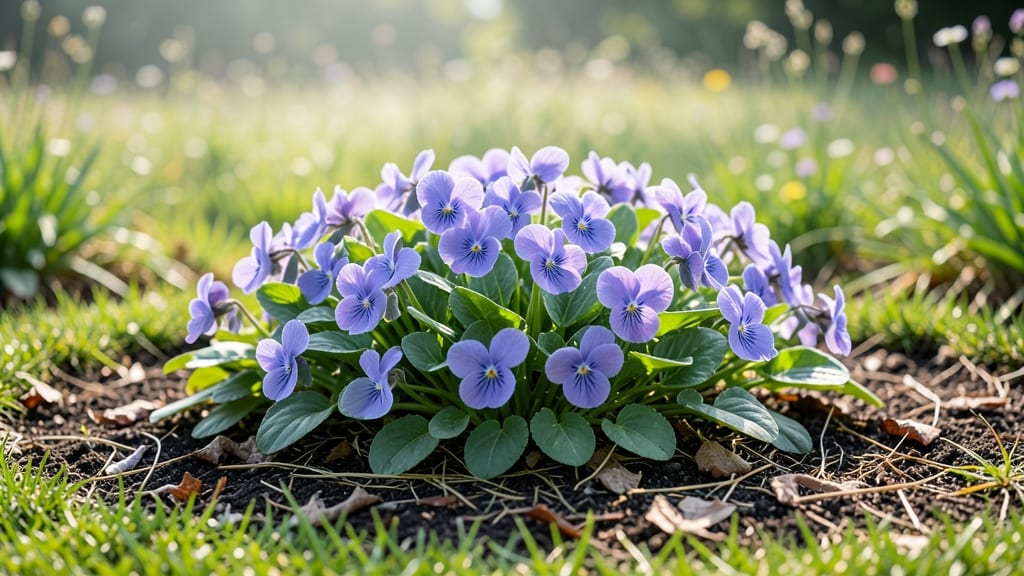
Those small purple flowers growing in your lawn aren’t just weeds—they’re wild violets, and they’re here to stay unless you take action. 🌿 I’ve spent years battling these tenacious little flowers, and I’ll show you how to reclaim your lawn without resorting to harsh chemicals or backbreaking work.
Wild violets spread through underground runners, making them harder to kill than annual weeds. The good news? They’re not harmful to grass, but they’ll outcompete your lawn if left unchecked.
Manual removal works best in small patches—just dig up the roots with a weeding tool or your hands, but be ready to repeat the process since they regrow easily.
For larger infestations, targeted herbicides (like vinegar-based sprays or glyphosate) can help, but timing is everything. Apply when violets are actively growing, and always spot-treat to avoid damaging your grass. Prevention starts with dense, healthy turf—thick grass crowds out weeds naturally.
The key is persistence. After removal, overseed bare spots and fertilize to strengthen your lawn’s defenses. With the right approach, you’ll see those purple blooms fade within a season, leaving you with a lush, weed-free yard that actually looks intentional.
📚 In This Guide
- What you need
- Instructions
- Tips and common mistakes
- Wrapping up and next steps
What you need
- ● Garden gloves (1 pair, heavy-duty for protection)
- ● Hand weeder or dandelion digger (1, with a long handle for leverage)
- ● Garden fork or trowel (1, for stubborn roots)
- ● Sharp scissors or pruners (1 pair, for cutting close to the ground)
- ● Bucket or wheelbarrow (1, for debris disposal)
- ● Hose with adjustable nozzle (for watering or rinsing tools)
- ○ Vinegar solution (1 gallon white vinegar + 1 cup dish soap + 1 cup salt—optional but effective)
- ● Corn gluten meal (5–10 lbs, for pre-emergent prevention)
- ● Pre-emergent herbicide (e.g., pendimethalin, follow label rates—use cautiously)
- ● Post-emergent herbicide (e.g., glyphosate or triclopyr, spot-treat only—wear protective gear)
- ● Mulch or landscape fabric (to suppress regrowth in treated areas)
- ● Soil test kit (to check pH/nutrients if wild violets are thriving)
- ● Knee pad or cushion (for comfort during long sessions)
- ● Trash bags (for easy cleanup)
How to identify and manage wild violet patches in your lawn
Here's how I tackle those stubborn purple blooms—without resorting to harsh chemicals.
🌿 Step 1: Confirm It's Wild Violet (Not a Lookalike)
Wild violets have heart-shaped leaves with scalloped edges and delicate ½-inch purple flowers that bloom early spring. Look for their smooth stems and slightly fuzzy leaves—these distinguish them from creeping charlie (which has square stems) or clover (with trifoliate leaves).
Press a leaf between your fingers: violets feel soft but slightly waxy, while chickweed (another purple-flowered weed) has sticky stems. I always check for white roots when pulling—violets have thin, fibrous roots that spread aggressively underground.
✂️ Step 2: Choose Your Removal Method
For small patches, hand-pulling works best when soil is moist. Grab the plant at the base of the leaves and wiggle gently to loosen the 1-2 inch deep roots. I use a hand trowel to pry out stubborn roots—never yank, or you'll break the crown and leave fragments behind.
For larger areas, vinegar spray (1 gallon white vinegar + 1 cup dish soap) kills violets on contact. Spray directly on leaves on a sunny day—avoid windy conditions, or you'll drift onto grass. Reapply every 3-5 days until new growth stops. Never use herbicide near edible plants or water sources.
💧 Step 3: Prevent Regrowth with Cultural Controls
Violets thrive in shady, moist lawns. After removal, mow higher (3-4 inches) to shade out new sprouts. I also top-dress with compost to encourage thick grass growth—violets can't compete with dense turf. For bare spots, overseed with fine fescue or perennial ryegrass in fall.
Water deeply once a week to establish grass roots—violets hate dry conditions. If your lawn stays soggy, consider aerating in fall to improve drainage. I've seen violets disappear completely within 2-3 seasons using this approach alone.
🌱 Step 4: Monitor and Maintain Year-Round
Check for new violet shoots every 2 weeks in spring and fall—their active growing seasons. I mark patches with white flags to spot them easily. For persistent areas, solarization (covering with clear plastic for 4-6 weeks in summer) can kill underground roots without chemicals.
If violets return, they're likely spreading from undisturbed roots or seedlings (each flower produces hundreds of seeds). Mulch with 2-3 inches of wood chips in problem areas to block light to emerging seedlings. This method keeps my lawn violet-free for years.
⏰ Step 5: Long-Term Lawn Health Strategy
Healthy lawns resist weeds naturally. Test your soil pH—violets prefer slightly acidic (6.0-6.5) conditions. If your lawn is too alkaline (above 7.0), amend with sulfur or peat moss to create an inhospitable environment. I also fertilize with slow-release nitrogen in early spring to outcompete violets.
Consider clover or microclover mixes—their nitrogen-fixing roots strengthen grass while reducing violet habitats. These alternatives handle shade better than pure grass lawns and still provide ground cover. Over time, you'll see violets fade as your lawn's resilience grows.
Tips & tricks for managing wild violet patches
These practical strategies will help you eliminate violet invasions while keeping your lawn lush and chemical-free.
Precision Identification: Pay special attention to the leaf texture in Step 1—violets have that distinctive slightly fuzzy surface that sets them apart from other weeds. I've found that examining the leaf undersides under bright light reveals the subtle hairs that distinguish them from lookalikes like creeping charlie. This careful identification prevents you from wasting effort on the wrong plants, especially in mixed weed patches where multiple species grow together.
Root Removal Technique: When hand-pulling in Step 2, focus on getting those 1-2 inch deep roots completely. I've learned the hard way that leaving even small root fragments behind leads to regrowth within weeks. Use a hand trowel to gently loosen soil around the roots before pulling—this gives you better leverage and cleaner removal. For stubborn roots, I sometimes use a butter knife to carefully slice through them at the base before pulling.
Vinegar Application Strategy: The vinegar spray in Step 2 works best when applied directly to the leaves on sunny days. I've found that adding a few drops of liquid dish soap to the 1 gallon vinegar solution creates better surface tension, making the spray stick to the leaves longer. Apply only when temperatures are above 60°F—cold weather reduces the vinegar's effectiveness. Always wear gloves and avoid spraying on windy days to prevent drift onto your grass.
Seasonal Timing for Prevention: The 2-3 week monitoring schedule in Step 4 works best when you focus on spring and fall—the violet's active growing seasons. I've noticed that violets are most vulnerable right after rain when the soil is moist but before the grass recovers. This is the perfect window to spot and remove new shoots before they establish deep roots. For persistent patches, I've had success with solarization in late summer when violets are dormant but still have residual root energy.
Pro Tips for Small Purple Flowers Growing In Lawn
- These practical strategies will help you eliminate violet invasions while keeping your lawn lush and chemical-free.
- Precision Identification: Pay special attention to the leaf texture in Step 1—violets have that distinctive slightly fuzzy surface that sets them apart from other weeds.
- Root Removal Technique: When hand-pulling in Step 2, focus on getting those 1-2 inch deep roots completely.
Frequently asked questions
Got questions about those tiny purple blooms popping up in your lawn? You’re not alone! Here are some of the most common concerns—plus quick, actionable answers to help you decide whether to embrace or eradicate your wild violet visitors.
Are small purple flowers in my lawn actually wild violets?
Most likely! Wild violets (Viola sororia) are the usual culprits behind those delicate, heart-shaped purple flowers. Look for their distinctive three-petal blooms and smooth, kidney-shaped leaves. If the flowers are tiny and clustered near the ground, it’s probably not a weed—it’s a wildflower! For confirmation, snap a photo and compare it to local plant databases like iNaturalist.
When is the best time to remove wild violets from my lawn?
Timing matters! Pull or dig up wild violets before they flower (early spring) or after they’ve finished blooming (late spring/early summer). This prevents seed spread. Avoid removing them in fall or winter—their deep roots make them tough to uproot when dormant. Pro tip: Use a weed torch or vinegar spray in late summer to kill them without harming grass.
Will wild violets come back if I pull them out?
Yes, but not forever! Wild violets spread via underground rhizomes and seeds, so pulling alone won’t erase them. For long-term control, combine methods:
- Hand-pulling: Grasp the entire root (including the white, stringy rhizomes) and tug firmly.
- Pre-emergent herbicide: Apply in early spring to block seed germination.
- Smothering: Cover bare spots with cardboard + mulch to starve roots of sunlight.
Consistency is key—repeat treatments for 2–3 years to break their cycle. Fun fact: Some gardeners embrace violets as ground cover for pollinators!
What’s a natural alternative to wild violets in my lawn?
If you want to replace violets with something prettier (or easier to manage), consider these low-maintenance, native alternatives:
Plant
Color
Benefits
Clover (Trifolium repens)
White/pink
Fixes nitrogen in soil, drought-tolerant, attracts bees.
Creeping Thyme (Thymus serpyllum)
Purple/pink
Fragrant, drought-resistant, repels pests.
Self-Heal (Prunella vulgaris)
Purple
Edible leaves, suppresses weeds, loves shade.
Seed these in early fall for best establishment. Bonus: Mix them with fine fescue grass for a lush, eco-friendly lawn!
Are wild violets harmful to my lawn or garden?
Not usually! Wild violets are non-toxic and beneficial in small patches—they:
- Attract pollinators like bees and butterflies.
- Suppress weeds by outcompeting them.
- Add organic matter to soil when they decompose.
However, they can spread aggressively in thin lawns, crowding out grass. If you’re not using herbicides, hand-pulling or spot-treating with corn gluten meal (a natural pre-emergent) is safest. Watch for: Yellowing grass in heavy violet patches—this may signal shade stress or root competition.
Wrapping up and next steps
Discovering small purple flowers blooming in your lawn can be both charming and frustrating—but now you’re equipped to handle it!
Whether you’re embracing wild violets for their beauty or ready to manage their spread, understanding their habits and solutions gives you control. Take action now: pick a method (manual removal, mulching, or organic herbicides) that fits your lawn’s needs and watch your green space thrive—wildflower-friendly or not!
🌱 Next step: Grab your gloves and start small—consistency is key! Monitor your lawn over the next few weeks and adjust your approach as needed. Happy gardening! 🌿