
Lawn
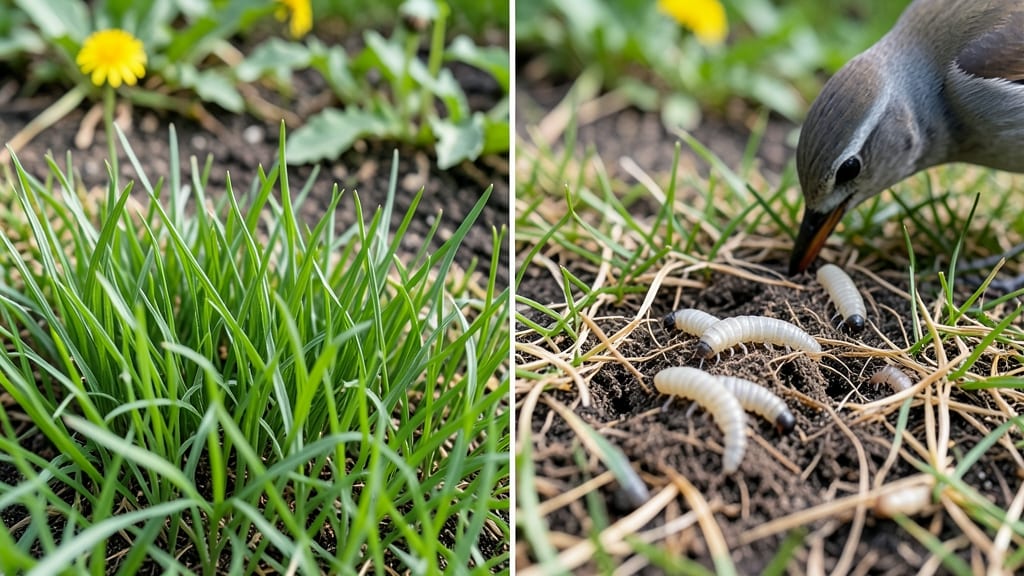
Your lawn’s hidden enemy is chewing roots you can’t see—grubs in lawn start small but leave devastating brown patches if ignored. 🌱 I’ve watched healthy grass turn to spongy, patchy messes overnight, and the early signs are subtle but unmistakable if you know what to look for.
The first clue? Irregular brown patches that don’t improve after watering—these are classic grub damage. Then watch for spongy grass that gives underfoot like a trampoline, or increased bird activity (especially robins digging frantically). Even ants marching in lines can signal grub larvae nearby.
Once you spot these, act fast: manual removal, nematodes, or milky spore treatments can save your lawn before the damage spreads. The key is catching it early—before the grubs mature and multiply underground.
Prevention is easier than repair: core aeration, beneficial nematodes, and proper watering keep grubs in check. Let’s turn your lawn from a grub buffet into a healthy, thriving space.
The Hidden Triggers Behind Grubs
Grubs don’t just appear out of nowhere—they’re the result of a perfect storm of environmental factors, lawn health, and even human habits. Understanding these causes helps you take preventive action before they turn your lush green grass into a patchwork of brown.
Here’s why these pests invade your lawn and how they thrive.
Grubs love moisture—too much of it, in fact. When lawns are overwatered or have poor drainage, excess water creates the ideal breeding ground for grubs. Here’s why: - Oxygen depletion: Soggy soil lacks oxygen, forcing grubs to burrow deeper to survive.
This makes them harder to spot but more destructive to roots. - Fungal growth: Wet conditions encourage fungi like Rhizoctonia, which grubs feed on.
This creates a feedback loop: more fungi = more grubs = more damage. - Root stress: Overwatering weakens grass roots, making them easier targets for grub larvae to munch on.
Actionable fix: Test your soil’s drainage by digging a 6-inch hole and filling it with water. If it drains in less than 6 hours, your lawn is fine. If not, aerate compacted soil and consider installing a French drain or sand topdressing to improve water flow.
Grubs are drawn to lawns that are overfed with nitrogen-rich fertilizers. While nitrogen promotes rapid grass growth, it also: - Attracts adult beetles: Beetles (like Japanese beetles or June bugs) are drawn to nitrogen-rich grass, where they lay eggs.
More eggs = more grubs later. - Weakens natural defenses: Fast-growing grass from excess nitrogen is softer and more vulnerable to grub feeding. - Disrupts soil microbes: Over-fertilizing can harm beneficial bacteria and fungi that compete with grubs for food.
Actionable fix: Use a slow-release, balanced fertilizer (with a lower nitrogen-to-phosphorus ratio, like 24-4-8) and follow label instructions. Avoid late-summer applications, as this is peak grub-hatching season.
Grubs are the larvae of beetles, and their presence is a direct result of adult beetle activity.
Common culprits include: - Japanese beetles: These metallic-green invaders chew leaves while females lay eggs in soil. - June bugs: Their eggs hatch into white grubs that target turfgrass roots. - Chafers: Their larvae are particularly destructive, often causing large brown patches.
Key triggers for beetle activity:
- Warm, humid nights: Beetles are most active during summer evenings (60–80°F).
- Mature grass: Beetles prefer established lawns over new seedings.
- Landscaping near wooded areas: Beetles migrate from trees and shrubs to lawns.
Actionable fix: Monitor your lawn for adult beetles in late spring/early summer. Use grub-resistant grass varieties (like tall fescue or Kentucky bluegrass) and apply beneficial nematodes (Heterorhabditis bacteriophora) to target larvae before they hatch.
A thick layer of thatch (dead grass, roots, and stems) or organic debris provides:
- Shelter: Grubs hide in thatch, protected from predators and pesticides.
- Moisture retention: Thatch holds water, creating microclimates perfect for grub survival.
- Food source: Decomposing thatch offers a buffet for grubs to feed on.
Actionable fix: Dethatch your lawn in early spring or fall using a vertical mower or raking. Aim for a thatch layer ≤ ½ inch thick. Pair this with core aeration to improve soil health and reduce grub hiding spots.
Grubs thrive in warm, stable temperatures (60–85°F), which align with:
- Late spring to early fall: Peak hatching and feeding seasons.
- Southern climates: Year-round grub activity is possible in warm regions.
- Microclimates: Shady or low-lying areas stay cooler and moister longer, extending grub season.
Actionable fix: Time grub control treatments for May–June (when eggs hatch) and August–September (second generation). Use preventative nematodes or imidacloprid-based granules before peak activity begins.
Even well-maintained lawns can fall victim to grubs if:
- You ignore early signs: Skipping soil checks for wilting grass or spongy patches lets grubs multiply unchecked.
- You use broad-spectrum pesticides: These kill beneficial insects (like ground beetles) that prey on grubs.
- You plant grub magnets: Some grasses (like fine fescue) are more attractive to beetles than others.
Actionable fix:
- Inspect soil every 2–3 weeks during grub season by digging a 2-inch square of turf. Look for C-shaped white larvae (grubs) or their castings.
- Encourage predators: Plant native flowers (like marigolds or yarrow) to attract ladybugs, birds, and toads.
- Rotate treatments: Alternate between nematodes, milky spore bacteria, and chemical controls to prevent resistance.
How to Fix Grub Damage Fast
Grubs may feel like a lawn’s worst nightmare, but with the right approach, you can eliminate them effectively and restore your grass to its lush best. The key is acting quickly—once grubs have moved deeper into the soil or your lawn shows widespread damage, recovery takes longer.
Below, we break down targeted solutions based on the root cause of your grub problem, from chemical treatments to organic fixes and preventive measures. Follow these steps to save your lawn without breaking the bank or the environment.
🍳 Chemical Treatments (Fastest Results)
If your lawn is already showing brown patches, wilting grass, or animals digging, chemical treatments can provide rapid knockdown of grubs. These are most effective when applied late summer to early fall (when grubs are young and feeding aggressively).
- 🔹 Nematodes (Biological Control) - How it works: Beneficial nematodes (Heterorhabditis bacteriophora) infect and kill grubs naturally. - How to apply: Mix nematodes with water and apply in the evening (they’re sensitive to sunlight) using a hose-end sprayer.
Water lightly afterward to help them move into the soil. - Best for: Organic lawns or areas where chemical use is limited. - 💡 Pro Tip: Apply when soil temps are 55–85°F for best results. Reapply if heavy rain follows.
- 🔹 Grub-Specific Insecticides (Synthetic) - How it works: Chemicals like imidacloprid, chlorantraniliprole, or trichlorfon disrupt the grub’s nervous system, killing them within days. - How to apply: Use a granular or liquid systemic insecticide labeled for grubs.
Water the lawn lightly after application to activate the product. - Best for: Severe infestations or large lawns where organic methods aren’t enough. - ⚠️ Caution: Follow label instructions—overuse can harm beneficial insects. Avoid treating if rain is forecasted within 24–48 hours.
- 🔹 Milky Spore (Long-Term Prevention) - How it works: A natural bacteria (Bacillus popilliae) that infects and kills Japanese beetle grubs (common in the Midwest). - How to apply: Mix milky spore powder with water and apply evenly to the lawn in late summer or early fall.
Takes 1–2 years to establish but provides decades of protection. - Best for: Preventing future grub outbreaks in high-risk areas.
If you prefer non-toxic solutions, these methods take longer but are gentler on the environment and safe for pets/kids.
🥘 Encourage Natural Predators
Grubs have built-in enemies—attracting them can reduce populations naturally.
- 🦋 Birds (e.g., Skunks, Raccoons, Crows, Robins)
- How to help: Leave shallow water sources (like a birdbath) and avoid pesticides that harm birds.
- Best for: Small lawns with light infestations.
- 🐛 Beneficial Insects (Ground Beetles, Spiders, Parasitic Wasps)
- How to help: Reduce broad-spectrum pesticides, add mulch or leaf litter for habitat, and plant native wildflowers to support predator populations.
🔪 Manual Removal (For Small Lawns)
- How to do it: Use a trowel or garden fork to flip over small sections of turf (1–2 sq ft at a time).
Scoop out grubs and drop them in soapy water to kill them. - Best for: Small patches or early-stage infestations (before grubs burrow deep). - ⏰ Time commitment: Labor-intensive but free and chemical-free.
🌡️ Heat or Cold Treatment (DIY Shock Therapy)
- Heat method: Use a propane torch (like for weed killing) to scorch small areas where grubs are active.
Works best in dry conditions. - Cold method: In winter, cover infested areas with black plastic sheeting for 4–6 weeks to solarize the soil (kills grubs and eggs). - Best for: Spot treatments or small yards.
The best defense? A grub-proof lawn. Implement these long-term strategies to keep populations low.
| Prevention Method | How to Do It | Best Time to Apply |
|---|---|---|
| 💡 Proper Mowing Height | Keep grass 3–4 inches tall—taller grass shades soil, making it harder for eggs to hatch. | Year-round (adjust seasonally) |
| 🌱 Overseeding | Fill in thin or bare spots with tall fescue or ryegrass—grubs prefer weak turf. | Early fall or spring |
| 🔥 Core Aeration | Loosens compacted soil, allowing oxygen and predators to reach grubs. | Late summer or early fall |
| 🚫 Avoid Overwatering | Grubs thrive in soggy soil—water deeply but infrequently (1–1.5 inches/week). | Year-round (adjust for climate) |
| 🍄 Use Milky Spore | Apply annually for 2 years in high-risk zones (especially for Japanese beetle grubs). | Late summer |
| 🌿 Plant Grub-Resistant Grass | Choose tall fescue, Kentucky bluegrass, or perennial ryegrass—they recover faster from damage. | When overseeding or renovating |
Even after killing grubs, your lawn may need help recovering. Try these steps:
- 🔄 Reseed Bare Spots – Use a lawn repair mix and keep soil moist until new grass sprouts.
- 💧 Water Deeply – Encourage deep root growth with slow, deep watering (1–2 times per week).
- 🌱 Apply Compost – Spread a thin layer (¼ inch) over the lawn to improve soil health.
- 🛠️ Overseed Thickly – Use a slit seeder for better seed-to-soil contact.
💡 Quick Recap:
- Active grubs? → Nematodes or insecticides (fastest fix).
- Organic approach? → Encourage predators + manual removal.
- Prevent next year? → Aerate, overseed, and use milky spore.
With the right mix of treatment and prevention, your lawn can bounce back stronger than ever—grub-free and green! 🌿🚀
Frequently asked questions
What do grubs look like when I dig up my lawn?
Grubs are C-shaped, white or cream-colored larvae about ½ to 1 inch long with brown heads. They resemble tiny worms but have a distinct segmented body. Look for them in the top 2–3 inches of soil—especially in damp areas where grass pulls up easily.
Why are birds suddenly digging up my lawn?
Birds like robins, skunks, and crows are feasting on grubs! Their frantic digging is a clear sign of a grub infestation. If you see irregular holes or hear scratching at night, check the soil—you’ll likely find grubs beneath the disturbed patches.
Can I still save my lawn if the damage is already done?
Yes! First, kill the grubs with nematodes or insecticides, then reseeding is key. Rake out dead grass, apply a lawn repair mix, and keep the soil moist. For severe cases, consider overseeding with tall fescue—it recovers faster than other grasses.
How often should I check for grubs in my lawn?
Inspect your lawn every 2–3 weeks during late spring to early fall—peak grub season. Dig up a 2-inch square of turf in suspicious areas (like spongy patches) to spot grubs early. Early detection prevents major damage!
Are grubs harmful to pets or children?
Grubs themselves aren’t dangerous, but the chemical treatments used to kill them can be toxic if ingested. Keep pets and kids off treated lawns for 24–48 hours after applying insecticides. Opt for nematodes or milky spore for safer, organic control.