
Lawn
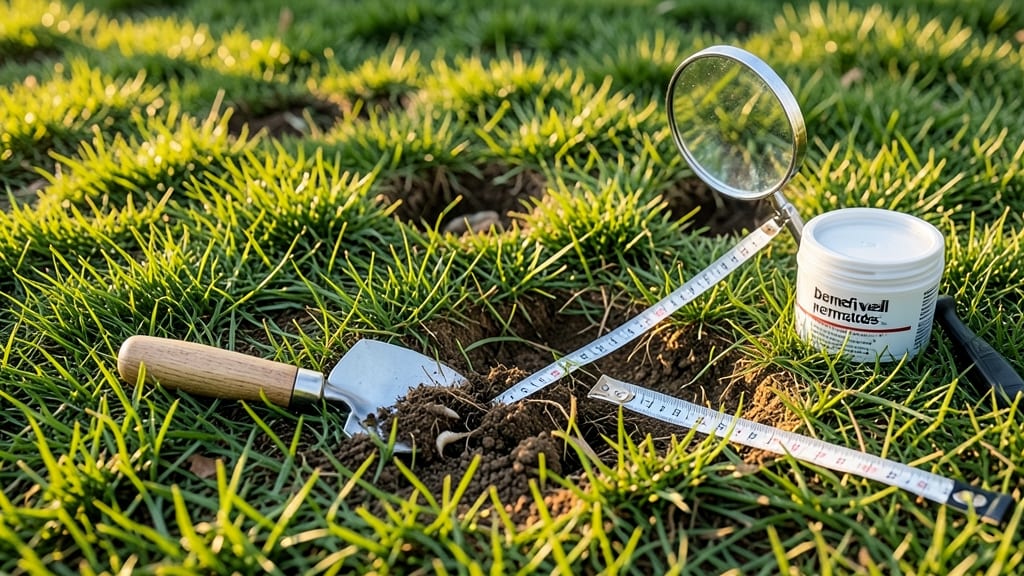
Round holes in your lawn aren’t just unsightly—they’re a sign something’s digging beneath the surface. 🌱 I’ve spent years patching these puzzles, and I’ll show you how to identify the culprit (grubs, moles, or pets?) and fix them in under an hour without breaking the bank.
Most people grab a shovel and patch the hole, but that’s like putting a bandage on a bullet wound. The real fix starts with figuring out who’s doing the damage—size matters (voles leave 2-inch holes; moles create tunnels with tiny mounds).
Once you know the enemy, you can tackle it with the right tools, whether it’s nematodes for grubs or castor oil for moles. By the end, your lawn will look seamless, and the digging will stop. No more guessing games—just a quick, foolproof repair that keeps your turf looking sharp.
And the best part? You’ll save money by avoiding costly professional treatments. This works for any lawn size, from small backyards to sprawling front yards. Let’s get those holes filled—and keep them filled—for good.
Mysterious Causes Behind Lawn Holes
If you’ve noticed round holes in your lawn—whether they’re small as a golf ball or large enough to trip over—you’re not alone. These puzzling patches can appear overnight or develop slowly, leaving your yard looking like a crime scene for tiny, unseen culprits.
Below, we break down the most common reasons behind these circular intrusions, backed by science and practical insights so you can identify the culprit and take action.
Animals are the #1 reason for round holes in lawns, and they leave behind distinct clues. Here’s how to tell if furry (or feathery) visitors are to blame:
- Moles:
Moles create shallow, perfectly round holes (about 2–4 inches wide) with a small mound of soil pushed up nearby.
They’re tunnelers, not surface diggers, so you’ll often see raised ridges of soil where their tunnels collapse. Pro tip: 🔥 If you find these, check for no visible grass damage—moles don’t eat turf, just burrow.
- Voles:
These rodent relatives leave irregular but roundish holes (3–5 inches wide) with chewed grass blades around the edges. Unlike moles, voles eat the roots, so the turf often pulls up easily. Look for runways in the grass where they’ve dragged food.
- Raccoons or Skunks:
Larger holes (6+ inches) with scattered debris (bugs, rocks, or even small animals) suggest these nocturnal bandits.
They dig for grubs, insects, or food you’ve left out. Pro tip: 🌡️ Check for tracks or scratch marks near the hole—raccoons have five-toed paw prints, while skunks leave claw marks in a straight line.
- Birds (e.g., Robins, Crows):
Birds peck at the ground to expose grubs or insects, leaving small, shallow holes (1–2 inches wide). These are often clustered in areas with high insect activity. Pro tip: ✨ Look for droppings or feathers nearby—birds rarely dig deeply.
Actionable fix: Set traps (for voles/moles), use repellents (like castor oil for raccoons), or encourage natural predators (owls, snakes) by adding birdhouses or brush piles.
White grubs—the larvae of beetles like Japanese beetles or June bugs—are lawn-destroying powerhouses. They munch on grass roots, causing patches to pull up like carpet when stepped on, often leaving round, sunken areas.
- How to spot them:
- Time of year: Peak damage occurs in late summer/fall (when grubs are largest) or spring (when birds dig them up).
- Grass test: Lift a suspect patch—if it peels back like a rug and you see white, C-shaped larvae (1–1.5 inches long), you’ve got grubs.
- Other signs: Ants or birds congregating in the area (they’re snacking on the grubs too!).
- Why it happens:
Female beetles lay eggs in the soil in early summer. When the grubs hatch, they feed on roots for months, weakening the grass. Drought or compacted soil makes lawns more vulnerable because roots are already stressed.
Actionable fix: Apply grub control (beneficial nematodes, milky spore, or chemical treatments like imidacloprid) in early summer to kill larvae before they mature. Overwatering can also attract grubs—stick to 1 inch of water per week.
Not all round holes are caused by living things—sometimes, Mother Nature is the culprit. Heavy rain, wind, or freeze-thaw cycles can create circular damage in specific conditions:
- Water Erosion:
If your lawn has clay-heavy or compacted soil, water can pool in low spots, creating crater-like holes as it erodes the turf. This is common after prolonged rain or poor drainage.
- Freeze-Thaw Damage:
In cold climates, water in the soil expands when it freezes, then contracts when it thaws. This heaves up soil in round patches, especially on slopes or uneven terrain. The turf may not pull up easily but will look puckered or sunken.
- Wind and Debris:
High winds can blow objects (acorns, rocks, toys) that punch holes in the turf. These are usually isolated and shallow, with no other signs of damage.
Actionable fix:
- 🔧 Improve drainage by aerating compacted soil or installing a French drain in low areas.
- 🌡️ In freeze-thaw zones, cover bare spots with straw mulch in winter to protect soil.
- 🧹 After storms, remove debris and reseed affected areas.
Sometimes, the holes are self-inflicted. Whether it’s a misplaced shovel, a rogue golf ball, or a kid’s impromptu soccer practice, human activity can create round divots in your lawn.
- Lawn tools:
Sharp-edged tools like spades, aerators, or even weed whackers can dig accidental holes if dropped or mishandled. These are usually clean-edged and uniform.
- Sports equipment:
Frisbees, golf balls, or pet toys can smash into the turf, creating small, deep craters. Look for scuff marks or dents around the hole.
- Construction or utility work:
If you’ve had cables buried, pipes installed, or soil moved, circular holes can form where equipment punctured the turf or soil settled unevenly
Quick Fixes for Uneven Turf Patches
Now that you’ve identified the cause of those mysterious round holes in your lawn, it’s time to take action! Whether it’s burrowing critters, shifting soil, or pesky pests, each problem requires a targeted solution.
Below, we’ll break down the best fixes for common culprits—plus pro tips to keep your lawn lush and hole-free for good.
---
If furry (or scaly) visitors are the culprits, your first step is to remove the intruder before repairing the damage.
#### 🔥 Step 1: Identify the Critter - Moles or voles? Look for tunnels or small mounds of dirt. - Squirrels or rabbits? Check for chewed grass or burrow entrances. - Insects (grubs or beetles)? Inspect the soil for tiny white larvae or adult bugs.
#### 👨🍳 Step 2: Humane Removal - For moles/voles: Use castor oil-based repellents (spray around the yard) or ultrasonic spikes (plant near entry points). - For rabbits/squirrels: Set up humane traps or install chicken wire barriers around vulnerable areas. - For grubs/beetles: Apply beneficial nematodes (microscopic worms that kill larvae) or neem oil spray.
#### 🥘 Step 3: Patch the Damage 1. Remove debris (dirt, chewed grass, or critter nests). 2. Loosen the soil with a rake or garden fork. 3. Fill with topsoil and level it out. 4. Plant new grass seed or lay sod patches for instant coverage.
💡 Pro Tip: If moles keep returning, try planting daffodils or marigolds—their scent deters them naturally!
---
Uneven ground or compacted soil can create sinkholes that look like round patches. Here’s how to reinforce weak spots:
#### 🔪 Step 1: Aerate the Area - Rent a core aerator or use a garden fork to poke holes every 3–4 inches. - This helps loosen compacted soil and improves drainage.
#### ⏰ Step 2: Add Organic Matter - Mix in compost, peat moss, or coconut coir to improve soil structure. - For sandy soil, add hydrated lime to bind particles. - For clay soil, blend in perlite or vermiculite for better drainage.
#### 🌱 Step 3: Relevel and Reseed 1. Rake the area to create a smooth surface. 2. Spread a thin layer of topsoil (½ inch max). 3. Plant new grass seed or lay sod for quick recovery.
🌡️ Pro Tip: Water the patched area lightly but frequently for the first 2 weeks to encourage root growth.
---
Grubs and beetle larvae munch on grass roots, leaving behind brown, spongy patches that can collapse into holes.
#### 🔥 Step 1: Test for Grubs - Dig up a small section of sod. If you see white, C-shaped larvae, you’ve got grubs! - Beetles? Look for adult Japanese beetles (metallic green) feeding on leaves.
#### 🍳 Step 2: Apply Natural or Chemical Treatments | Pest | Solution | When to Apply | |----------------|---------------------------------------|-------------------------| | Grubs | Beneficial nematodes or milky spore powder | Early spring or fall | | Japanese Beetles | Neem oil or pyrethrin-based sprays | Late afternoon (beetles are active) | | Chinch Bugs | Diatomaceous earth (food-grade) | Dry, sunny days |
#### 🥘 Step 3: Revive the Lawn 1. Rake out dead grass and loosen the soil. 2. Apply a slow-release fertilizer (high in nitrogen for recovery). 3. Overseed with drought-resistant grass (like tall fescue or Bermuda).
✨ Pro Tip: Encourage natural predators—birds, toads, and ground beetles love eating grubs! Plant clover or marigolds to attract them.
---
Once your lawn is repaired, keep those round holes from returning with these easy habits:
- 💡 Regular Aeration: Do it once a year (spring or fall) to prevent soil compaction. - 🎯 Proper Watering: Water deeply but infrequently (1–1.5 inches per week) to discourage grubs. - 🌱 Overseed Annually: Fill in thin spots before pests or animals notice them. - 🔥 Monitor for Signs Early: Check for tunnels, chewed grass, or wilting patches—catch problems before they spread! - 🏡 Install Barriers: Use hardware cloth around garden beds to keep rabbits out.
--- By tackling the root cause and following these steps, your lawn will bounce back faster than you think—and stay smooth and hole-free for seasons to come! 🌿✨
Frequently asked questions
Why do round holes keep appearing even after I patch them?
If holes keep reappearing, you're likely dealing with active burrowers like moles or voles. Patching without addressing the root cause is like putting a bandage on a bullet wound—you need to remove the critters first using repellents (castor oil) or traps. For grubs, apply nematodes before patching to prevent new damage.
Can I use regular dirt to fill the holes instead of topsoil?
No—regular dirt lacks nutrients and may compact, preventing new grass from growing. Always use topsoil mixed with compost (50/50 ratio) for better drainage and root establishment. For large holes, consider adding sand or perlite to improve aeration in heavy clay soils.
How do I tell if my lawn holes are from grubs vs. moles?
Grubs leave soft, spongy patches that pull up easily (like a rug), while moles create raised tunnels with small mounds of dirt. Dig up a sample: if you see white C-shaped larvae, it's grubs; if you find tunnels without larvae, it's moles. Birds digging for grubs will leave tiny, scattered holes.
Will my lawn ever look the same after repairing holes?
With proper repairs, your lawn can look 90%+ as good as before in 4-6 weeks! Use sod patches for instant coverage, then overseed edges. The key is leveling the soil perfectly and keeping the area well-watered during recovery. For large damage, consider professional sod installation for seamless results.
Are there any natural ways to prevent future holes?
Yes! Plant daffodils, marigolds, or alliums to deter moles and voles naturally. For grubs, encourage natural predators like birds (add birdhouses) and toads (keep grass tall). Aerate annually and maintain proper watering (1-1.5 inches/week) to strengthen roots against pests.