
Lawn
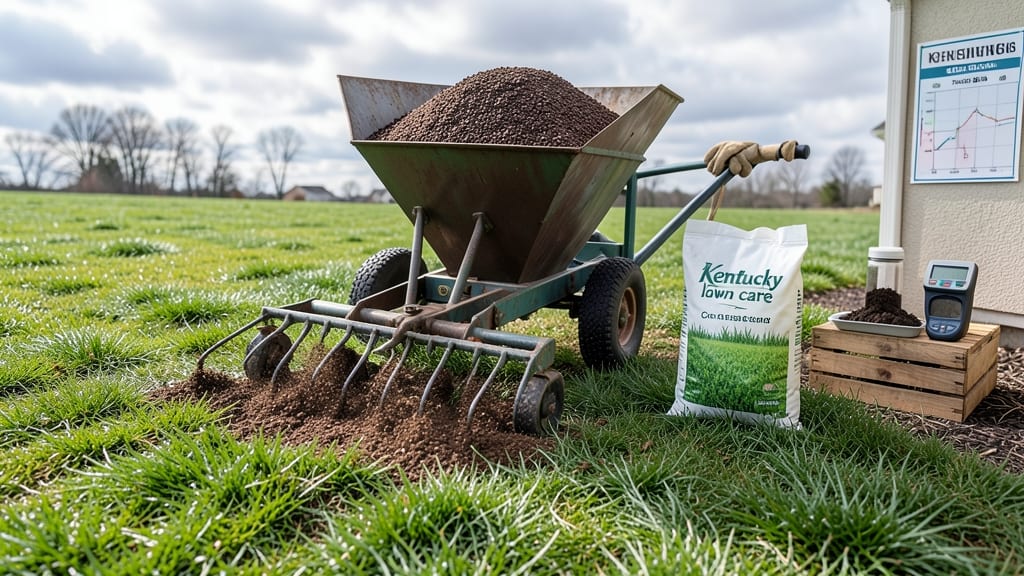
Fertilizing your lawn in Kentucky at the right time means the difference between a lush, green carpet and a patchy, struggling yard 🌱 — and the best months depend entirely on whether you’ve got cool-season or warm-season grass.
Here’s the catch: Kentucky’s humid subtropical climate throws off most national schedules.
Cool-season grasses like Kentucky bluegrass need their first feeding as soon as the soil warms in early spring, while warm-season varieties like Bermuda grass won’t respond until late spring—get it wrong, and you’ll either starve your lawn or burn it.
Below, I break down the exact fertilization timeline for both grass types, including the three critical windows Kentucky homeowners swear by to avoid wasted fertilizer and weak growth. Plus, the one mistake that turns your lawn yellow overnight.
You’ll learn how to sync your feeding with Kentucky’s microclimates, which fertilizers work best for clay-heavy soils, and why a late-summer application could kill your grass faster than drought.
Kentucky’s cool-season lawn fertilization schedule: best months for fescue & bluegrass
Cool-season grasses like Kentucky bluegrass and tall fescue dominate Kentucky lawns because they thrive in our humid subtropical climate. But unlike warm-season grasses, they need fertilization during spring and fall when temperatures are mild.
Timing is everything—apply too early or late, and you’ll waste fertilizer or even stress your grass.
Kentucky’s USDA zones 6a-7b mean first frost typically arrives between mid-November and early December, while last frost usually lifts around mid-March. These dates create your fertilization window—the perfect time to feed your lawn for maximum growth and resilience.
Here’s the exact fertilization schedule Kentucky lawn pros recommend, including how to adjust for microclimates (like shady spots or urban heat islands) and soil types (clay-heavy soils need extra attention).
| Season | Month | Temperature Trigger | Fertilizer Type | Application Rate | Notes |
|---|---|---|---|---|---|
| Early Spring | March | Soil temps 50°F+, last frost passed | High-Nitrogen (24-0-5) | 1 lb per 100 sq ft | Kickstart growth after dormancy |
| April | Grass actively growing, no frost risk | Balanced (16-4-8) | 0.5 lb per 100 sq ft | Encourage root depth before summer | |
| Late Summer | August | Soil temps 80°F+, drought stress | Light feed (optional) | 0.25 lb per 100 sq ft | Only if grass shows heat stress |
| September | Daytime temps 75°F or below | High-Nitrogen (24-0-5) | 1 lb per 100 sq ft | Strengthen roots for winter dormancy | |
| Fall | October | 6-8 weeks before first frost | Winterizer (high potassium) | 0.5 lb per 100 sq ft | Boost cold tolerance and root density |
🌱 Pro Tip: Adjust for microclimates—shady areas may need 2 weeks later fertilization.
Your early spring fertilization (March-April) is all about waking up dormant grass. Aim for soil temperatures above 50°F—this is when roots start absorbing nutrients again. Use a high-nitrogen fertilizer (like 24-0-5) to promote rapid green-up, but avoid applying if frost is forecasted within 48 hours.
By late May, cool-season grasses typically go dormant as temperatures rise. This is why summer fertilization is risky—it can stress your lawn or even cause nutrient burn.
If your grass shows signs of heat stress (brown patches, wilting), a light feed in August might help, but skip it if drought conditions persist.
Fall is your second critical window—especially September and October. This is when you should apply a winterizer fertilizer (high in potassium) to strengthen roots. Time it so the grass has 6-8 weeks to absorb nutrients before the first frost.
In Kentucky’s Zone 7b, this usually means fertilizing by mid-October.
For microclimates, like shaded lawns or urban areas with heat islands, adjust your schedule by 2 weeks. Shady spots may need fertilization later in spring (May instead of April) because they warm up slower. Meanwhile, southern Kentucky’s warmer microclimates might extend your fall window into early November.
One common mistake Kentucky homeowners make is over-fertilizing in late summer. If you fertilize when soil temps exceed 80°F, you risk nutrient burn or even inviting fungal diseases. Always check the weather forecast—if rain is expected within 24 hours, wait to apply fertilizer.
To maximize results, pair fertilization with proper watering. After applying fertilizer, water your lawn deeply (1 inch) to help nutrients penetrate the soil. Early morning is the best time to water—this reduces evaporation and fungal risks. In clay-heavy Kentucky soils, consider aerating before fertilizing to improve nutrient absorption.
Finally, don’t forget to test your soil every 2-3 years. Kentucky’s soils often lack phosphorus or potassium, and a soil test will tell you if you need to adjust your fertilizer’s N-P-K ratio. Many local extension offices offer affordable testing—it’s worth the investment for a healthier lawn.
Warm-season grasses in Kentucky: when to fertilize Bermuda, Zoysia & Centipede
Kentucky’s warm-season grasses like Bermuda, Zoysia, and Centipede thrive under our hot, humid summers but need precise fertilization timing to avoid stress. Unlike cool-season grasses, these varieties enter dormancy in winter, so feeding must align with their active growth windows.
Missing these timelines can lead to weak turf or even nutrient burn during heatwaves.
Your fertilization schedule should prioritize late spring and early summer when temperatures consistently stay above 65°F. Kentucky’s USDA zones 6a-7b mean you’ll also need to adjust for late summer droughts, which can stress warm-season grasses if fertilized too late.
Let’s break down the exact month-by-month strategy for each variety.
Apply high-nitrogen fertilizer (25-0-5 or 30-0-4) as soon as soil temps hit 65°F+ to kickstart growth. Bermuda responds fastest, while Zoysia may need a lighter dose to avoid burn risk.
Use a slow-release fertilizer (16-4-8) in June to support drought resilience. Centipede grass thrives here but avoid feeding if soil is dry—water first!
Switch to a low-nitrogen blend (10-10-10) in early September to prepare for dormancy. Hybrid Bermuda benefits most from this late-season boost.
July-August fertilization is a common mistake—new growth struggles in 90°F+ heat, leading to thin, weak turf. Skip feeding entirely unless you’ve overseeded with ryegrass.
Kentucky’s microclimates play a big role here. If you’re in western Kentucky’s hotter zones, push your first feeding to mid-April when soil warms faster. In eastern Kentucky’s cooler pockets, wait until early May to avoid fertilizer washout from spring rains.
Always test your soil pH—warm-season grasses prefer 6.0-7.0, and Kentucky’s clay soils often need lime adjustments.
For drought-prone areas, pair fertilization with deep watering (1-1.5 inches per week). Zoysia is the most drought-tolerant, while Centipede needs consistent moisture to recover from heat stress. After feeding, mow high (1.5-2.5 inches) to shade roots and retain moisture—this is critical in Kentucky’s humid summers.
Pro tip: Use a fertilizer with iron in late spring to keep Bermuda’s vibrant green color, especially if your lawn shows yellowing. And if you’re overseeding with ryegrass in fall, apply a starter fertilizer (high-phosphorus) to help new seedlings establish before dormancy sets in.
Timing is everything with warm-season grasses in Kentucky—get it right, and you’ll have a dense, heat-resistant lawn that outshines neighbors’. Skip these windows, and you’ll spend next summer patching brown spots instead. 🌱☀️✂️