
Container Gardens
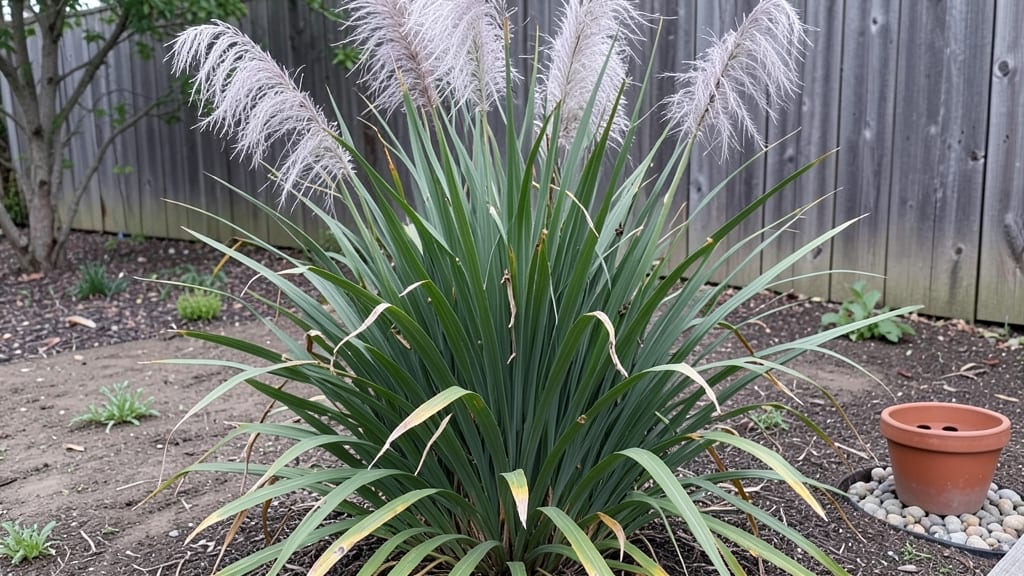
Growing pampas grass in containers demands spacious pots (minimum 18-24 inches wide and deep) to support its sprawling roots and avoid root-bound stress, paired with fast-draining soil and light pruning for longevity. Compact varieties adapt better to smaller planters.
Pampas grass thrives in containers when given enough room to spread—its fibrous roots can stretch 3-4 feet wide in mature plants. 🌿 The key is replicating its natural soil conditions: a mix of 60% potting soil, 30% perlite, and 10% compost keeps roots oxygenated while preventing waterlogging.
I’ve found that terracotta pots with side drainage holes work best, as they wick away excess moisture faster than plastic. For dwarf varieties like 'Dwarf Pampas' (3-4 feet tall), a 12-inch pot suffices, but standard types need the extra space to prevent stunted growth.
Container choice matters just as much as size—heavy clay pots anchor tall varieties better during wind, while lightweight plastic lets you move plants seasonally. Pro tip: Elevate containers on pot feet to improve airflow at the base, where roots are most vulnerable to rot.
This small tweak can extend your pampas grass’s lifespan by 2-3 years.
💡 In This Article
- How Pampas Grass Roots Grow and Space Needs
- Best Container Materials and Drainage Solutions
How pampas grass roots grow and space needs
Pampas grass spreads through a network of fibrous rhizomes that can extend 3-4 feet outward from the plant's center, creating a dense mat of roots that absorb nutrients aggressively. This growth pattern mimics its native behavior in open plains, where it competes for space and resources.
The rhizomes store energy and water, allowing the plant to survive droughts—up to 6-8 weeks without supplemental water in ideal conditions. When confined to small containers, these rhizomes become root-bound, forcing them to circle tightly and compete for the same nutrients, which weakens the plant over time.
The root system of standard pampas grass varieties (like Cortaderia selloana) can reach depths of 2-3 feet, requiring containers with at least 24-inch depth to prevent stunted growth.
Dwarf varieties, such as 'Pumila' or 'Dwarf Pampas,' have shallower roots (12-18 inches deep) and can thrive in 12-inch pots because their rhizomes spread horizontally rather than vertically.
The key difference lies in their growth habit: standard types prioritize vertical expansion, while dwarf varieties focus on lateral spread, making them more adaptable to confined spaces.
Container size directly impacts nutrient absorption because roots need room to explore soil for minerals and water. A 24-inch pot provides enough volume for mature pampas grass to develop a robust root system, while a 12-inch pot limits growth to about 3-4 feet tall—ideal for dwarf varieties.
Without adequate space, roots become compacted, reducing oxygen flow and increasing the risk of fungal infections like Phytophthora. This is why even well-draining soil fails to compensate for insufficient container size: the problem isn’t drainage alone but the physical constraint on root expansion.
Stability is another critical factor. Tall pampas grass varieties (up to 10-12 feet) need wide, heavy containers to prevent tipping in wind or rain. A 24-inch diameter pot distributes weight more evenly than a narrow, deep container, reducing the risk of toppling.
For example, a 15-gallon clay pot with a 20-inch diameter can support a 6-foot-tall plant without needing staking, whereas a 5-gallon plastic pot would struggle to anchor the same height. The broader base also improves water retention during dry spells, as more soil volume moderates moisture loss.
What most gardeners overlook is how container material affects root temperature. Terracotta pots, with their porous walls, allow roots to breathe and regulate temperature better than plastic, which can trap heat and accelerate root rot in summer.
In winter, terracotta insulates roots slightly, protecting them from freezing in zones 7-9. Plastic pots, while lightweight, create a more insulated environment that can lead to overheating in sunny climates or chilling in cold snaps.
This is why terracotta is the preferred choice for standard pampas grass in containers, despite its heavier weight.
For those working with limited space, consider dividing mature plants every 3-4 years to refresh their root systems. This involves carefully removing the plant, separating the rhizomes, and repotting them into fresh soil.
It’s a labor-intensive process but can revive a struggling pampas grass by giving its roots the space they crave. The best time to divide is in early spring, when new growth is just beginning—this minimizes stress on the plant and maximizes its ability to establish in the new container.