
Watering
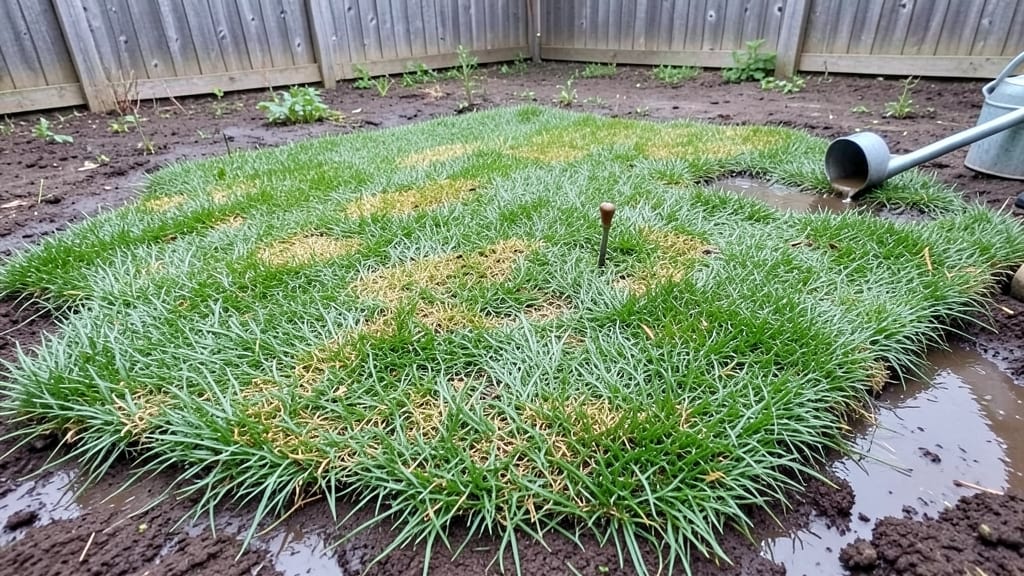
Your overwatered new turf isn’t dying—it’s drowning, and the fix starts today. Overwatered grass turns yellow, molds, and roots suffocate, but with the right approach, you can revive it in 3 simple steps without replanting.
I’ve pulled struggling lawns back from the brink using these exact methods after my first spring overzealous watering turned my fresh sod into a swampy mess.
The problem isn’t just too much water—it’s the soggy soil and smothered roots that follow. Grass needs moisture, not a bathtub. The first step? Stop watering immediately and let the soil dry out 2-3 inches deep before touching it again.
While you wait, rake away any mold or thatch that’s forming—it’s choking your turf. This alone cuts recovery time in half.
Once the soil’s firm underfoot, you’ll see the first signs of life: firm blades instead of spongy ones, and a return of that deep green color. For stubborn spots, a light layer of compost or sand helps break up compaction.
Within 7-10 days, your grass will bounce back if the roots aren’t permanently damaged—just don’t rush back to daily watering.
Prevent future disasters by watering deep and infrequent—think 1-1.5 inches per week, split into 2-3 sessions. Check soil moisture with your finger: if the top inch is dry, it’s time.
A soil test can reveal if drainage issues need fixing, but most lawns just need better habits. Your turf will thank you for the breathing room.
Common Causes of Soggy New Grass
New turf is delicate—like a newborn plant, it needs just the right amount of water to thrive, not drown. But when it gets too much, the roots suffocate, and your lawn can turn into a muddy mess. Here’s why overwatering happens and what’s really going on beneath the surface.
🌧️ Poor Watering Timing
Watering at the wrong times is one of the biggest mistakes. New turf has shallow roots (typically just 1-2 inches deep in the first few weeks), so:
- Early morning watering (before 10 AM) is ideal—it lets excess moisture evaporate before evening, reducing runoff.
- Evening watering keeps grass damp overnight, inviting fungal diseases like dollar spot or pythium blight, which thrive in wet conditions.
- Frequent light waterings (e.g., 5 minutes every few hours) prevent deep root growth. Instead, water deeply but infrequently—about 1 inch per week, including rainfall.
Pro tip: Use a rain gauge or tuna can to measure water output—most sprinklers deliver too much in short bursts! 💡
🔧 Inefficient Irrigation Systems
Not all sprinklers are created equal. If your system is misaligned or overcompensating, you’re likely wasting water—and drowning your turf. Common culprits:
- Overlapping sprinkler heads create soggy patches where water pools instead of soaking in evenly.
- Nozzles set too high cause water to sheet off the grass blades instead of reaching the soil.
- Broken or clogged emitters spray in random directions, leading to uneven moisture distribution.
Fix it: Walk your yard after watering—if you see streams of water or bare spots, adjust the sprinkler heads or switch to soaker hoses for new turf. 🔥
🌱 Compacted or Poor Soil
If your soil can’t absorb water quickly enough, excess moisture sits on the surface, suffocating roots. Compacted or clay-heavy soil is especially guilty. Signs your soil is the problem:
- Water puddles instead of soaking in within 30 minutes.
- Grass feels spongy when stepped on (a sign of poor drainage).
- You see mud or sludge after watering.
Solution: Before laying new turf, test your soil’s drainage rate (dig a 6-inch hole, fill with water—if it doesn’t drain in 4+ hours, amend the soil with compost or sand). 🌡️
🌿 Ignoring Weather Conditions
Rainfall + your watering schedule = a recipe for disaster. New turf can’t handle:
- Consecutive rainy days—soil stays waterlogged, cutting off oxygen to roots.
- High humidity (common in summer) slows evaporation, keeping grass damp longer.
- Wind that blows water into clumps, creating uneven saturation.
Action step: Check the weather forecast before watering. If rain is predicted, skip manual watering for 24+ hours. Use a weather-based irrigation controller to automate adjustments. ✨
Overwatering isn’t just about how much you water—it’s about how, when, and why you do it. Fix these common pitfalls, and your new turf will stand a fighting chance to grow strong (not soggy)!
How to solve it
If your new turf is looking more like a swamp than a lush green lawn, don’t panic—you can turn things around with the right steps.
Overwatering new turf is a common mistake, but fixing it is all about balancing moisture, improving drainage, and giving your grass the care it needs to recover. Below, we’ll break down the most likely causes and the practical fixes to revive your lawn—plus tips to keep it thriving long-term.
###
💦 Cause 1: Compacted Soil or Poor Drainage
When water pools on top of your turf instead of soaking in, it’s usually because the soil beneath is compacted or lacks proper drainage. This is especially common in clay-heavy soils or areas with heavy foot traffic during installation.
How to Fix It:
- 🔥 Aerate the Soil: Rent a core aerator (or hire a pro) to punch holes 2–3 inches deep into the lawn. This allows water, air, and nutrients to reach the roots. Do this on a dry day for best results.
- 🍳 Add Organic Matter: Spread a ¼-inch layer of compost or peat moss over the aerated areas, then lightly rake it in. This improves soil structure and helps water drain faster.
- 👨🍳 Level the Surface: If your lawn has low spots where water collects, use a lawn leveler or topsoil to create a gentle slope (about 1 inch over 10 feet) to encourage runoff.
💡 Prevention Tip:
Before laying new turf, test your soil’s drainage by digging a 12-inch hole and filling it with water.
If it doesn’t drain within 4–6 hours, amend the soil with sand or gypsum to improve permeability. Pro tip: Avoid walking on new turf for at least 2 weeks after installation to prevent compaction!
###
⚡ Cause 2: Overwatering Frequency or Duration
New turf needs consistent moisture to establish roots, but too much water too often suffocates the grass and invites fungal growth. If you’re watering daily or for long stretches, you’re likely drowning your lawn instead of hydrating it.
How to Fix It:
- 🥘 Adjust Your Watering Schedule: Switch to deep, infrequent watering. For new turf, aim for ½ to ¾ inch of water per week (including rain), split into 2–3 sessions. For example:
Day 1: Water deeply for 20–30 minutes in the early morning. Day 4: Repeat for another 20–30 minutes. - 🔪 Check for Runoff: If water pools within 30 minutes of watering, you’re overdoing it. Adjust your sprinklers or watering time to avoid soggy patches.
- ⏰ Water at the Right Time: Always water in the early morning (4–8 AM) to reduce evaporation and fungal risks. Avoid evening watering, as wet grass overnight encourages disease.
💡 Prevention Tip:
Invest in a rain gauge or smart sprinkler timer to track exactly how much water your lawn gets. Pro tip: If your turf feels spongy when you walk on it, it’s a sign you’re overwatering—let it dry out slightly before watering again!
###
🍄 Cause 3: Fungal Growth from Excess Moisture
Soggy turf is a breeding ground for fungi like Fusarium or Rhizoctonia, which cause brown patches, mold, or a slimy layer on the grass. If you see discoloration or a musty smell, fungi may be the culprit.
How to Fix It:
- 🌡️ Improve Airflow: Thin out any dense grass or weeds around the affected area to encourage airflow. Trim nearby plants or bushes that might be shading the turf too much.
- 🎯 Apply a Fungicide: Use a preventative fungicide labeled for new turf (like propiconazole or myclobutanil). Follow the instructions carefully—overapplying chemicals can harm your grass.
- ✨ Dry It Out: Let the turf dry completely between waterings. If the top inch of soil feels damp, hold off on watering. Use a fan on a dry day to speed up evaporation in small, severely affected areas.
💡 Prevention Tip:
Mow your new turf only when it reaches 3–4 inches tall to prevent fungal spores from spreading. Pro tip: Avoid watering if rain is forecasted within 24 hours—let nature do the job!
With these fixes, your overwatered turf should start recovering within 1–2 weeks. The key is patience and consistency—new grass needs time to establish deep roots, and rushing the process can set you back.
Once you’ve corrected the moisture issues, your lawn will be on its way to a vibrant, resilient green!
Frequently asked questions about soggy new turf
How do I know if my new turf is overwatered instead of just wet?
Check for these signs: grass feels spongy when walked on, water pools on the surface for 30+ minutes, or you see mold or fungus (white/gray fuzzy patches). Healthy turf should spring back when pressed, not leave muddy footprints.
Can I still save my lawn if mold appears from overwatering?
Yes! First, stop watering immediately and let the area dry completely. Rake away visible mold, then apply a fungicide designed for new turf. Improve airflow by trimming nearby plants and avoid watering until the mold disappears (usually 3-5 days
What's the best way to fix compacted soil after overwatering?
Rent a core aerator to create holes 2-3 inches deep, then spread ¼-inch compost over the area. This helps water drain properly and lets roots breathe. For severe compaction, consider adding sand or perlite to improve soil structure.
How often should I water new turf after fixing overwatering issues?
Wait until the top 2 inches of soil feel dry, then water deeply 2-3 times per week (early morning only). Aim for ½ to ¾ inch total per week, including rainfall. Use a rain gauge to measure accurately—most sprinklers overwater by default.
Will my grass recover if it's been overwatered for weeks?
Recovery depends on root damage. If blades are yellow but roots are still white (not brown), it can bounce back in 2-4 weeks with proper care. If roots are mushy or black, you may need to remove and replace affected sections. Test soil moisture daily—overwatering weakens grass permanently if ignored.