
Lawn
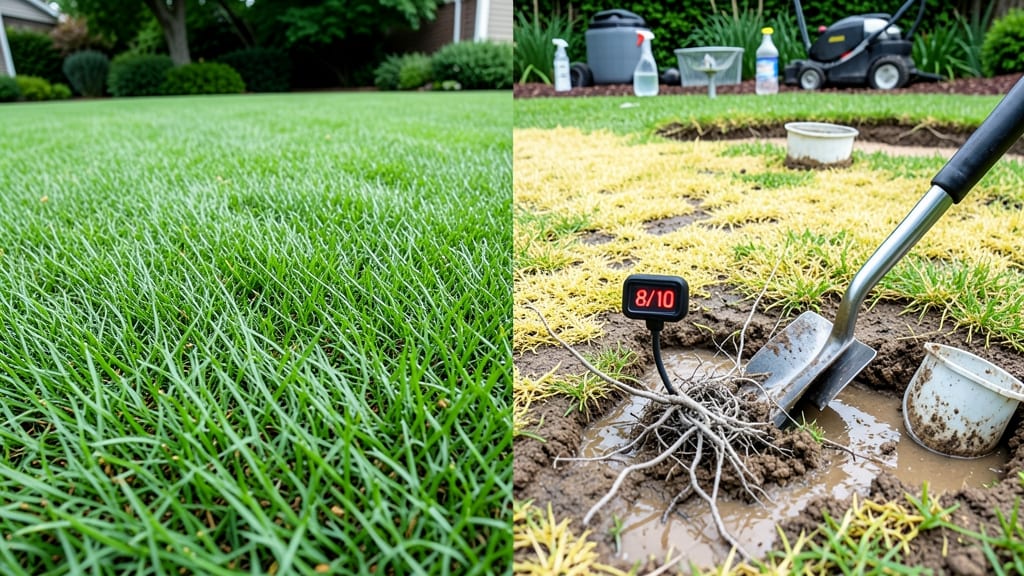
Your lawn isn't drowning—it's suffocating. 🌱 Overwatered lawns turn vibrant green into a sad, yellowing mess, and the fix starts with recognizing the signs: spongy grass, that awful damp smell, and mushrooms popping up like unwanted guests.
I've rescued more lawns than I can count from this exact problem, and the solution isn't complicated—just different from what you're probably doing now.
The root cause is almost always too much water, too often. Most people water when they think the lawn needs it, not when it actually does. A simple soil check (lift a small patch—if it's soggy 1-2 inches down, you've overdone it) reveals the truth.
The good news? Grass is tougher than we give it credit for. With the right adjustments, you'll see dry edges turn crisp green again within 7-10 days—no magic, just science.
Here's where it gets simple: cut back watering to 1 inch per week (including rain), improve drainage with a core aeration pass, and let the soil breathe. The first step alone—watering less—will shock you at how much better the lawn looks.
You'll also notice fewer weeds and pests, because overwatering creates the perfect party for everything you don't want growing.
Once you've got the basics down, we'll talk about long-term fixes like soil testing and smart irrigation systems that do the work for you. But first, let's get that lawn breathing again—it's been holding its breath long enough.
Common Causes Of Soggy Soil
An overwatered lawn isn’t just a result of a heavy rain or a misplaced sprinkler—it’s often the outcome of well-intentioned (but misguided) habits. Understanding the root causes can help you avoid turning your yard into a swamp.
Let’s break down the most common reasons your grass might be drowning in excess moisture.
One of the biggest culprits is inconsistent watering. While it might seem like more water equals a greener lawn, overwatering disrupts the soil’s natural balance. When you water too frequently—especially in short, shallow sessions—you prevent grass roots from growing deep. This leads to:
- Shallow root systems that can’t access deeper moisture, making grass more dependent on surface water.
- Poor oxygen exchange in the soil, suffocating roots and promoting fungal growth (like Fusarium or Rhizoctonia).
- Nutrient leaching, where excess water washes away essential minerals like nitrogen and potassium.
Pro tip: 💡 Water deeply but infrequently—aim for 1–1.5 inches per week, including rainfall. Use a rain gauge or tuna can to measure accurately!
If your sprinklers, drip lines, or irrigation controllers aren’t calibrated correctly, they can deliver far more water than your lawn needs. Common issues include:
- Overlapping spray patterns from misaligned sprinkler heads, leading to "double-dipping" in the same area.
- Clogged or broken nozzles that spray in erratic, high-pressure bursts instead of a gentle, even mist.
- Automatic timers set too long, especially during rainy periods (many systems lack rain sensors).
- Slope-related runoff—water pooling in low spots instead of absorbing evenly.
Pro tip: 🔥 Run a DIY sprinkler check by placing empty containers around your yard during a watering cycle. If one spot gets 2 inches while another gets just 0.5, you’ve got an imbalance!
Not all soil is created equal—and some types hold onto water like a sponge. If your yard has clay-heavy or compacted soil, excess moisture can’t drain away, leading to:
- Waterlogging, where soil pores fill with water, cutting off oxygen to roots.
- Anaerobic conditions, which encourage harmful bacteria and pests (like grubs or nematodes).
- Surface puddling, signaling that water can’t penetrate more than a few inches down.
Test your soil’s drainage with a simple percolation test:
- Dig a 12-inch-deep hole in a dry area.
- Fill it with water and let it drain completely.
- Refill and time how long it takes to drain. If it takes longer than 6 hours, you’ve got poor drainage.
Pro tip: ✨ Improve drainage by aerating in fall or spring and mixing in compost or sand (for clay soil) to loosen compaction.
Not all grass thrives in the same conditions. Cool-season grasses (like Kentucky bluegrass or fescue) need more water than warm-season types (like Bermuda or zoysia). Similarly, your local climate plays a role:
- Humid regions (e.g., the Southeast U.S.) naturally receive more rainfall, so grass may not need extra watering.
- Dry climates (e.g., the Southwest) require deep, infrequent watering to mimic natural rainfall.
- Shade vs. sun exposure: Grass in shaded areas stays wet longer and may need 10–25% less water than sun-exposed patches.
Pro tip: 🌡️ Adjust your watering based on grass type and microclimates in your yard. Use a soil moisture meter to check moisture levels before watering.
Sometimes, the problem isn’t watering at all. Other factors can contribute to a soggy lawn:
- Improper grading: If your yard slopes toward the house or driveway, water pools instead of draining away.
- Blocked drainage paths: Gutters spilling onto the lawn, broken downspouts, or clogged French drains can redirect water where it doesn’t belong.
- Thatch buildup: A layer of dead grass (over ½ inch thick) can act like a barrier, preventing water from reaching the roots.
- Over-fertilizing: Excess nitrogen promotes rapid top growth, which increases water needs and makes grass more susceptible to disease.
Pro tip: 🎯 If you suspect drainage issues, call a landscape professional to assess grading and install swales or French drains if needed.
Fixing a Soggy Lawn Step by Step
An overwatered lawn can feel like a soggy mess, but with the right approach, you can nurse it back to health—without drowning it further. The key is identifying the root cause (like poor drainage, overzealous watering, or compacted soil) and applying targeted fixes.
Below, we break down practical, actionable solutions tailored to the most common culprits, plus prevention tips to keep your grass thriving.
---
If your lawn is suffering from heavy, infrequent watering (like a single deep soak that leaves puddles for days), the fix is simple: spread out your watering sessions.
#### How to Fix It: - 🔥 Switch to shallow, frequent watering – Aim for 0.5 to 1 inch of water per week (including rain), broken into 2–3 sessions (e.g., 3x/day for 10–15 minutes). - 👨🍳 Use a rain gauge or tuna can – Place a shallow container in your lawn to measure water output.
Adjust sprinklers if they’re delivering too much. - ⏰ Water early in the morning – This reduces evaporation and fungal risks (like brown patch disease) compared to evening watering. - 🌱 Check sprinkler placement – Misaligned sprinklers can create uneven wet spots.
Adjust nozzles or add soaker hoses for precision.
#### 💡 Prevention Tip: Install a smart sprinkler controller (like Rain Bird or Rachio) to automate watering based on local weather data—no guesswork required!
---
If water pools for hours after rain or your lawn feels spongy underfoot, compaction or clay soil might be trapping moisture. Here’s how to loosen the soil and boost drainage:
#### How to Fix It: - 🔪 Core aeration (best for compacted lawns) – - Rent a core aerator (or hire a pro) to pull small soil plugs (like a honeycomb pattern) every 6–12 months. - When to do it: Late spring or early fall, when grass is actively growing. - 🌡️ Add organic matter – - Spread 2–3 inches of compost or peat moss over the lawn, then lightly rake in. - For clay-heavy soil, mix in sand or perlite (but avoid pure sand—it can compact further). - 🎯 Install French drains (for severe cases) – - Dig a trench along low spots, fill it with gravel, and insert a perforated pipe to redirect water away from the lawn.
#### 💡 Prevention Tip: Top-dress annually with a thin layer of compost to improve soil structure over time. Avoid heavy foot traffic when soil is wet to prevent future compaction.
---
If your yard is in a flood-prone area or gets consistent heavy rainfall, you’ll need to manage runoff before it strangles your grass.
#### How to Fix It: - 🏗️ Grade your lawn properly – - Ensure the slope is 1–2% (about 1 inch of drop over 10 feet) to encourage water flow away from the house or low spots. - Avoid steep slopes—they can erode soil. - 🌿 Create swales (shallow ditches) – - Dig wide, shallow trenches (6–12 inches deep) along contours to slow and absorb water. - Plant deep-rooted grasses (like tall fescue) or clover in these areas to stabilize soil. - 🔄 Install a dry well or bioswale – - For large yards, a dry well (a gravel-filled pit) can absorb excess water underground. - A bioswale (a landscaped ditch with plants) filters and slows runoff naturally.
#### 💡 Prevention Tip: Plant native, drought-tolerant grasses (like buffalo grass or zoysia) in problem areas—they handle wet conditions better than Kentucky bluegrass.
---
If your lawn has mushrooms, mold, or yellow patches, excess moisture is likely feeding fungal growth. Here’s how to dry it out and prevent recurrence:
#### How to Fix It: - ⏰ Space out watering sessions – Let the top 1–2 inches of soil dry between waterings (stick a screwdriver in—if it goes in easily, it’s too wet). - 🌡️ Mow higher (3–4 inches) – Taller grass shades soil, reducing evaporation and fungal spores. - 🔥 Apply fungicide (if needed) – - Use a preventative fungicide (like propiconazole) in early spring or after heavy rain. - For existing patches, spot-treat with baking soda + water (1 tbsp baking soda + 1 gallon water) or hydrogen peroxide (3%). - 🌱 Improve airflow – Thin out dense grass with vertical mowing (rent a dethatcher) to let air circulate.
#### 💡 Prevention Tip: Avoid watering at night—moisture lingers longer, creating the perfect fungal buffet. Stick to morning watering for quick evaporation.
--- Once your lawn is back on track, consistent care will prevent future sogginess: - 📊 Test soil moisture weekly – Use a moisture meter or the screwdriver trick. - 💪 Fertilize smartly – Over-fertilizing can encourage lush (but weak) growth that retains more water.
Use a slow-release, balanced fertilizer (like 16-4-8). - 🌿 Overseed bare spots – Thin or dead patches hold water longer. Reseed with disease-resistant grass varieties.
--- Final Thought: An overwatered lawn is a fixable problem—not a death sentence. Start with one or two solutions based on your yard’s biggest issue, then build good habits to keep your grass happy, healthy, and just damp enough. 🌱💦
Frequently asked questions
How can I tell if my lawn is overwatered vs. underwatered?
Check the soil first—lift a small patch. If it's soggy 1-2 inches down and smells musty, you're overwatering. Look for yellowing grass with dark green patches, mushrooms popping up, or a spongy feel underfoot. Underwatered lawns feel dry 2+ inches down and have crispy brown edges.
Will stopping watering immediately fix an overwatered lawn?
Not quite! Sudden water cuts can shock grass. Instead, reduce to 0.5-1 inch per week (including rain) and let the top 1-2 inches of soil dry between sessions. Recovery takes 7-14 days—be patient, and avoid heavy foot traffic while roots adjust.
Can I still use my sprinkler system if my lawn is overwatered?
Yes, but adjust it first! Check for overlapping spray patterns or broken nozzles. Run a DIY test: place empty containers around your yard during watering. If one spot gets 2 inches while another gets 0.5 inches, you've got uneven coverage. Use a smart controller to automate proper watering cycles.
How do I fix clay soil that won't drain?
Start with core aeration (rent a machine or hire a pro) to create holes for water escape. Then top-dress with 2-3 inches of compost or mix in sand/perlite (but avoid pure sand—it can compact). For severe cases, install French drains along low spots to redirect water.
Will overwatering kill my lawn permanently?
Not necessarily! Grass is resilient. The key is catching it early. If you act within 2-3 weeks of overwatering, your lawn can fully recover with proper drainage adjustments and reduced watering. Long-term damage (like fungal diseases) may require fungicide, but the grass itself rarely dies permanently.