
Lawn
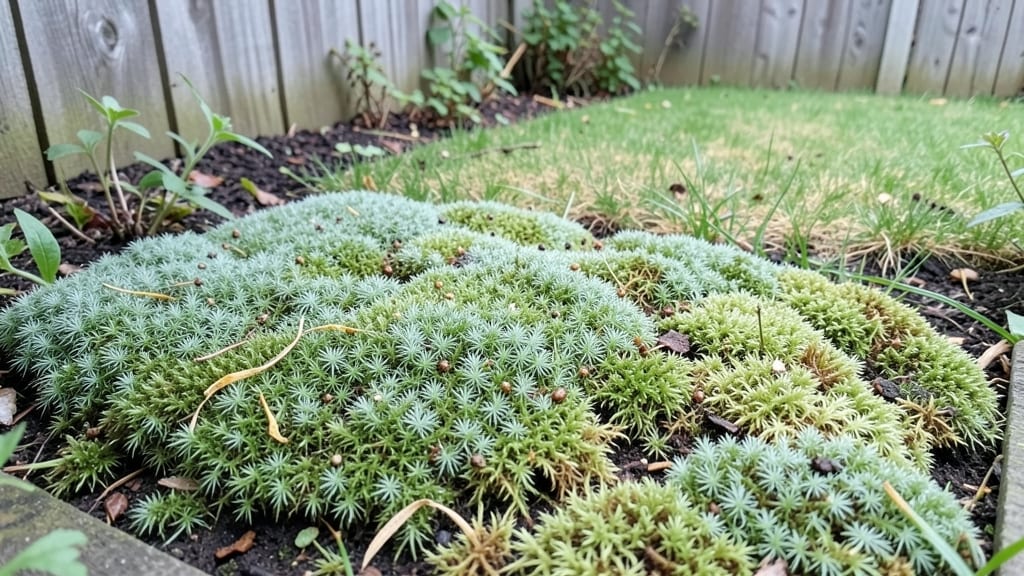
Moss lawns shine in environments where traditional grass struggles—think dense shade or acidic, poorly drained soils. 🌿 Their shallow root systems mean they don’t compete for nutrients like grass does, and their natural cushioning reduces soil erosion.
However, this same simplicity becomes a drawback in dry spells or high-traffic areas, where moss can brown out or get compacted.
Many homeowners discover the real trade-off lies in maintenance: while moss needs no mowing or fertilizing, its slow recovery after drought or foot traffic means it’s better suited for ornamental spaces than active play areas.
What’s interesting is how moss’s pros and cons flip depending on your priorities. For instance, if you’re dealing with a heavily shaded yard where grass barely survives, moss’s resilience becomes its biggest advantage. But if you need a durable surface for kids or pets, the limitations become dealbreakers.
I’ve seen moss lawns thrive in woodland gardens but struggle in sunny backyards—soil type and sunlight are the real game-changers here.
💡 In This Article
- How Moss Lawns Adapt to Shade and Soil Conditions
- Moss Lawn Maintenance: Realistic Expectations vs. Grass Alternatives
How moss lawns adapt to shade and soil conditions
Moss thrives in shaded areas because its cells contain chlorophyll that operates efficiently under low light conditions. Unlike grass, which relies on extensive root systems to access nutrients and water, moss has no true roots—just tiny hair-like structures called rhizoids that anchor it to surfaces.
This adaptation allows moss to absorb moisture directly from the air and soil, making it ideal for damp, shaded environments where grass would struggle to establish roots and photosynthesize effectively.
The ideal soil pH for moss ranges between 4.5 and 6.0, which is acidic. This preference stems from moss's natural habitat in forests and bogs, where organic matter decomposes and releases acids. In contrast, most grass species prefer neutral to slightly alkaline soils (pH 6.0-7.5).
Moss’s ability to thrive in acidic conditions also means it doesn’t compete with other plants for nutrients, as it can absorb them directly from the environment without relying on deep soil layers.
Moisture retention is another key advantage of moss. Its dense, spongy structure holds water like a natural sponge, reducing evaporation and keeping the surface damp even in dry conditions. This trait is particularly useful in areas with poor drainage or high humidity.
However, this same moisture-loving nature makes moss vulnerable to drought—once dry, it can take weeks to recover, unlike grass, which has deeper roots to access water during dry spells.
Visually, moss lawns create a soft, velvety carpet that contrasts sharply with the coarse texture of grass. The absence of roots also means moss doesn’t form thatch or require aeration, which is a major maintenance advantage. Yet, this same lack of roots limits moss’s ability to handle foot traffic.
Grass recovers from compression because its roots can regenerate, while moss can become permanently damaged if walked on frequently, leading to brown, compacted patches.
Consider this comparison: a 100-square-foot moss lawn in full shade may require no mowing, fertilizing, or overseeding, but it could take 6-8 weeks to recover from a single drought event.
Grass, on the other hand, might need mowing every 1-2 weeks but can bounce back from drought in just 2-3 weeks with proper care. The trade-off is clear—moss excels in low-maintenance beauty, while grass offers durability and resilience.
For homeowners with acidic, shaded soils, moss lawns are a game-changer. They transform problem areas into lush, green spaces with minimal effort. But for those needing a functional surface for play or pets, the limitations become obvious.
The key is matching the moss’s strengths—shade tolerance, moisture retention, and low upkeep—with your yard’s specific conditions. 💫