
Lawn
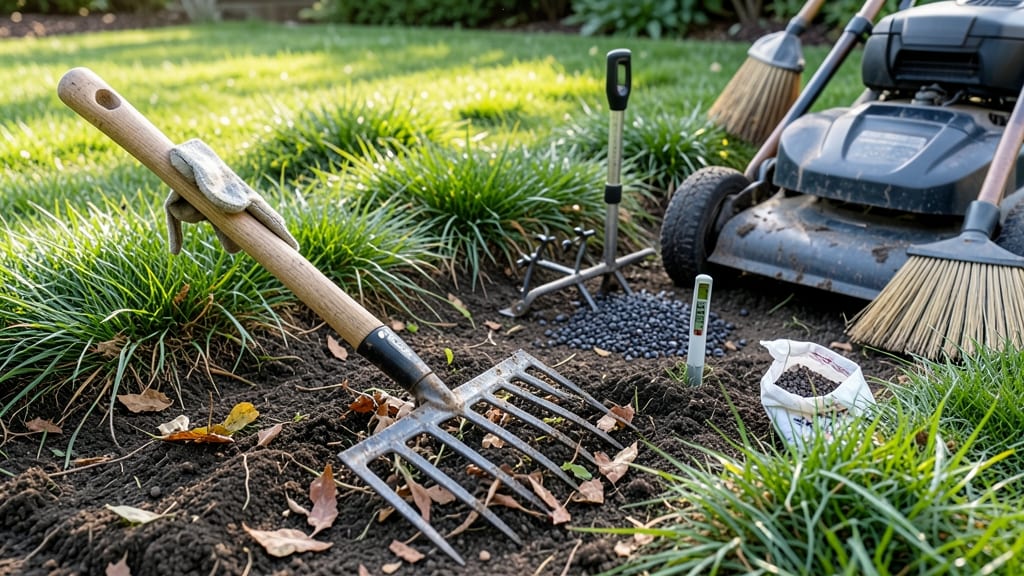
Your lawn spring clean-up starts with just three simple steps—and skipping any of them means missing the best chance to fix last year’s problems. 🌱 I’ve learned the hard way that rushing this process leads to patchy grass, wasted fertilizer, and a lawn that never quite recovers its lushness.
The key is timing: early spring (as soon as the soil is workable) gives your grass the jumpstart it needs before summer heat sets in.
First, clear away winter’s debris—leaves, branches, and thatch—so sunlight and air can reach the soil. Then adjust your mower height to 3-4 inches for cool-season grasses (or 2-3 inches for warm-season), which shades roots and retains moisture.
Most people overlook this, but it’s the difference between a lawn that thrives and one that struggles all season.
After mowing, aerate compacted areas (rent a core aerator if you don’t own one) and spread a slow-release fertilizer—this feeds roots without burning them. For bare spots, overseed now while the soil is warm enough for germination but not yet too dry.
By mid-May, your lawn will look like it’s been professionally redone, not just “fixed.”
Regional tweaks matter: Northern gardeners should wait until soil temps hit 50°F before overseeding, while Southerners might delay until late spring to avoid summer heat stress. And if your lawn is mostly weeds?
Start with a pre-emergent in early spring to block crabgrass before it takes over. Small adjustments make all the difference.
📚 In This Guide
- What you need
- Instructions
- Tips and common mistakes
- Wrapping up and next steps
What you need
- ● Lawn rake – A sturdy bendable-tine rake (8–12" width) to clear debris.
- ● Leaf blower or broom – For quick cleanup (gas-powered or electric).
- ● Garden shears or hedge clippers – Sharp, bypass-style for trimming edges.
- ● Lawn mower – Set to 2–3" height for early spring (adjust later).
- ● Gloves & knee pads – Heavy-duty work gloves and gel knee pads for comfort.
- ● Trash bags (30–50 gallon) – For collecting debris and yard waste.
- ● Pruners (bypass or anvil) – For trimming dead branches or overgrown plants.
- ○ Soil aerator (optional but helpful) – Manual or spike-type for compacted lawns.
- ● Garden hose with nozzle – For rinsing tools and wetting the lawn before mowing.
- ● Lawn dethatching tool – If your lawn has thick thatch buildup.
- ● Post-hole digger – For removing stubborn weeds or rocks.
- ● Lawn fertilizer & spreader – Slow-release spring blend (10-10-10 or 20-0-5).
- ● Mulching kit – For shredding leaves or grass clippings into compost.
- ● Safety glasses & ear protection – If using loud equipment.
Step-by-Step instructions for lawn spring clean up
Here's how I transform my lawn from winter dormancy to vibrant spring growth—no heavy equipment required.
✂️ Step 1: Remove Winter Debris and Aerate Compacted Soil
Start by raking up all dead grass, leaves, and twigs that accumulated over winter. I use a stiff-bristle rake to pull these out without tearing up new growth—just drag it gently across the surface. Look for thatch buildup (the spongy layer between soil and grass) over ½ inch thick, which blocks water and air. If you see it, rent a dethatching rake or hire help—this is the most labor-intensive part.
Next, aerate compacted areas with a manual aerator or even a garden fork. Poke holes every 3-4 inches in a grid pattern, pressing down until the fork hits 2-3 inches deep. You'll feel resistance in tight soil—this is where grass roots struggle. Water the lawn lightly after aerating to help the soil settle and encourage root expansion.
🌱 Step 2: Test Soil and Apply Fertilizer for Spring Growth
Grab a soil test kit (available at garden centers) and collect samples from 4-6 spots across your lawn. The results will tell you if your soil needs nitrogen, phosphorus, or potassium. For most lawns, a spring fertilizer with 25-0-5 ratio works best—this promotes leaf growth without overstimulating roots too early. I spread the granules using a broadcast spreader, following the package rate for my square footage.
After fertilizing, water deeply to activate the nutrients. Set your sprinkler for ½ inch of water (about 30 minutes for most systems) and let it soak in. Avoid light, frequent watering now—you want the fertilizer to move down to the roots, not just sit on the surface. Watch for yellow patches after watering; these signal over-fertilization in that spot.
☀️ Step 3: Mow and Adjust for Seasonal Growth
Wait until grass reaches 3-4 inches tall before your first mow—this ensures you're cutting no more than ⅓ of the blade length. Set your mower to 3 inches high for cool-season grasses (like fescue or rye) or 2-2.5 inches for warm-season types (like Bermuda). Higher settings shade the soil, reducing weeds and moisture loss.
Bag your clippings the first few times to remove thatch and debris. Once the lawn establishes new growth, you can switch to mulch mowing—those clippings break down quickly and return nutrients to the soil. I mow when the grass feels springy underfoot, usually every 7-10 days as growth accelerates. Avoid mowing when the lawn is wet to prevent clumping and uneven cuts.
Tips & tricks for perfect lawn spring clean up
Here's what nobody tells you about transforming your lawn without the usual headaches.
Timing Secret: The key to avoiding spring cleanup mistakes starts with the right timing. Don't rush into Step 1 until daytime temperatures consistently reach 50°F or higher—this ensures new grass growth isn't damaged by cold. I've learned this the hard way after accidentally tearing up tender spring shoots by working too early. Also, schedule your aeration for a dry day, but not immediately after—wait until 24 hours after rain when the soil is moist but not soggy. This gives you the perfect balance for those 2-3 inches deep holes.
Tool Upgrade: While a stiff-bristle rake works for debris removal, invest in a dethatching rake with adjustable tines if you notice thatch buildup over ½ inch. The wider tines pull out thatch more efficiently than regular rakes. For aeration, a manual aerator with ½-inch spikes works better than garden forks for larger lawns—it gives you more consistent hole spacing every 3-4 inches. I've tried both methods, and the aerator saves my back for big areas.
Fertilizer Precision: When applying that 25-0-5 ratio spring fertilizer, use a broadcast spreader with a calibrated rate to avoid over-application. Walk in a crisscross pattern to ensure even coverage, and always follow the package instructions for your specific square footage. After fertilizing, that ½ inch of water (30 minutes) is critical—set a rain gauge or measure with a straight-sided container to verify you're hitting the mark. Too little water leaves fertilizer on the surface, while too much can wash it away.
Mowing Strategy: The 3-4 inches tall guideline for your first mow is non-negotiable—cutting too short stresses new growth. For cool-season grasses, stick with 3 inches all season, while warm-season types can go slightly lower at 2-2.5 inches once established. I've found that mowing when grass feels springy underfoot (not wet) gives the cleanest cuts and prevents clumping. And remember: those first few mows should bag clippings to remove thatch and debris before switching to mulch mowing.
Pro Tips for Lawn Spring Clean Up
- Here's what nobody tells you about transforming your lawn without the usual headaches.
- Timing Secret: The key to avoiding spring cleanup mistakes starts with the right timing.
- Tool Upgrade: While a stiff-bristle rake works for debris removal, invest in a dethatching rake with adjustable tines if you notice thatch buildup over ½ inch.
Frequently asked questions
Got questions about your spring lawn clean-up?
You’re not alone! Here are answers to the most common concerns to help you tackle your yard with confidence.
When is the best time to start my lawn spring clean-up?
The ideal window is late winter to early spring (February through April, depending on your climate). Aim for after the last frost but before summer heat sets in. This gives grass time to recover before the growing season peaks.
What if my lawn has weeds or bare spots? Should I reseed now?
Yes! Spring is perfect for reseeding and weed control. After cleaning up debris, aerate compacted soil, spread fresh seed or sod, and apply pre-emergent herbicide (for weeds) or post-emergent (for existing weeds). Pro tip: Water lightly daily to keep seeds moist until germination.
Is it worth hiring a professional for a spring clean-up?
It depends on your budget and yard size. DIY is cost-effective for small lawns, but pros save time and ensure deep cleaning (like dethatching or soil testing). If your lawn has major issues (e.g., fungus, drainage problems), a pro’s expertise may be worth the investment.
Can I skip mowing until summer if my grass is still dormant?
No—never skip spring mowing! Dormant grass hides pests, diseases, and thatch buildup. Start with a high first cut (3–4 inches) to avoid shocking the lawn. Once growth resumes, mow regularly (never removing more than ⅓ of the blade height) to encourage thick, healthy turf.
What’s the fastest way to remove thick layers of thatch?
Use a manual thatch rake or power dethatcher in early spring before new growth. For thick layers (>½ inch), rent a vertical mower to slice through compacted thatch. Warning: Don’t overdo it—remove only what’s necessary to avoid damaging roots. Follow up with overseeding.
Wrapping up and next steps
Your spring lawn clean-up is the perfect way to refresh your outdoor space and set the stage for a lush, green season ahead! 🌱 By tackling debris, aerating, and feeding your grass, you’re not just tidying up—you’re investing in a healthier, more vibrant lawn.
Now that you’re armed with the right tools and tips, there’s no better time to roll up your sleeves and make it happen.
Ready to transform your yard? Start small—pick one task today and build momentum. Before you know it, your lawn will be the envy of the neighborhood! 🌿