
Lawn
Your lawn problems in South Africa aren’t just struggling—they’re fighting for their life against drought, heat, and stubborn pests. 🌞 I’ve watched Kikuyu and Buffalo grass turn from vibrant green to crispy brown in weeks, and I’m here to share the drought-resistant solutions that actually work in our climate.
The real culprits? Clay soil that bakes hard, mole crickets tunneling under the surface, and brown patch fungus thriving in summer humidity.
Most "solutions" online ignore our extreme heat—so I’ll cut through the noise with what’s proven to keep grass alive here, from shade-loving alternatives to watering hacks that save gallons. By the end, you’ll have a lawn that stays green through 100°F heatwaves, resists pests naturally, and doesn’t require constant watering.
No more wilting patches or brown spots—just a resilient turf that matches our tough landscape. Native grasses like Rhodes grass and St. Augustine (with the right care) are the secret weapons. Let’s get your lawn back to lush without breaking the bank or the planet.
Root Causes Of Lawn Struggles
South Africa’s harsh climate—think scorching sun, erratic rainfall, and nutrient-poor soils—creates a perfect storm for lawn woes. But why do these issues pop up in the first place? Let’s break down the science behind the struggle, so you can tackle the real culprits head-on. 🌡️🔍
When temperatures soar above 30°C (86°F), grass blades lose moisture faster than roots can replenish it. This triggers:
- Cell dehydration: Grass cells shrink as water evaporates, causing blades to turn grayish-blue or brown—a survival mechanism to reduce water loss.
- Photosynthesis shutdown: High heat damages chlorophyll, the pigment that turns sunlight into energy. Without it, grass weakens and stops growing.
- Root suffocation: Compacted or clay-heavy soils (common in SA) trap heat, baking roots alive. Fun fact: Roots need 15–25°C (59–77°F) to thrive—any hotter, and they struggle to absorb water.
Actionable fix: Choose deep-rooted, heat-tolerant varieties like Kikuyu or Buffalo grass, and water deeply 2–3x/week (early morning) to encourage root growth.
South Africa’s soils are often nutrient-deficient, alkaline, or clay-bound, choking grass growth. Here’s how:
| Problem | Why It Happens | Grass Response |
|---|---|---|
| Alkaline soil (pH >7.5) | Limestone bedrock (common in Gauteng/Western Cape) raises pH, locking out iron, manganese, and phosphorus—nutrients grass craves. | Yellowing between veins (iron deficiency) or stunted growth. |
| Clay soil | Tiny particles pack tightly, blocking oxygen and water flow. Roots drown in wet spells but bake in drought. | Mushy patches or crispy, brittle blades. |
| Low organic matter | Without decomposed plant material, soil lacks humus—the "glue" that holds moisture and microbes. | Grass turns straw-like and dies back in heat. |
Actionable fix: Test your soil (kits cost R50–R100), then amend with gypsum (for clay), compost, or sulfur (to lower pH). Top-dress annually with 5cm of compost to boost organic matter.
South Africa’s humid summers and dry winters create the perfect breeding ground for pests and pathogens. Here’s the breakdown:
#### 🐜 Insect Invaders- Grasshoppers & crickets: Chew blades into lacy patterns or skeletonize leaves. They thrive in dry, sunny conditions (like SA’s winter).
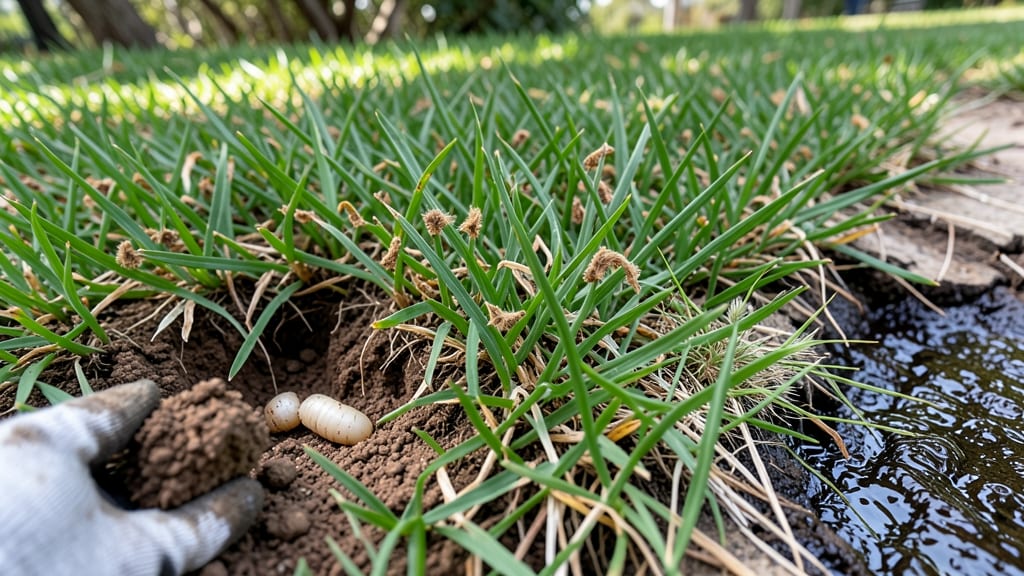
- Chafers (white grubs): Larvae munch on roots, causing irregular brown patches that pull up easily. Warm soils (20–30°C) speed up their lifecycle.
- Mealybugs & scale: Sap-sucking pests leave sticky residue (honeydew), attracting sooty mold (black fungus). They love stressed grass—like your lawn after a drought!
- Brown patch (Rhizoctonia): Thrives in hot, humid nights + dry days (classic SA summer). It kills grass in circular patches with a smoky ring at the edge.
- Dollar spot: Tiny straw-colored spots with dark borders appear when grass is overwatered or nitrogen-deficient.
- Take-all root rot: A winter problem in SA, caused by Gaeumannomyces. It turns roots black and mushy, and grass wilts even when watered.
Actionable fix:
- 🔥 Prevent pests: Apply neem oil or diatomaceous earth for insects; copper fungicides for diseases.
- 🌡️ Reduce humidity: Water early morning (not at night) to let grass dry faster.
- 💡 Boost grass health: Fertilize with low-nitrogen, high-potassium blends (e.g., 3-1-2) to strengthen defenses.
South Africans often overcompensate for drought by drowning their lawns—then wonder why grass rots or develops fungus. Here’s the science:
- Shallow watering: Light sprinkles (5mm/day) encourage surface roots (which die in heat) instead of deep roots.
- Night watering: Prolongs leaf wetness, inviting fungal spores (like brown patch) to germinate.
- Uneven coverage: Sprinklers that miss spots create dry/wet mosaics, stressing grass and inviting weeds.
Actionable fix:
- ⏰ Water deeply 2–3x/week (before 8 AM), aiming for 25mm/week in summer.
- 🔧 Check sprinkler heads: Adjust for uniform coverage; replace broken ones.
- 🌱 Use soaker hoses: Deliver water slowly to roots, reducing waste and fungal risk.
Pro tip: If your lawn is already struggling, don’t panic—many problems (like drought stress) are reversible with the right care. Start with soil tests and grass upgrades for long-term resilience. 🌱💪
Fixing Common Lawn Issues
South Africa’s harsh climate—with scorching heat, droughts, and unpredictable rains—can turn even the hardiest lawns into a battleground. But fear not! With the right approach, you can revive your grass, boost its resilience, and keep it thriving despite the challenges.
Below, we’ve mapped out practical fixes for the most common lawn problems, tailored to local conditions, plus prevention tips to stop issues before they start.
---
Signs: Yellowing grass, spongy soil, fungus growth (like brown patch or dollar spot), and a musty smell.
#### 🚿 How to Fix It 1. 🔥 Assess Your Watering Schedule - South African lawns need deep, infrequent watering—not daily light sprinkles.
Aim for 1–2 inches per week (including rain), delivered in morning sessions (before 10 AM) to reduce evaporation. - Test your soil: Dig a small hole (6 inches deep). If it’s soggy, cut back on watering immediately.
2. 🌱 Improve Drainage - Aerate compacted soil (rent a core aerator or hire a pro) to help water penetrate deeper. - Add organic matter: Mix in compost or sand (50/50 ratio) to loosen heavy clay soils common in regions like Gauteng or KwaZulu-Natal.
3. 🍄 Treat Fungal Infections - Fungicide sprays (like copper-based or systemic options) can help, but prevention is key: - Avoid evening watering (fungi thrive in damp, cool nights). - Mow high (3–4 cm) to improve airflow.
#### 💡 Prevention Tips - Upgrade your sprinklers: Use soaker hoses or drip irrigation for targeted, efficient watering. - Choose drought-resistant grass (e.g., Kikuyu, Buffel, or Sir Walter Buffalo) if you’re in a water-restricted area.
---
Signs: Grayish-blue grass, footprints that don’t bounce back, and dry, brittle blades.
#### 💧 How to Revive It 1. 🌱 Deep Watering Shock Treatment - Soak the lawn deeply (1–2 inches) once a week—even if it means skipping a week to let the soil dry out.
Use a rain gauge to track intake. - Pro tip: Water slowly (overnight) to avoid runoff, especially on slopes.
2. 🍂 Mulch Like a Pro - Spread straw or wood chips (2–3 cm thick) to retain moisture and cool roots. - Grass clippings (left on the lawn) act as a natural mulch—just ensure they’re short (under 5 cm).
3. 💪 Fertilize Smartly - Avoid nitrogen-heavy feeds during drought—they encourage top growth but weaken roots. - Use a slow-release, drought-tolerant fertilizer (look for potassium and phosphorus to strengthen roots).
#### 🌡️ Prevention Tips - Install a rainwater harvesting system (even a simple barrel setup) to collect water for emergencies. - Mow less frequently (every 7–10 days) to reduce stress on the grass.
---
Signs: Holes in the grass, chewed blades, or stubborn weeds (like thistles, clover, or nutgrass).
#### 🐞 How to Kick Them Out 1. 🔪 Manual Removal (For Weeds) - Pull weeds early (when they’re young and roots are shallow).
Use a weed torch (carefully!) for broadleaf weeds. - Spot-treat with vinegar (1 part white vinegar + 1 part water + a drop of dish soap) for small infestations.
2. 🐜 Natural Pest Control - Encourage predators: Ladybugs, nematodes, and birds help combat grubs and aphids. - Neem oil spray (mix 2 tbsp neem oil + 1 liter water + a drop of soap) deters pests without harming the lawn.
3. 🌱 Pre-Emergent Weed Barrier - Apply a corn gluten meal (natural pre-emergent) in early spring to stop weed seeds from sprouting.
#### 🎯 Prevention Tips - Keep grass healthy—thick, strong turf crowds out weeds naturally. - Aerate annually to prevent thatch buildup, which weeds love.
---
Signs: Spongy layer (0.6–2.5 cm thick) between soil and grass, slow water absorption, and patchy growth.
#### 🔪 How to Thin It Out 1. 🔥 Dethatch Properly - Rent a manual thatch rake or power dethatcher and work in small sections (don’t overdo it—remove only half the thatch at a time). - Best time: Early fall or spring (avoid summer heat).
2. 🌱 Improve Soil Health - Top-dress with compost (1 cm layer) to encourage beneficial microbes. - Overseed with a drought-resistant grass mix to fill bare spots.
#### ✨ Prevention Tips - Mow high (never remove more than ⅓ of the blade at once). - Avoid excessive nitrogen—it speeds up thatch buildup.
--- Final Thought: 🌿 A resilient lawn in South Africa’s climate isn’t about perfection—it’s about adaptation. Combine these fixes with regular care, and your grass will bounce back stronger than ever. Need a quick cheat sheet? Bookmark this guide for your next lawn rescue mission!
Frequently asked questions
What are the most common lawn pests in South Africa that destroy grass?
Watch for mole crickets (they create tunnels and chew roots) and white grubs (larvae that cause irregular brown patches). Mealybugs and scale insects also sap nutrients, leaving sticky residue. These pests thrive in SA's dry winters—check for chewed blades or wilting spots after rain.
How do I fix yellow patches in clay soil?
Clay soil locks out nutrients and water—start by aerating with a core aerator (spring/fall is best). Mix in gypsum (500g/m²) to break up compaction, then top-dress with 5cm compost. Test pH (ideal: 6.0-7.0); if alkaline, add sulfur.
Can I still have a green lawn in summer without daily watering?
Switch to drought-resistant grasses like Rhodes grass or Sir Walter Buffalo. Water deeply 2-3x/week (early morning) and mulch with straw (2-3cm) to retain moisture. Avoid nitrogen-heavy fertilizers—they encourage thirsty top growth.
Why does my lawn get brown spots even after watering?
Brown spots often signal fungal infections (like brown patch) or grub damage. Water before 8 AM to dry leaves faster, and apply copper fungicide if spots have dark rings. For grubs, use nematodes or milky spore—both are organic and effective.
What’s the best time to overseed a damaged lawn in SA?
Overseed in early spring (September-October) or late autumn (March-April) when soil is 60-70°F (15-21°C). Choose fast-germinating seeds like perennial ryegrass for quick coverage. Keep soil moist for 14 days—use a light sprinkle daily instead of deep watering.