
Mower
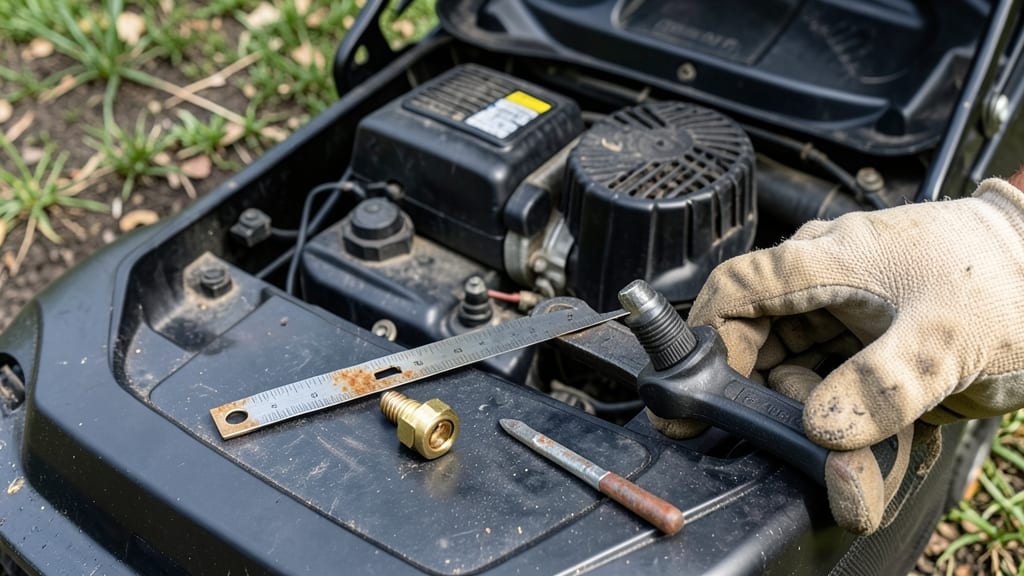
Setting the correct lawn mower spark plug gap is essential—small engines typically need 0.025 to 0.035 inches (0.6 to 0.9 mm), while larger models often require 0.030 to 0.040 inches (0.8 to 1.0 mm). Always verify your specific model’s specs in the manual before adjusting with a precision gap tool.
Getting this spacing right ensures your mower starts reliably and runs efficiently. 🔥 The gap affects how well the spark plug creates the electrical arc needed to ignite the fuel-air mixture—too wide, and you’ll struggle with misfires; too narrow, and the plug can overheat.
I’ve seen many DIYers overlook this step, leading to poor performance or even engine damage. Always use a feeler gauge for accuracy, and never bend the electrodes with pliers, as that can weaken them over time.
Different engine types and brands have their own ideal settings. For example, a Honda HRX might specify 0.030 inches, while a Briggs & Stratton model could call for 0.028 inches.
These variations exist because larger engines need slightly more space for the spark to jump effectively, while smaller engines benefit from tighter gaps for better efficiency. Checking your owner’s manual isn’t just a formality—it’s the best way to avoid guesswork.
💡 In This Article
- How to Measure and Adjust Spark Plug Gaps Correctly
- Spark Plug Gap Settings for Popular Lawn Mower Brands
How to measure and adjust spark plug gaps correctly
The spark plug gap is the tiny space between the center and side electrodes where the electrical arc jumps to ignite the fuel-air mixture.
This gap must be precise—too wide, and the spark may not consistently reach across, causing misfires; too narrow, and the plug can overheat, leading to pre-ignition or even engine damage. 🔥 The key to getting it right lies in using the proper tools and technique.
A standard feeler gauge (also called a wire gauge) is essential, as it provides the most accurate measurement down to thousandths of an inch.
Start by removing the spark plug using a socket wrench—most lawn mower plugs are 5/8-inch or 13/16-inch drive sizes. Inspect the electrodes first: if they’re pitted, corroded, or covered in carbon deposits, clean them with a wire brush or plug cleaner.
Never use sandpaper or emery cloth, as these can leave abrasive particles that damage the electrode surface. Once clean, insert the feeler gauge between the electrodes. The gauge should slide in snugly but with slight resistance—this is the correct gap.
For example, if your manual calls for 0.030 inches, the 0.030-inch feeler should fit just right without bending.
Adjusting the gap requires a specialized spark plug gap tool, not regular pliers. Place the plug in a vise or clamp it securely, then bend the ground electrode away from the center electrode until the feeler gauge fits perfectly.
A common mistake is over-bending the electrode, which can weaken it over time. 💫 Always check the gap after each bend—it’s easier to make small adjustments than to fix an over-gapped plug later.
Remember, even a 0.005-inch difference can significantly impact engine performance, especially in high-RPM lawn mower engines where precision is critical.
Once you’ve achieved the correct gap, reassemble the spark plug and reinstall it. Start your mower and listen for smooth operation—no popping or hesitation means the gap is likely correct. If you notice rough idling or the engine stalls frequently, double-check the gap and ensure the plug is properly gapped.
Many performance issues, including poor fuel economy and hard starts, can trace back to an improperly set spark plug gap. This is why manufacturers specify exact measurements in the owner’s manual—it’s not just a recommendation, it’s a performance requirement.
For those working with multiple mowers, consider keeping a small reference chart with common gap settings for popular brands. For instance, Honda engines often use 0.030 inches, while Briggs & Stratton models might specify 0.028 inches.
These variations exist because larger displacement engines need slightly more space for the spark to jump effectively, especially at higher RPMs. The gap also affects ignition timing—too wide, and the spark may arrive too late; too narrow, and it can arrive too early, causing pre-ignition.
This balance is why precision matters so much in small engine maintenance.
Pro tip: If you’re unsure about the gap, take the spark plug to a local small engine repair shop. Many will check it for free and show you the correct setting.
This small investment in time can save you from costly repairs down the road. 💛 Regularly checking and maintaining the spark plug gap—along with replacing the plug every 100 hours of use—will keep your lawn mower running smoothly and efficiently for years.