
Lawn
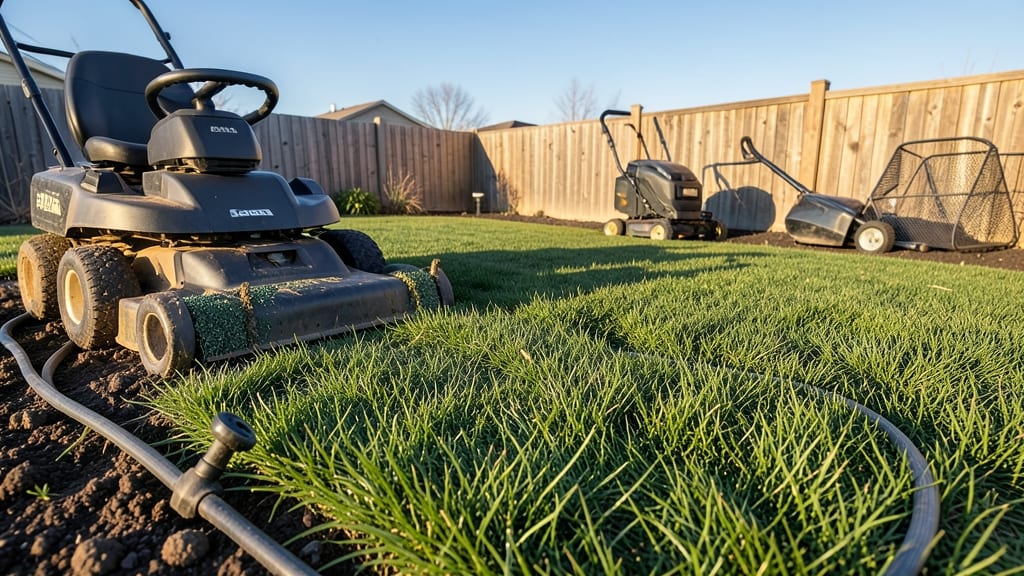
Washington DC's humid summers and unpredictable winters turn lawn care into a year-round challenge—unless you know the local tricks. 🌱 The key isn't just watering or mowing; it's understanding how grubs thrive in our clay-heavy soil, how dollar spot fungus loves our summer heat, and how winter's freeze-thaw cycles can rip apart your turf if you're not careful.
I've spent five seasons fighting these exact battles, and what works in Virginia Beach fails here.
You'll need the right tools for DC's conditions: a core aerator to break through compacted clay, a sharp mower blade to prevent disease spread, and a soil test kit from your local extension office (they're free and game-changing).
The real secret? Rotating between organic nematodes for grubs and fungal-resistant grass seed mixes that actually grow here—none of that generic big-box store stuff that bolts in August.
By following this localized approach, you'll end up with a lawn that stays vibrant green through DC's brutal summers and recovers quickly from winter's damage. The texture becomes soft underfoot, the color deepens, and you'll actually enjoy looking at it instead of dreading the next pest outbreak.
No more guessing—just results that match our climate.
This works for both front yards and community gardens across the DMV. The same principles apply whether you're dealing with a small urban plot or a larger suburban lawn. Let's get that grass growing the way it should in our neck of the woods.
📚 In This Guide
- What you need
- Instructions
- Tips and common mistakes
- Wrapping up and next steps
What you need
- ● Lawn Mower: Electric or gas-powered, with adjustable height settings (3"–4" for DC’s grass types).
- ● String Trimmer/Edger: For tight spaces and clean edges (gas or battery-operated).
- ● Rake: Leaf rake (for cleanup) + garden rake (for thatch removal).
- ● Lawn Aerator: Manual or rented core aerator (spring/fall, 2–3 times/year).
- ● Broadcast Spreader: For even fertilizer/seed distribution (calibrated for DC’s soil).
- ● Watering System: Hose with adjustable nozzle + sprinkler (or smart irrigation timer).
- ● Soil Test Kit: pH testing (DC soil is often alkaline; aim for 6.0–7.0).
- ● Gloves & Knee Pads: Heavy-duty work gloves + ergonomic pads for comfort.
- ● Seeds/Sod: Tall Fescue or Kentucky Bluegrass (cool-season, DC’s best picks).
- ● 10–20 lbs of seed per 1,000 sq. ft. (or 500–1,000 sq. ft. sod rolls).
- ● Fertilizer: Slow-release granular (e.g., 16-4-8 ratio) for spring/fall.
- ● Weed-and-feed (early spring, pre-emergent in late spring).
- ● Mulch: Shredded bark or straw (2–3 inches for winter protection).
- ● Leaf Blower (for DC’s plenty of autumn leaves).
- ● Soil Conditioner (compost or gypsum for clay-heavy DC soil).
- ● Lawn Thermometer (to monitor heat stress in summer).
- ● DIY Soil Mix (peat moss + compost for patch repairs).
Step-by-Step guide to Washington DC lawn care
DC’s humid summers and cold winters demand a tailored approach—here’s how to keep your lawn lush year-round.
🌱 Step 1: Test Soil and Choose the Right Grass Type
Washington DC’s clay-heavy soil and variable climate mean you can’t just plant any grass. First, test your soil’s pH and drainage—aim for a pH of 6.0-7.0 and well-draining conditions. Tall fescue and Kentucky bluegrass are top choices for DC’s heat and humidity, while fine fescue handles shade better. If your soil is compacted, aerate before planting to prevent water runoff and root suffocation.
I always dig a small hole, fill it with water, and time how long it takes to drain. If it sits longer than 10 minutes, you’ve got drainage issues. Amend with 2-3 inches of compost if needed, but avoid heavy organic matter that can suffocate roots in DC’s heat.
💧 Step 2: Water Deeply and Strategically
DC’s summer droughts and clay soil make watering tricky. Water deeply 1-2 times per week (early morning is best) instead of light daily sprinkles. Aim for 1-1.5 inches of water per week, including rainfall. You’ll know you’re doing it right when water penetrates 4-6 inches deep—use a screwdriver to check.
If your lawn has brown patches, it’s usually underwatering, not overwatering. Avoid watering in the evening—DC’s humidity breeds fungal diseases like brown patch. A rain gauge helps track moisture, but your thumb is fine: if the top ½ inch of soil feels dry, it’s time to water.
☀️ Step 3: Mow High and Maintain Seasonal Height
Set your mower to 3-4 inches in summer to retain moisture and shade roots. In fall and spring, you can drop it to 2.5-3 inches for a tidy look. Never remove more than ⅓ of the blade height in one mowing—this stresses grass and invites weeds. Sharpen blades monthly to avoid tearing grass, which leads to brown tips.
DC’s heat means grass grows fast in summer. Mow when blades reach 3.5 inches—longer grass shades soil, reducing evaporation. In winter, raise the mower to 3 inches to protect grass from freeze-thaw cycles. Bag clippings if your lawn has fungal issues, but leave them otherwise—they return nutrients to the soil.
✂️ Step 4: Fertilize and Aerate at the Right Times
Spring and fall are prime fertilization windows in DC. Use a slow-release, low-nitrogen fertilizer (like 24-0-10) in early spring to encourage root growth, then switch to a balanced 10-10-10 in fall. Avoid fertilizing in summer—it burns grass in DC’s heat. Apply when soil temps are 50-60°F for best uptake.
Aerate in early fall when grass is actively growing but before winter dormancy. Rent a core aerator or hire a pro—DC’s clay soil compacts easily. Follow up with ¼ inch of compost to fill the holes. Skip aeration if your lawn is flooded or frozen; wait until soil is 60°F or warmer for spring aeration.
🌿 Step 5: Address Pests and Weeds Preemptively
DC’s heat and humidity love chinch bugs and grubs. Scout for yellow patches (chinches) or spongy turf (grubs) in late summer. Apply neem oil for chinches or beneficial nematodes for grubs before they cause damage. For weeds, spot-treat with vinegar + dish soap (for broadleaf weeds) or pre-emergent in early spring.
Don’t overlook shade issues—DC’s mature trees create dry, compacted spots. Overseed bare areas with fine fescue in early fall. Pull weeds by hand when soil is moist (they’re easier to remove). If you see mushrooms, your soil is too wet—fix drainage before treating the lawn.
Tips & tricks for perfect Washington DC lawn care
DC's unique climate demands a few strategic adjustments to keep your lawn thriving year-round—here's how to optimize each step for maximum success.
Soil Testing Precision: When testing drainage in Step 1, use a clear glass or plastic container to measure water penetration more accurately. The 10-minute mark is critical—if water disappears faster than 10 minutes, your soil drains too quickly and may need organic matter to retain moisture. For clay-heavy areas, mix in 2-3 inches of compost and water thoroughly to help break up compaction over time. This creates ideal conditions for root development in DC's variable climate.
Watering Technique: The 1-1.5 inches per week guideline in Step 2 works best when applied in two deep sessions rather than one. Use a rain gauge or tuna can to measure—most sprinklers overestimate by 20-30%. For clay soil, water until you see moisture penetrate 4-6 inches deep—this prevents surface evaporation and encourages deep root growth. Early morning watering (before 9 AM) minimizes fungal risks while maximizing absorption in DC's heat.
Seasonal Mowing Strategy: In Step 3, the 3-4 inch summer height might seem tall, but it's essential for shade and moisture retention. For shade areas, consider leaving grass at 3.5 inches year-round—this prevents stress from competing with tree roots. When mowing, alternate patterns weekly to prevent soil compaction from repeated wheel tracks. And remember: never cut more than ⅓ of the blade height at once—this rule prevents shock and weed invasion.
Fertilizer Timing: The 50-60°F soil temperature window in Step 4 is non-negotiable for spring applications. Test soil temperature with a simple thermometer—if it's below 50°F, nutrients won't activate properly. For fall fertilization, switch to a 10-10-10 blend in early September to give grass time to absorb nutrients before dormancy. Avoid granular fertilizers in summer—they can burn grass in DC's heat and contribute to runoff pollution.
Pro Tips for Lawn Care Washington Dc
- DC's unique climate demands a few strategic adjustments to keep your lawn thriving year-round—here's how to optimize each step for maximum success.
- Soil Testing Precision: When testing drainage in Step 1, use a clear glass or plastic container to measure water penetration more accurately.
- Watering Technique: The 1-1.5 inches per week guideline in Step 2 works best when applied in two deep sessions rather than one.
Frequently asked questions
Got questions about keeping your Washington, DC lawn lush and healthy year-round? Here are some of the most common concerns—and expert answers—from local lawn care pros.
When is the best time to fertilize my DC lawn?
The ideal times are early spring (March–April) and fall (September–October). DC’s humid summers can burn grass if you fertilize too late, while fall helps roots strengthen before winter. For cool-season grasses like Kentucky bluegrass (common in DC), a light winter feeding in January can also help.
How often should I water my lawn in Washington, DC?
Water deeply 1–2 times per week (early morning is best) to encourage deep root growth. Avoid light, frequent watering—it promotes shallow roots and weeds. In DC’s heat (summer), you may need daily watering, but 1–1.5 inches per week is the golden rule. Check soil moisture: if the top 2–3 inches are dry, it’s time to water.
Should I aerate my lawn, and how do I know if it needs it?
Yes! Aeration 2x yearly (spring/fall) is key for compacted DC soil. Signs you need it:
- Water pools on the surface instead of soaking in
- Grass feels spongy or grows slowly
- Weeds (like clover) thrive in thin patches
How do I get rid of weeds naturally in my DC lawn?
Start with preventive care: mow high (3–4 inches), overseed bare spots, and water deeply. For stubborn weeds like crabgrass, apply a pre-emergent herbicide in early spring (before weeds sprout). For organic control, try corn gluten meal (a natural pre-emergent) or spot-treat with vinegar (mix 1 gallon vinegar + 1 oz dish soap—test on a small area first!).
What’s the best way to winterize my lawn in DC?
DC’s winters are mild but damp—don’t skip fall prep! Key steps:
- Apply a winterizer fertilizer (high in potassium) in November
- Leave grass clippings after your last mow (they act as natural mulch)
- Rake leaves regularly to prevent smothering
- Avoid heavy foot traffic on frozen ground
Pro Tip:
DC’s clay soil can be tricky—amend it with compost in spring/fall to improve drainage and nutrient absorption. Mix in 1–2 inches of compost during aeration for best results!
Wrapping up and next steps
Transforming your Washington, DC lawn into a lush, year-round green space is totally within reach—with the right knowledge and a little elbow grease! 🌿 From seasonal maintenance to tackling common challenges, you now have the tools to keep your yard thriving in the nation’s capital.
Whether you’re a DIY enthusiast or prefer calling in the pros, consistency and care are your best allies.
Ready to take action? Start small:
- Schedule your first deep clean or aeration this week.
- Book a consultation with a local lawn care expert for a customized plan.
- Join a DC gardening group for tips and inspiration!