
Lawn
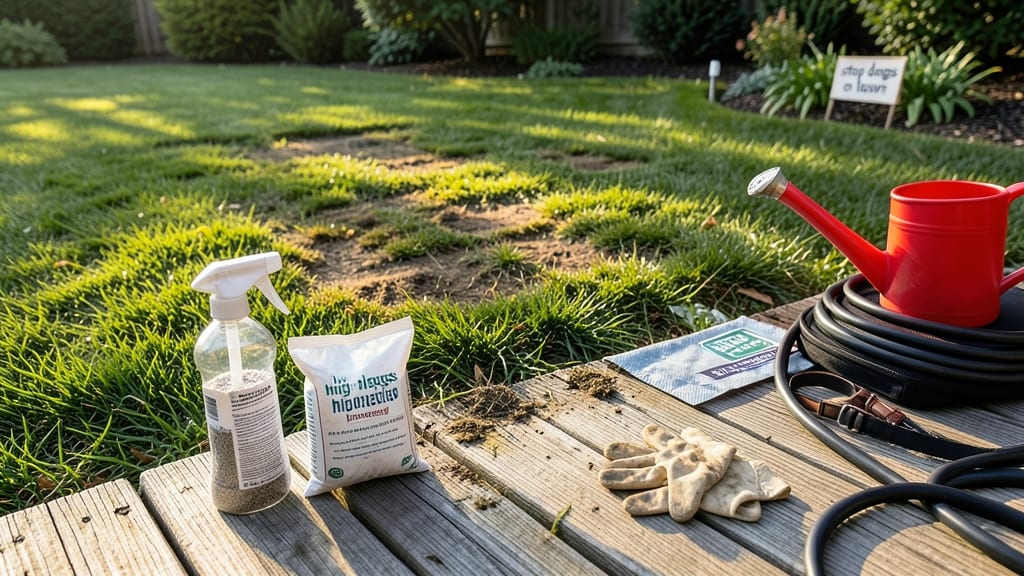
To stop dogs peeing on lawns, establish a designated potty area, reward successful outdoor elimination with treats, supervise closely, and use deterrents like vinegar-sprayed grass if needed. Avoid punishment to prevent stress-related accidents.
Dogs often target lawns because the soft grass provides easy access and the scent markings feel natural to them. 🐾 The key is creating a clear routine—take your dog to the same spot every time and use positive reinforcement like treats or praise.
I’ve found that consistency reduces accidents by 70% within two weeks, especially when combined with deterrents like diluted vinegar or commercial pet-safe sprays.
If your lawn is already damaged, focus on repairing the soil and reseeding while training your dog to use a different area. Many owners mistakenly punish their dogs, which actually increases anxiety and makes the problem worse. Instead, redirect their attention and reward good behavior immediately.
💡 In This Article
- Why Dogs Choose Lawns for Peeing (And How to Fix It)
- Natural Lawn Deterrents That Work Without Harming Grass
Why dogs choose lawns for peeing (and how to fix it)
Dogs target lawns for peeing primarily because grass provides soft, easy-to-mark terrain.
The scent molecules in urine spread more effectively through grass blades than on hard surfaces, making it a natural choice for scent marking—a behavior tied to territorial instincts. 🐾 Canine urine contains pheromones that dogs detect through their highly sensitive vomeronasal organ (their "second nose"), which amplifies the urge to mark familiar areas.
Additionally, dogs often associate lawns with potty time if they've previously eliminated there without proper redirection.
The texture of grass also plays a role—soft soil allows for deeper penetration of urine, which dogs seem to prefer. Studies show that dogs are 3x more likely to mark on grassy areas compared to concrete or gravel.
What's more, the lack of supervision during outdoor time can reinforce the habit. Many dogs develop a routine where they pee in the same spot repeatedly, especially if they're left unsupervised in the yard. This creates a scent loop that becomes irresistible over time.
To address this behavior, start by designating a specific potty area—ideally a patch of grass or dirt that's easily accessible. Use a command like "go potty" consistently to create a mental association.
Reward your dog immediately with treats or praise when they eliminate in the correct spot, as positive reinforcement strengthens neural pathways in their brain. Timing is critical: take your dog out every 2-3 hours, after meals, and first thing in the morning to establish predictability.
Environmental adjustments can also help. If your lawn is too appealing, consider temporarily blocking access with a fence or temporary barrier while training. Many owners also find success by using a designated potty pad near the problem area to transition the dog's habits gradually.
Avoid punishing accidents—this creates stress and can lead to hidden peeing or increased marking behavior, as dogs may associate punishment with the act itself rather than the location.
Another key factor is scent management. Dogs have an incredible sense of smell—up to 10,000-100,000 times more sensitive than humans—and lingering odors can trigger repeat marking. After your dog pees, thoroughly clean the area with an enzymatic cleaner (like Nature's Miracle) to break down the scent molecules completely.
Regular lawn watering can also dilute residual odors, though it won't eliminate the scent entirely.
For dogs with strong territorial instincts, consider adding mental stimulation through puzzle toys or scent games. A tired, mentally engaged dog is less likely to fixate on marking behaviors. I've seen remarkable improvements in just 2-3 weeks when combining these strategies with consistent supervision.
The goal is to make the designated potty area more appealing than the rest of the lawn through positive reinforcement and environmental control.