
Lawn
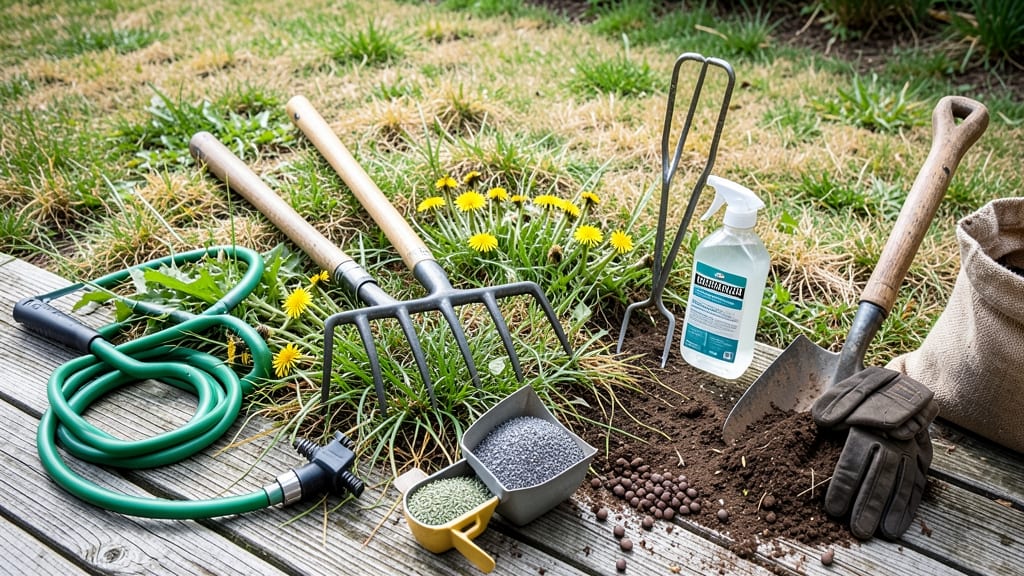
Your how to revive a lawn full of weeds journey starts here—transforming that patchy, weed-choked mess into a vibrant green carpet in just three focused steps. 🌱 I’ve turned my own weed-choked yard into a thick, green carpet using these same methods—no harsh chemicals, no wasted time.
The secret? Targeting weeds at their roots while giving grass the right conditions to outcompete them. Start by identifying your worst offenders—broadleaf weeds like dandelions or grassy weeds like crabgrass. Pull or spot-treat them first, then aerate the soil to let oxygen and nutrients reach struggling grass roots.
Most people skip this step, but it’s where real revival begins. By the end of the process, you’ll have a lawn that stays weed-free with minimal effort. The key is consistency: feed the grass, not the weeds, and you’ll see results in as little as 4-6 weeks.
Works for any lawn size, from small patches to full backyards. Let’s get started!
📚 In This Guide
- What you need
- Instructions
- Tips and common mistakes
- Wrapping up and next steps
What you need
- ● Garden Gloves: 1 pair (waterproof, heavy-duty for protection)
- ● Lawn Mower: 1 (sharp blades, set to 3–4 inches height for grass recovery)
- ● Hand Trowel or Weeding Tool: 1 (for stubborn weeds)
- ● Broadcast Spreader: 1 (for even fertilizer/seed distribution)
- ○ Organic Weed Killer (Optional but Helpful): Vinegar (5% acetic acid) + dish soap + water (1 gallon vinegar + 1 tbsp soap + 1 gallon water) OR
- ● Commercial organic herbicide (e.g., corn gluten meal or boiling water for spot treatment)
- ● Grass Seed: 10–20 lbs (native grass blend for your climate/soil type)
- ● Compost or Topsoil: 2–3 cubic yards (for patchy areas or soil amendment)
- ● Organic Lawn Fertilizer: 1 bag (slow-release, nitrogen-rich, e.g., 10-10-10 or composted manure)
- ● Water Hose with Adjustable Nozzle: 1 (for deep watering)
- ● Rake: 1 (bow rake for debris, stiff-bristle for seed bed prep)
- ○ Soil Test Kit (Optional): 1 (to check pH/nutrient levels before seeding)
- ● Weather: Mild temps (50–80°F) and no rain forecast for 48 hours after seeding
- ● Sunlight: Full sun exposure (6+ hours/day) for best grass growth
- ● Soil Prep: Loose, well-draining soil (amend with compost if clay-heavy)
- ● Time Commitment: 1–2 weekends (plus 4–6 weeks for regrowth)
Step-by-step instructions for reviving a weed-infested lawn
Here’s how to reclaim your lawn naturally—without toxic chemicals or costly replacements.
🌱 Step 1: Identify and Remove Weeds Strategically
Start by pulling weeds when the soil is moist—either right after watering or during morning dew. Use a weeding tool or your fingers to grasp weeds at the base, where the root meets the soil. I’ve found that digging out the entire root prevents regrowth; even a tiny fragment can sprout back. For stubborn weeds like dandelions, a screwdriver works wonders—just twist gently to avoid damaging surrounding grass.
Focus on broadleaf weeds first, as they compete aggressively with grass. If your lawn has clover or creeping charlie, spot-treat those areas first—they spread quickly. Avoid ripping grass up in the process; instead, work slowly to preserve as much healthy turf as possible. You’ll know you’re doing it right when the pulled weeds leave clean, empty spots ready for grass to fill.
💧 Step 2: Aerate and Overseed for Thicker Growth
Rent a core aerator to punch holes 3-4 inches deep across your lawn—this breaks up compacted soil and lets grass roots breathe. Walk in a grid pattern, overlapping passes slightly to ensure full coverage. If you don’t have an aerator, spike the lawn with a garden fork every 6 inches for similar results, though it’s less thorough. After aerating, rake the soil lightly to smooth the surface and remove debris.
Scatter high-quality grass seed evenly over the entire area, using about ½ pound per 100 square feet for most cool-season grasses. Lightly rake the seed into the soil to ensure good soil contact—this helps germination. Water immediately after seeding to settle the seed into the soil. You’ll know it’s working when the soil stays damp (but not soggy) for the next 10-14 days.
☀️ Step 3: Adjust Watering and Fertilize for Recovery
Water deeply twice daily—once in the early morning and once in the evening—for the first 2 weeks to encourage seed germination. After that, shift to deep, infrequent watering (about 1 inch per week) to strengthen roots. Avoid light, frequent watering, which promotes shallow roots and weed regrowth. Use a rain gauge or tuna can to measure water accurately—eyeballing it leads to over- or under-watering.
Apply a slow-release, organic fertilizer (like compost or a balanced 10-10-10) to provide nutrients without burning new grass. Spread it evenly with a broadcast spreader, then water it in thoroughly. You’ll see the difference within 3-4 weeks: thicker grass outcompetes weeds naturally, and the lawn starts to look lush again. Keep mowing at 3-4 inches to shade out weeds and encourage deep root growth.
✂️ Step 4: Maintain and Prevent Future Weed Takeover
Once your lawn recovers, switch to a preventative routine: mow regularly, water deeply but less often, and apply corn gluten meal in early spring. This natural pre-emergent stops weed seeds from germinating without harming grass. I also recommend leaving grass clippings on the lawn—they return nutrients to the soil and reduce the need for fertilizer. A healthy lawn crowds out weeds before they become a problem.
Finally, test your soil every 2-3 years to check pH and nutrient levels. Most weeds thrive in acidic or nutrient-poor soil, so adjusting these factors makes your lawn less inviting to invaders. With consistent care, your lawn will stay weed-resistant and vibrant for years.
Tips & tricks for reviving a weed-infested lawn
Here's what nobody tells you about transforming your patchy lawn into a lush, weed-free paradise.
Timing is Everything: The best time to pull weeds is right after a good rain or when morning dew is present. The soil's natural moisture makes weeds easier to remove without damaging surrounding grass. I've learned this the hard way—trying to pull weeds from dry soil often results in broken roots that regrow. For stubborn weeds like dandelions, go deeper than you think you need to—those taproots can extend up to 12 inches deep!
Equipment Upgrade: While a weeding tool works fine, I've found that a small hand fork (about 6 inches long) is my secret weapon for those stubborn weeds. It lets me get leverage without damaging grass. For large areas, consider renting a dandelion digger—it's specifically designed to remove weeds with deep roots in one clean motion. Always clean your tools between uses to prevent spreading weed seeds to healthy areas.
Seed Selection Matters: When choosing grass seed, match it to your climate and existing grass type if any remains. Cool-season grasses like Kentucky bluegrass or fescue work well in northern regions, while Bermuda grass thrives in southern climates. I recommend using a seed blend that includes at least 2-3 grass types for better disease resistance. For areas with heavy foot traffic, look for seed labeled "high-traffic" or "sports turf" varieties—they're bred to be more resilient.
Watering Wisdom: The first 2 weeks after seeding are critical—keep that soil consistently damp (not soggy) by watering twice daily. I use a simple rain gauge to measure exactly 1 inch of water per week after the initial period. Early morning watering prevents fungal growth, while evening watering helps seeds absorb moisture overnight. Pro tip: Water slowly and deeply to encourage roots to grow downward rather than staying shallow.
Pro Tips for Revive A Lawn Full Of Weeds
- Here's what nobody tells you about transforming your patchy lawn into a lush, weed-free paradise.
- Timing is Everything: The best time to pull weeds is right after a good rain or when morning dew is present.
- Equipment Upgrade: While a weeding tool works fine, I've found that a small hand fork (about 6 inches long) is my secret weapon for those stubborn weeds.
Frequently asked questions
Got questions about tackling that weed-infested lawn? You’re not alone—here are some of the most common concerns (and answers!) to help you get back to a lush, green yard without breaking a sweat.
How do I know if my weeds are annual or perennial?
Annual weeds (like crabgrass) sprout, grow, and die in one season, while perennials (such as dandelions or clover) return year after year from roots. Why it matters: Annuals need pre-emergent treatment in early spring, while perennials require deep soil disruption (like tilling or vinegar spot treatment) to break their root systems. Start by pulling a few—if they resprout, they’re perennials!
Is it better to tackle weeds in spring or fall?
Both seasons work, but fall is ideal for most climates. Weeds are still active but grass recovers faster in cooler weather. Spring is a close second—just apply pre-emergent before weeds sprout (usually 4–6 weeks before your last frost). Pro tip: Mow high (3–4 inches) to shade out weeds while you work.
Will overwatering my lawn help kill weeds?
Nope! Overwatering actually feeds weeds and encourages fungal growth. Instead, water deeply but infrequently (1–1.5 inches per week) to strengthen grass roots. For stubborn weeds, dry them out—reduce watering for 2–3 weeks to weaken annuals like chickweed. Pair this with manual removal or vinegar spray for best results.
Can I use corn gluten meal to prevent weeds long-term?
Corn gluten meal is a natural pre-emergent that starves weed seeds while feeding your lawn. Apply it in early spring or fall (follow package rates) and reapply annually. It won’t kill existing weeds, so combine it with pulling or spot-treating. Bonus: It’s pet-safe once settled into the soil!
What’s the fastest way to kill weeds without chemicals?
For immediate results, use a vinegar-based spray (1 gallon white vinegar + 1 oz dish soap + 1 oz lemon juice). Spray on sunny days to avoid burning grass—target weeds only. For larger areas, solarization (covering soil with clear plastic for 4–6 weeks) bakes weeds out naturally. Patience pays off: Repeat treatments may be needed for perennials.
How do I keep weeds from coming back after I’ve cleared them?
Prevention is key! Start with a dense, healthy lawn—seed bare spots, aerate compacted soil, and fertilize (use organic options like compost or bone meal). Mow high (3+ inches) to block sunlight, and mulch grass clippings to smother weeds. Apply a natural weed barrier (like cardboard + mulch) in garden beds. Consistency beats quick fixes!
Wrapping up and next steps
Reviving a weed-infested lawn is totally doable with the right approach—patience, consistency, and a little elbow grease! 🌱 You’ve got the tools, the know-how, and now the confidence to transform that overgrown space into a lush, healthy yard.
Start small, celebrate every progress (even the tiny wins!), and soon, you’ll be the envy of the neighborhood with your thriving green carpet.
Ready to take the next step? Pick one task from this guide today—whether it’s pulling weeds, adjusting your mower height, or testing your soil—and watch your lawn bloom back to life! 🌟